<coursepack>
    <title>Designer Brand Perfumes &amp; Colognes</title>
    <author>bwestbuilders</author>
    <id>DesignerBrandPerfumesColognes10</id>
    <works>
        <TEI xmlns="http://www.tei-c.org/ns/1.0" xml:id="doyle-sign">

   <!--TEI Header BEGINS-->
   <teiHeader xml:lang="en">

      <fileDesc>
         <!--BEGINS File Description -->
         <titleStmt>
            <title type="main">"The Sign of the Four"</title>

            <author>
               <persName type="lcnaf" key="n79082292">
                  <name ref="doyle.xml">
                     <forename>Arthur Conan</forename>
                     <surname>Doyle</surname>
                  </name>
               </persName>
            </author>

            <editor>
               <persName type="orcid" key="0000-0002-7400-4093">
                  <name ref="editors.xml#TH">
                     <surname>Howe</surname>
                     <forename>Tonya</forename>
                  </name>
               </persName>
            </editor>

            <respStmt>
               <resp>Transcription, correction, editorial commentary, and markup</resp>
               <name ref="editors.xml#GG">Greg Gillespie</name>
               <name ref="editors.xml#MUstudstaff">Students and Staff of Marymount University</name>
            </respStmt>
            <sponsor/>
            <funder>VIVA</funder>
         </titleStmt>


         <publicationStmt>
            <publisher>Literature in Context</publisher>
            <address>
               <addrLine>Marymount University Department of Literature and Languages</addrLine>
               <addrLine>2807 N. Glebe Road</addrLine>
               <addrLine>Arlington, VA </addrLine>
               <addrLine>22207</addrLine>
               <addrLine>thowe@marymount.edu</addrLine>
               <addrLine>lic.open.anthology@gmail.com</addrLine>
            </address>
            <availability status="free">
               <licence target="http://creativecommons.org/licenses/by-sa/4.0/">Published by
                  Literature in Context under a Creative Commons Attribution-ShareAlike 4.0 Unported
                  License </licence>
            </availability>
         </publicationStmt>


         <sourceDesc>
            <biblStruct>
               <analytic>
                  <title>"The Sign of the Four"</title>

               </analytic>
               <monogr>
                  <author>
                                    <persName type="lcnaf" key="n79082292">
                     <name ref="doyle.xml">
                        <forename>Arthur Conan</forename>
                        <surname>Doyle</surname>
                     </name>
                  </persName>
                                </author>
                  <title>Lippincott's Monthly Magazine</title>
                  <imprint>
                     <pubPlace>
                        <placeName type="tgn" key="7014406">Philadelphia, PA</placeName>
                     </pubPlace>
                     <publisher>J. B. Lippincott Company</publisher>
                 
                     <date when="1889">1889</date>
                     <note/>
                     <note>Page images are drawn from the February 1890 edition of <hi rend="italic">Lippincott's</hi>, housed at The University of Virginia.</note>

                  </imprint>
                  <imprint>
                     <pubPlace>Web</pubPlace>
                     <publisher>Project Gutenberg</publisher>
                     <date>March 2020</date>
                     <note>Text for this digital edition drawn from <ref target="https://www.gutenberg.org/files/2097/2097-h/2097-h.htm">https://www.gutenberg.org/files/2097/2097-h/2097-h.htm</ref> and checked
                        against page images.</note>
                  </imprint>

                  <extent>4v.,plate ; 12°</extent>
                  <biblScope unit="volume">45(?)</biblScope>
                  <biblScope>pp 147-223</biblScope>
               </monogr>
            </biblStruct>
         </sourceDesc>

      </fileDesc>


      <profileDesc>
         <!--BEGINS Profile Description  -->
         <langUsage>
            <language ident="en">English</language>
         </langUsage>

         <creation/>

         <textDesc n="novella">
            <channel mode="w">print</channel>
            <constitution type="single"/>
            <derivation type="original"/>
            <domain/>
            <factuality type="fiction"/>
            <interaction/>
            <preparedness type="prepared"/>
            <purpose type="entertain" degree="high"/>
         </textDesc>

         <settingDesc>
            <setting>
               <name type="tgn" key="7011781">London, England</name>
               <time from="1888" to="1888">1888</time>
            </setting>
         </settingDesc>
      </profileDesc>


      <encodingDesc>
         <!-- BEGINS Encoding Description -->
         <projectDesc>
            <p>This text is prepared as part of the <hi rend="italic">Literature in Context</hi>
               project, which provides an accessible, curated, and marked-up selection of primary
               sources relevant to the study and the teaching of British and American literature of
               the 18th century. This project is funded by the National Endowment for the Humanities
               and developed by faculty at The University of Virginia and Marymount University. </p>
         </projectDesc>
         <editorialDecl>
            <interpretation>
               <p>Research informing these annotations draws on publicly-accessible resources, with
                  links provided where possible. Annotations have also included common knowledge,
                  defined as information that can be found in multiple reliable sources. If you
                  notice an error in these annotations, please contact lic.open.anthology@gmail.com.
               </p>
            </interpretation>
            <normalization>
               <p>Original spelling and capitalization is retained, though the long s has been
                  silently modernized and ligatured forms are not encoded.</p>
            </normalization>
            <hyphenation>
               <p>Hyphenation has not been retained, except where necessary for the sense of the
                  word.</p>
            </hyphenation>
            <segmentation>
               <p>Page breaks have been retained. Catchwords, signatures, and running headers have
                  not. Where pages break in the middle of a word, the complete word has been
                  indicated prior to the page beginning.</p>
            </segmentation>
            <correction>
               <p>Materials have been transcribed from and checked against first editions, where
                  possible. See the Sources section.</p>
            </correction>
         </editorialDecl>
         <tagsDecl>
            <namespace name="http://www.tei-c.org/ns/1.0">
               <tagUsage gi="div">Unnumbered divs used.</tagUsage>
            </namespace>
         </tagsDecl>
         <classDecl>
            <taxonomy xml:id="lcnaf">
               <bibl>Library of Congress Name Authority File</bibl>
            </taxonomy>
            <taxonomy xml:id="lcc">
               <bibl>Library of Congress Classification</bibl>
            </taxonomy>
            <taxonomy xml:id="tgn">
               <bibl>Getty Thesaurus of Geographic Names</bibl>
            </taxonomy>
            <taxonomy xml:id="orcid">
               <bibl>Open Researcher and Contributor ID</bibl>
            </taxonomy>
         </classDecl>
      </encodingDesc>


      <revisionDesc>
         <!--BEGINS Revision Description -->
         <change when="2022-07-22" who="editors.xml#TH">First pass XML file</change>
      </revisionDesc>


   </teiHeader>
   <!--TEI Header Ends -->


   <text>
      <front>
         <pb n="[Cover of Lippincott's Monthly Magazine, February 1890]" facs="pageImages/TP.jpg"/>
         <pb n="147" facs="pageImages/147.jpg"/>
         <titlePage>
            <titlePart>
               <lb/> LIPPINCOTT'S <lb/> MONTHLY MAGAZINE. <lb/> FEBRUARY, 1890. <lb/> THE SIGN OF
               THE FOUR.<lb/>
            </titlePart>
            <docImprint/>
         </titlePage>

      </front>
      <body>
         <div>
            <head>CHAPTER I.</head>
            <head type="sub">THE SCIENCE OF DEDUCTION.</head>
            <p>Sherlock Holmes took his bottle from the corner of the mantel-piece and his
               hypodermic syringe from its <ref target="moroccoCase_" corresp="moroccoCase">neat
                  morocco case</ref>
               <note xml:id="moroccoCase" target="moroccoCase_" resp="editors.xml#GG" type="gloss">In this context, morocco is a kind of leather, imported into Europe since the 16th century, that is very soft. Holmes stores his syringes in a small case covered in morocco leather.

               </note>. With his long, white, nervous fingers he adjusted the delicate needle, and
               rolled back his left shirt-cuff. For some little time his eyes rested thoughtfully
               upon the sinewy forearm and wrist all dotted and scarred with innumerable
               puncture-marks. Finally he thrust the sharp point home, pressed down the tiny piston,
               and sank back into the velvet-lined arm-chair with a long sigh of satisfaction.</p>
            <p>Three times a day for many months I had witnessed this performance, but custom had
               not reconciled my mind to it. On the contrary, from day to day I had become more
               irritable at the sight, and my conscience swelled nightly within me at the thought
               that I had lacked the courage to protest. Again and again I had registered a vow that
               I should deliver my soul upon the subject, but there was that in the cool, nonchalant
               air of my companion which made him the last man with whom one would care to take
               anything approaching to a liberty. His great powers, his masterly manner, and the
               experience which I had had of his many extraordinary qualities, all made me diffident
               and backward in crossing him.</p>
            <p>Yet upon that afternoon, whether it was <ref target="beaune_" corresp="beaune">the
                  Beaune which I had taken with my lunch</ref>
               <note xml:id="beaune" target="beaune_" type="gloss" resp="editors.xml#TH">
                                <placeName type="tgn" key="7662594">Beaune</placeName> is a
                  region in Burgundy, France, that is known for its wine. Yorick is drinking wine
                  from Beaune with his lunch. To read more about the region, see <ref target="https://en.wikipedia.org/wiki/Beaune">Wikipedia</ref>.</note>, or the
               additional exasperation produced by the extreme deliberation of his manner, I
               suddenly felt that I could hold out no longer.</p>
            <p>“Which is it to-day?" I asked,—“<ref target="drugs_" corresp="drugs">morphine or
                  cocaine</ref>
               <note xml:id="drugs" target="drugs_" type="editorial" resp="editors.xml#GG">In the
                  19th century, Britain had fought two wars with India and China over the trade of
                  opium, which equated to large profits for the British economy. Drugs such as opium
                  were considered an everyday commodity, like food or alcohol, and were not met with
                  any restrictions until 1868. Someone could walk into a chemist (pharmacy) during
                  this time and simply purchase opium, cocaine or arsenic without any sort of
                  prescription. To learn more about drug use during the Victorian era, check out<ref target="https://www.historic-uk.com/HistoryUK/HistoryofBritain/Opium-in-Victorian-Britain/">Opium in Victorian Britain at Historic UK</ref> and <ref target="https://victorianweb.org/victorian/science/addiction/addiction2.html">Victorian Drug Use on VictorianWeb.org</ref>
                            </note> ?"</p>
            <p>He raised his eyes languidly from the old <ref target="blackletter_" corresp="blackletter">black-letter</ref>
               <note xml:id="blackletter" target="blackletter" resp="editors.xml#TH" type="gloss">
                                <graphic url="notes/Calligraphy.malmesbury.bible.arp.jpg" source="https://upload.wikimedia.org/wikipedia/commons/4/46/Calligraphy.malmesbury.bible.arp.jpg" alt="an example of blackletter from the 15th century" desc="An example of blackletter from the 15th century (Wikimedia Commons)"/>Blackletter is a
                  medieval script form characterized by heavy calligraphic letters. This image, <ref target="https://upload.wikimedia.org/wikipedia/commons/4/46/Calligraphy.malmesbury.bible.arp.jpg">from Wikimedia Commons</ref>, shows an example of blackletter from a 15th
                  century bible. </note> volume which he had opened. “It is cocaine," he said,—“a
               seven-per-cent. solution. Would you care to try it?"</p>
            <p>“No, indeed," I answered, brusquely. “My constitution has not <pb n="148" facs="pageImages/148.jpg"/>got over the <ref target="afghan_" corresp="afghan">Afghan campaign</ref>
               <note xml:id="afghan" target="afghan_" type="editorial" resp="editors.xml#TH">The
                  "Afghan campaign" that Watson refers to here is most likely the Second
                  Anglo-Afghan War (1878-1880), which was waged between the British Raj and the
                  Afghan Emirate because of historical geopolitical tensions with Russia. To read
                  more about this important historical allusion, see <ref target="https://en.wikipedia.org/wiki/Second_Anglo-Afghan_War">Wikipedia</ref>.</note> yet. I cannot afford to throw any extra strain upon
               it."</p>
            <p>He smiled at my vehemence. “Perhaps you are right, Watson," he said. “I suppose that
               its influence is physically a bad one. I find it, however, so transcendently
               stimulating and clarifying to the mind that its secondary action is a matter of small
               moment."</p>
            <p>“But consider!" I said, earnestly. “Count the cost! Your brain may, as you say, be
               roused and excited, but it is a pathological and morbid process, which involves
               increased tissue-change and may at last leave a permanent weakness. You know, too,
               what a black reaction comes upon you. Surely the game is hardly worth the candle. Why
               should you, for a mere passing pleasure, risk the loss of those great powers with
               which you have been endowed? Remember that I speak not only as one comrade to
               another, but as a medical man to one for whose constitution he is to some extent
               answerable."</p>
            <p>He did not seem offended. On the contrary, he put his finger-tips together and leaned
               his elbows on the arms of his chair, like one who has a relish for conversation.</p>
            <p>“My mind," he said, “rebels at stagnation. Give me problems, give me work, give me
               the most abstruse cryptogram or the most intricate analysis, and I am in my own
               proper atmosphere. I can dispense then with artificial stimulants. But I abhor the
               dull routine of existence. I crave for mental exaltation. That is why I have chosen
               my own particular profession,—or rather created it, for I am the only one in the
               world."</p>
            <p>“The only unofficial detective?" I said, raising my eyebrows.</p>
            <p>“The only unofficial consulting detective," he answered. “I am the last and highest
               court of appeal in detection. When Gregson or Lestrade or Athelney Jones are out of
               their depths—which, by the way, is their normal state—the matter is laid before me. I
               examine the data, as an expert, and pronounce a specialist’s opinion. I claim no
               credit in such cases. My name figures in no newspaper. The work itself, the pleasure
               of finding a field for my peculiar powers, is my highest reward. But you have
               yourself had some experience of my methods of work in the Jefferson Hope case."</p>
            <p>“Yes, indeed," said I, cordially. “I was never so struck by anything in my life. I
               even embodied it in a small brochure with the somewhat fantastic title of <ref target="Scarlet_" corresp="Scarlet">'A Study in Scarlet.'</ref>
               <note xml:id="Scarlet" target="Scarlet_" type="gloss" resp="editors.xml#GG">A Study
                  in Scarlet' was Arthur Conan Doyle's first detective novel featuring Sherlock
                  Holmes and Dr. Watson, published in 1887. An online text can be read on <ref target="https://www.gutenberg.org/files/244/244-h/244-h.htm">Project
                     Gutenberg</ref>.</note>"</p>
            <p>He shook his head sadly. “I glanced over it," said he. “Honestly, I cannot
               congratulate you upon it. Detection is, or ought to be, an exact science, and should
               be treated in the same cold and unemotional manner. You have attempted to tinge it
               with romanticism, which produces much the same effect as if you worked a love-story
               or an elopement into <ref target="Euclid_" corresp="Euclid">the fifth proposition of
                  Euclid</ref>
               <note xml:id="Euclid" target="Euclid_" type="gloss" resp="editors.xml#GG">In 300 BC,
                  the Greek mathematician Euclid, wrote five postulates (beliefs) - the fifth
                  stating: "That, if a straight line falling on two straight lines make the interior
                  angles on the same side less than two right angles, if produced indefinitely, meet
                  on that side on which are the angles less than the two right angles." Learn more
                  about Euclid's Fifth Postulate<ref target="https://sites.pitt.edu/~jdnorton/teaching/HPS_0410/chapters/non_Euclid_fifth_postulate/index.html">from the University of Pittsburgh</ref>.</note>."</p>
            <p>“But the romance was there," I remonstrated. “I could not tamper with the facts."</p>
            <p>“Some facts should be suppressed, or at least a just sense of proportion should be
               observed in treating them. The only point in the case which deserved mention was the
               curious analytical reasoning from effects to causes by which I succeeded in
               unraveling it."</p>
            <pb n="149" facs="pageImages/149.jpg"/>
            <p>I was annoyed at this criticism of a work which had been specially designed to please
               him. I confess, too, that I was irritated by the egotism which seemed to demand that
               every line of my pamphlet should be devoted to his own special doings. More than once
               during the years that I had lived with him in Baker Street I had observed that a
               small vanity underlay my companion’s quiet and didactic manner. I made no remark,
               however, but sat nursing my wounded leg. I had a <ref target="jezail_" corresp="jezail">Jezail bullet</ref>
               <note xml:id="jezail" target="jezail_" type="gloss" resp="editors.xml#GG">A jezail or
                  jezzail (Pashto: جزائل) is a simple, homemade gun that was used during the First
                  and Second Anglo-Afghan wars, primarily by Pasthun tribesmen. To read more, see
                     <ref target="https://en.wikipedia.org/wiki/Jezail)">Wikipedia</ref>.</note>
               through it some time before, and, though it did not prevent me from walking, it ached
               wearily at every change of the weather.</p>
            <p>“My practice has extended recently to <ref target="continent_" corresp="continent">the Continent</ref>
               <note xml:id="continent" target="continent_" type="gloss" resp="editors.xml#GG">"The
                  Continent" refers to the mainland of Europe, separate from the British Isles.
                  (OED)</note>," said Holmes, after a while, filling up his old <ref target="brierpipe_" corresp="brierpipe">brier-root pipe</ref>
               <note xml:id="brierpipe" target="brierpipe_" resp="editors.xml#GG" type="gloss">
                                <graphic url="notes/briar_pipe.jpg" source="https://www.briar-pipes.com/themes/leo_wines/assets/img/modules/leoslideshow/1400Sh3-01.jpg" alt="A briar pipe" desc="A briar pipe"/>According to TobaccoPipes.com, briar wood
                  is taken from a shrub native to the Mediterranean region. Pipes made from this
                  wood are of high quality and are naturally fire resistant. <ref target="https://www.briar-pipes.com/themes/leo_wines/assets/img/modules/leoslideshow/1400Sh3-01.jpg">Briar Pipe from briar-pipes.com</ref>
               </note>. “I was consulted last week by François Le Villard, who, as you probably
               know, has come rather to the front lately in the French detective service. He has all
               the Celtic power of quick intuition, but he is deficient in the wide range of exact
               knowledge which is essential to the higher developments of his art. The case was
               concerned with a will, and possessed some features of interest. I was able to refer
               him to two parallel cases, the one at <placeName type="tgn" key="7006484">Riga</placeName> in 1857, and the
               other at <placeName type="tgn" key="7014444">St. Louis</placeName> in 1871, which have suggested to him the
               true solution. Here is the letter which I had this morning acknowledging my
               assistance." He tossed over, as he spoke, a crumpled sheet of foreign notepaper. I
               glanced my eyes down it, catching a profusion of notes of admiration, with stray
               “magnifiques," “<ref target="coupdemaitre_" corresp="coupdemaitre">coup-de-maîtres</ref>
               <note xml:id="coupdemaitre" target="coupdemaitre_" type="gloss" resp="editors.xml#GG">A "coup-de-maître" (French) is an action worthy of a master. (OED)</note>," and
                  “<ref target="tourdeforce_" corresp="tourdeforce">tours-de-force</ref>
               <note xml:id="tourdeforce" target="tourdeforce_" type="gloss" resp="editors.xml#GG">A
                  "tour-de-force" (French) is a feat of strength, power, or skill. Here, the word is
                  plural ("tours"). (OED)</note>," all testifying to the ardent admiration of the
               Frenchman.</p>
            <p>“He speaks as a pupil to his master," said I.</p>
            <p>“Oh, he rates my assistance too highly," said Sherlock Holmes, lightly. “He has
               considerable gifts himself. He possesses two out of the three qualities necessary for
               the ideal detective. He has the power of observation and that of deduction. He is
               only wanting in knowledge; and that may come in time. He is now translating my small
               works into French."</p>
            <p>“Your works?"</p>
            <p>“Oh, didn’t you know?" he cried, laughing. “Yes, I have been guilty of several
               monographs. They are all upon technical subjects. Here, for example, is one ‘Upon the
               Distinction between the Ashes of the Various Tobaccoes.’ In it I enumerate a hundred
               and forty forms of cigar-, cigarette-, and pipe-tobacco, with coloured plates
               illustrating the difference in the ash. It is a point which is continually turning up
               in criminal trials, and which is sometimes of supreme importance as a clue. If you
               can say definitely, for example, that some murder has been done by a man who was
               smoking an Indian <ref target="lunkah_" corresp="lunkah">Indian lunkah</ref>
               <note xml:id="lunkah" target="lunkah_" type="gloss" resp="editors.xml#GG">A lunkah is
                  a cigar made from tobacco grown on the Indian islands of the Godavery Delta.
                  (OED)</note>, it obviously narrows your field of search. To the trained eye there
               is as much difference between the black ash of a <ref target="trichinopoly_" corresp="trichinopoly">Trichinopoly</ref>
               <note xml:id="trichinopoly" target="trichinopoly_" type="gloss" resp="editors.xml#GG">A Trichinopoly is a type of thin cigar made from tobacco grown near the town of
                  <placeName type="tgn" key="7001595">Tiruchirappall</placeName>i in Tamil Nadu, India. During the Victorian era, these cigars were
                  one of India's main exports. To read more, see <ref target="https://en.wikipedia.org/wiki/Trichinopoly_cigar)">Wikipedia</ref>.</note> and the white fluff of bird’s-eye as there is between a
               cabbage and a potato."</p>
            <p>“You have an extraordinary genius for minutiæ," I remarked.</p>
            <p>“I appreciate their importance. Here is my monograph upon the tracing of footsteps,
               with some remarks upon the uses of plaster of <placeName type="tgn" key="7008038">Paris</placeName> as a preserver of impresses.
               Here, too, is a curious little work upon the influence of a trade upon the form of
               the hand, with lithotypes of the hands of slaters, sailors, corkcutters, compositors,
               weavers, and <pb n="150" facs="pageImages/150.jpg"/>diamond-polishers. That is a
               matter of great practical interest to the scientific detective,—especially in cases
               of unclaimed bodies, or in discovering the antecedents of criminals. But I weary you
               with my hobby."</p>
            <p>“Not at all," I answered, earnestly. “It is of the greatest interest to me,
               especially since I have had the opportunity of observing your practical application
               of it. But you spoke just now of observation and deduction. Surely the one to some
               extent implies the other."</p>
            <p>“Why, hardly," he answered, leaning back luxuriously in his arm-chair, and sending up
               thick blue wreaths from his pipe. “For example, observation shows me that you have
               been to the Wigmore Street Post-Office this morning, but deduction lets me know that
               when there you dispatched a <ref target="telegram_" corresp="telegram">telegram</ref>
               <note xml:id="telegram" target="telegram_" type="gloss" resp="editors.xml#TH">
                                <graphic url="notes/telegraph.jpg" source="https://en.wikipedia.org/wiki/Electrical_telegraph" alt="The English Cook and Wheatstone needle telegraph (via Wikimedia                      Commons, photograph by Geni)" desc="The English Cook and Wheatstone needle telegraph (via Wikimedia                      Commons"/>A telegram is a typed message delivered
                  from point to point via electrical cables. The method of communication became the
                  most popular way to send urgent messages in the 1840s. One prototype of the
                  telegraph machine was developed by the American Samuel Morse, using Morse Code to
                  transmit message content, but the one likely referred to here is based on the
                  English Cook and Wheatstone needle telegraph, pictured below (via Wikimedia
                  Commons, photograph by Geni). Read more about text telegaphy on<ref target="https://en.wikipedia.org/wiki/Electrical_telegraph">Wikipedia</ref>.
                  image By Geni - Photo by User:geni, CC BY-SA 4.0</note> ."</p>
            <p>“Right!" said I. “Right on both points! But I confess that I don’t see how you
               arrived at it. It was a sudden impulse upon my part, and I have mentioned it to no
               one."</p>
            <p>“It is simplicity itself," he remarked, chuckling at my surprise,—“so absurdly simple
               that an explanation is superfluous; and yet it may serve to define the limits of
               observation and of deduction. Observation tells me that you have a little reddish
               mould adhering to your instep. Just opposite the Wigmore Street Office they have
               taken up the pavement and thrown up some earth which lies in such a way that it is
               difficult to avoid treading in it in entering. The earth is of this peculiar reddish
               tint which is found, as far as I know, nowhere else in the neighbourhood. So much is
               observation. The rest is deduction."</p>
            <p>“How, then, did you deduce the telegram?"</p>
            <p>“Why, of course I knew that you had not written a letter, since I sat opposite to you
               all morning. I see also in your open desk there that you have a sheet of stamps and a
               thick bundle of post-cards. What could you go into the post-office for, then, but to
               send a wire? Eliminate all other factors, and the one which remains must be the
               truth."</p>
            <p>“In this case it certainly is so," I replied, after a little thought. “The thing,
               however, is, as you say, of the simplest. Would you think me impertinent if I were to
               put your theories to a more severe test?"</p>
            <p>“On the contrary," he answered, “it would prevent me from taking a second dose of
               cocaine. I should be delighted to look into any problem which you might submit to
               me."</p>
            <p>“I have heard you say that it is difficult for a man to have any object in daily use
               without leaving the impress of his individuality upon it in such a way that a trained
               observer might read it. Now, I have here a watch which has recently come into my
               possession. Would you have the kindness to let me have an opinion upon the character
               or habits of the late owner?"</p>
            <p>I handed him over the watch with some slight feeling of amusement in my heart, for
               the test was, as I thought, an impossible one, and I intended it as a lesson against
               the somewhat dogmatic tone which he occasionally assumed. He balanced the watch in
               his hand, gazed hard at the dial, opened the back, and examined the works, first with
               his naked eyes and then with a powerful convex lens. I could hardly keep <pb n="151" facs="pageImages/151.jpg"/>from smiling at his crestfallen face when he finally
               snapped the case to and handed it back.</p>
            <p>“There are hardly any data," he remarked. “The watch has been recently cleaned, which
               robs me of my most suggestive facts."</p>
            <p>“You are right," I answered. “It was cleaned before being sent to me." In my heart I
               accused my companion of putting forward a most lame and impotent excuse to cover his
               failure. What data could he expect from an uncleaned watch?</p>
            <p>“Though unsatisfactory, my research has not been entirely barren," he observed,
               staring up at the ceiling with dreamy, lack-lustre eyes. “Subject to your correction,
               I should judge that the watch belonged to your elder brother, who inherited it from
               your father."</p>
            <p>“That you gather, no doubt, from the H. W. upon the back?"</p>
            <p>“Quite so. The W. suggests your own name. The date of the watch is nearly fifty years
               back, and the initials are as old as the watch: so it was made for the last
               generation. Jewelry usually descends to the eldest son, and he is most likely to have
               the same name as the father. Your father has, if I remember right, been dead many
               years. It has, therefore, been in the hands of your eldest brother."</p>
            <p>“Right, so far," said I. “Anything else?"</p>
            <p>“He was a man of untidy habits,—very untidy and careless. He was left with good
               prospects, but he threw away his chances, lived for some time in poverty with
               occasional short intervals of prosperity, and finally, taking to drink, he died. That
               is all I can gather."</p>
            <p>I sprang from my chair and limped impatiently about the room with considerable
               bitterness in my heart.</p>
            <p>“This is unworthy of you, Holmes," I said. “I could not have believed that you would
               have descended to this. You have made inquires into the history of my unhappy
               brother, and you now pretend to deduce this knowledge in some fanciful way. You
               cannot expect me to believe that you have read all this from his old watch! It is
               unkind, and, to speak plainly, has a touch of charlatanism in it."</p>
            <p>“My dear doctor," said he, kindly, “pray accept my apologies. Viewing the matter as
               an abstract problem, I had forgotten how personal and painful a thing it might be to
               you. I assure you, however, that I never even knew that you had a brother until you
               handed me the watch."</p>
            <p>“Then how in the name of all that is wonderful did you get these facts? They are
               absolutely correct in every particular."</p>
            <p>“Ah, that is good luck. I could only say what was the balance of probability. I did
               not at all expect to be so accurate."</p>
            <p>“But it was not mere guess-work?"</p>
            <p>“No, no: I never guess. It is a shocking habit,—destructive to the logical faculty.
               What seems strange to you is only so because you do not follow my train of thought or
               observe the small facts upon which large inferences may depend. For example, I began
               by stating that your brother was careless. When you observe the lower part of that
               watch-case you notice that it is not only dinted in two places, but it is cut and
               marked all over from the habit of keeping other hard objects, such as coins or keys,
               in the same pocket. Surely it is no great <pb n="152" facs="pageImages/152.jpg"/>feat
               to assume that a man who treats a fifty-guinea watch so cavalierly must be a careless
               man. Neither is it a very far-fetched inference that a man who inherits one article
               of such value is pretty well provided for in other respects."</p>
            <p>I nodded, to show that I followed his reasoning.</p>
            <p>“It is very customary for pawnbrokers in <placeName type="tgn" key="7002445">England</placeName>, when they
               take a watch, to scratch the number of the ticket with a pin-point upon the inside of
               the case. It is more handy than a label, as there is no risk of the number being lost
               or transposed. There are no less than four such numbers visible to my lens on the
               inside of this case. Inference,—that your brother was often at low water. Secondary
               inference,—that he had occasional bursts of prosperity, or he could not have redeemed
               the pledge. Finally, I ask you to look at the inner plate, which contains the
               key-hole. Look at the thousands of scratches all round the hole,—marks where the key
               has slipped. What sober man’s key could have scored those grooves? But you will never
               see a drunkard’s watch without them. He winds it at night, and he leaves these traces
               of his unsteady hand. Where is the mystery in all this?"</p>
            <p>“It is as clear as daylight," I answered. “I regret the injustice which I did you. I
               should have had more faith in your marvellous faculty. May I ask whether you have any
               professional inquiry on foot at present?"</p>
            <p>“None. Hence the cocaine. I cannot live without brain-work. What else is there to
               live for? Stand at the window here. Was ever such a dreary, dismal, unprofitable
               world? See how the <ref target="yellowfog_" corresp="yellowfog">See how the yellow
                  fog swirls down the street and drifts across the dun-coloured houses.</ref>
               <note xml:id="yellowfog" target="yellowfog_" type="editorial" resp="editors.xml#GG">Due to the increase in manufacturing and urbanization associated with the
                  Industrial Revolution, air pollution in 19th century London became an everyday
                  occurrence. The city witnessed an increase of emissions from factory fires and
                  furnaces, resulting in thick fogs that could last a week, even leading to death.
                  Not much was done in response to this public health emergency. These references to
                  intense fog are depicted in the works of Arthur Conan Doyle and Charles Dickens.
                  To read more about this historical smog, check out <ref target="https://www.britannica.com/event/Great-Smog-of-London">Great Smog of
                     London on Britannica</ref>.</note> swirls down the street and drifts across the
               dun-coloured houses. What could be more hopelessly prosaic and material? What is the
               use of having powers, doctor, when one has no field upon which to exert them? Crime
               is commonplace, existence is commonplace, and no qualities save those which are
               commonplace have any function upon earth."</p>
            <p>I had opened my mouth to reply to this tirade, when with a crisp knock our landlady
               entered, bearing a card upon the <ref target="salver_" corresp="salver">salver</ref>
               <note xml:id="salver" target="salver_" resp="editors.xml#GG" type="gloss">
                                <graphic url="notes/salver.jpg" source="https://collectionapi.metmuseum.org/api/collection/v1/iiif/185873/486018/main-image" alt="Photograph of a salver made of brass, from the Metropolitan Museum of Art" desc="Brass salver (Metropolitan Museum of Art)"/>A salver is a tray. This image, <ref target="https://collectionapi.metmuseum.org/api/collection/v1/iiif/185873/486018/main-image">from The Met Museum</ref>, shows an example of a salver made from brass.
               </note>.</p>
            <p>“A young lady for you, sir," she said, addressing my companion.</p>
            <p>“Miss Mary ," he read. “Hum! I have no recollection of the name. Ask the young lady
               to step up, Mrs. Hudson. Don’t go, doctor. I should prefer that you remain."</p>
         </div>
         <div>
            <head>CHAPTER II.</head>
            <head type="sub">THE STATEMENT OF THE CASE.</head>
            <p>Miss entered the room with a firm step and an outward composure of manner. She was a
               blonde young lady, small, dainty, <ref target="well-gloved_" corresp="well-gloved">well gloved</ref>
               <note xml:id="well-gloved" target="well-gloved_" type="gloss" resp="editors.xml#TH">"Well-gloved" means wearing either thick, warm, or elegant gloves. (OED) </note>,
               and dressed in <ref target="fashion_" corresp="fashion">dressed in the most perfect
                  taste</ref>
               <note xml:id="fashion" target="fashion_" type="editorial" resp="editors.xml#GG">
                                <graphic url="notes/Victorian-Woman.jpg" source="https://commons.wikimedia.org/wiki/File:Victorian_Woman.jpeg" alt="An image of Victorian women's fashion via Wikimedia Commons" desc="An image of Victorian women's fashion (Wikimedia Commons)"/>Fashion throughout the Victorian Era
                  evolved every decade. The Industrial Revolution offered immense changes with the
                  manufacturing of ready-made clothing with an influx of sewing machines, leading to
                  more choices for the consumer. To read more about Victorian fashion, check out
                     <ref target="https://www.epochs-of-fashion.com/the-epochs/victorian-era/">Epochs of Fashion</ref>.Image by Bazar of Fashions, <ref target="https://commons.wikimedia.org/wiki/File:Victorian_Woman.jpeg">via
                     Wikimedia Commons</ref>
                            </note>. There was, however, a plainness and simplicity
               about <ref target="costume_" corresp="costume">her costume</ref>
                            <note xml:id="costume" target="costume_" type="editorial" resp="editors.xml#TH">This
                  tale takes place in 1888. In the late 19th century, women's day dress featured a
                  slim, corsetted style when viewed from the front, often with a high neckline and
                  long sleeves, and a small bustle in the back and visible from the side. Miss
                  Morstan works for her living as a governess, so her style of dress would be
                  plainer, as Watson describes. However, it would likely have the same sillouette.
                  To read more about Victorian fashion, visit the <ref target="http://www.vam.ac.uk/content/articles/v/victorian-dress-at-v-and-a/">Victoria and Albert Museum</ref>.</note> which bore with it a suggestion of
               limited means. The dress was a sombre greyish beige, untrimmed and unbraided, and she
               wore a small turban of the same dull hue, relieved only by a suspicion of white
               feather in the side. Her face had neither regularity of feature nor beauty of
               complexion, but <pb n="152" facs="pageImages/152.jpg"/>her expression was <ref target="amiable_" corresp="amiable">her expression was sweet and amiable</ref>
               <note xml:id="amiable" target="amiable_" type="editorial" resp="editors.xml#GG">During the Victorian era, men and women were expected to live their days in
                  ‘separate spheres’, only coming together at mealtimes. For gender expectations,
                  women were perceived to have less physical strength than men, but they had
                  superior morals that were anchored at home. This “sweetness" was to counteract the
                  harshness of society with which men interacted on a daily basis, ultimately
                  guiding the next generation. To read more about gender roles in the 19th century,
                  check out <ref target="https://www.bl.uk/romantics-and-victorians/articles/gender-roles-in-the-19th-century">the British Library's description of gender roles during this
                  era</ref>.</note>, and her large blue eyes were singularly spiritual and
               sympathetic. In an experience of women which extends over many nations and three
               separate continents, I have never looked upon a face which gave a clearer promise of
               a refined and sensitive nature. I could not but observe that as she took the seat
               which Sherlock Holmes placed for her, her lip trembled, her hand quivered, and she
               showed every sign of intense inward agitation.</p>
            <p>“I have come to you, Mr. Holmes," she said, “because you once enabled my employer,
               Mrs. Cecil Forrester, to unravel a little domestic complication. She was much
               impressed by your kindness and skill."</p>
            <p>“Mrs. Cecil Forrester," he repeated thoughtfully. “I believe that I was of some
               slight service to her. The case, however, as I remember it, was a very simple
               one."</p>
            <p>“She did not think so. But at least you cannot say the same of mine. I can hardly
               imagine anything more strange, more utterly inexplicable, than the situation in which
               I find myself."</p>
            <p>Holmes rubbed his hands, and his eyes glistened. He leaned forward in his chair with
               an expression of extraordinary concentration upon his clear-cut, hawklike features.
               “State your case," said he, in brisk, business tones.</p>
            <p>I felt that my position was an embarrassing one. “You will, I am sure, excuse me," I
               said, rising from my chair.</p>
            <p>To my surprise, the young lady held up her gloved hand to detain me. “If your
               friend," she said, “would be good enough to stop, he might be of inestimable service
               to me."</p>
            <p>I relapsed into my chair.</p>
            <p>“Briefly," she continued, “the facts are these. My father was an officer in an Indian
               regiment who sent me home when I was quite a child. My mother was dead, and I had no
               relative in <placeName type="tgn" key="7002445"> England</placeName>. I was placed, however, in a comfortable <ref target="boardingschool_" corresp="beboardingschool">boarding establishment</ref>
               <note xml:id="boardingschool" target="boardingschool_" type="editorial" resp="editors.xml#GG">In the 19th century, upper class women were expected to
                  marry and give their husband children, thus requiring no formal education. If a
                  young woman was unable to find a suitor, she would be expected to look after
                  others' children or elderly parents. This shifted in 1848 when Queen's College
                  recognized a governess as a qualification, opening up education to women in the
                  following decades. To read more, check out <ref target="https://www.bl.uk/victorian-britain/articles/education-in-victorian-britain">Education in Victorian Britain</ref>at the British Library.</note> at
                  <placeName type="tgn" key="7009546">Edinburgh</placeName>, and there I remained until I was seventeen years
               of age. In the year 1878 my father, who was senior captain of his regiment, obtained
               twelve months’ leave and came home. He telegraphed to me from <placeName type="tgn" key="7011781">London</placeName> that he had arrived all safe, and directed me to
               come down at once, giving the Langham Hotel as his address. His message, as I
               remember, was full of kindness and love. On reaching <placeName type="tgn" key="7011781">London</placeName> I drove to the <placeName type="tgn" key="4006117">Langham</placeName>, and was informed that
               Captain was staying there, but that he had gone out the night before and had not yet
               returned. I waited all day without news of him. That night, on the advice of the
               manager of the hotel, I communicated with the police, and next morning we advertised
               in all the papers. Our inquiries led to no result; and from that day to this no word
               has ever been heard of my unfortunate father. He came home with his heart full of
               hope, to find some peace, some comfort, and instead—" She put her hand to her throat,
               and a choking sob cut short the sentence.</p>
            <p>“The date?" asked Holmes, opening his note-book.</p>
            <p>“He disappeared upon the 3rd of December, 1878,—<ref target="timeline1878_" corresp="timeline1878">“He disappeared upon the 3rd of December, 1878,—nearly ten
                  years ago."</ref>
               <note xml:id="timeline1878" target="timeline1878_" type="editorial" resp="editors.xml#TH">Given the dates noted here, the action of "The Sign of the
                  Four" takes place 1888, possibly November, given the discussion of the yellow fog
                  above. The fog in London was typically at its worst in November.</note>."</p>
            <p>“His luggage?"</p>
            <p>“Remained at the hotel. There was nothing in it to suggest a clue,<pb n="154" facs="pageImages/154.jpg"/>—some clothes, some books, and a considerable number of
               curiosities from the <placeName type="tgn" key="1009838">
                                <ref target="andaman_" corresp="andaman">Andaman
                     Islands</ref>
                            </placeName>
                  <note xml:id="andaman" target="andaman_" type="editorial" resp="editors.xml#GG">The Andaman Islands are made up of 300 islands stretching across the
                     southeastern part of the Bay of Bengal. The navy of the English East India
                     Company first arrived on the islands in 1789, ultimately becoming union
                     territory of India in 1956. The islands are known for their indigenous
                     communities who evade contact from outsiders (<ref target="https://www.britannica.com/place/Andaman-and-Nicobar-Islands)">Britannica</ref>). In 1858, the British government transformed one island
                     to become the Ross Island Penal Colony, and jailed a number of prisoners from
                     the Indian Rebellion of 1857 (often referred here as the "Mutiny"). Conditions
                     were brutal, and many Indian political prisoners died from torture by the
                     British (<ref target="https://en.wikipedia.org/wiki/Ross_Island_Penal_Colony">Wikipedia</ref>). To learn more about these penal colonies, see <ref target="https://www.cambridge.org/core/journals/international-review-of-social-history/article/andaman-islands-penal-colony-race-class-criminality-and-the-british-empire/00628D1C1401929D53A01F9E523E72E2"> Clare Anderson's article, "The Andaman Islands Penal Colony: Race, Class,
                        Criminality, and the British Empire."</ref>
                            </note>
               He had been one of the officers in charge of the convict-guard
               there."</p>
            <p>“Had he any friends in town?"</p>
            <p>“Only one that we know of,—Major Sholto, of his own regiment, the 34th Bombay
               Infantry. The major had retired some little time before, and lived at <placeName type="tgn" key="7029209">Upper Norwood</placeName>. We communicated with him, of
               course, but he did not even know that his brother officer was in <placeName type="tgn" key="7002445"> England</placeName>."</p>
            <p>“A singular case," remarked Holmes.</p>
            <p>“I have not yet described to you the most singular part. About six years ago—to be
               exact, upon the 4th of May, 1882—an advertisement appeared in the Times asking for
               the address of Miss Mary and stating that it would be to her advantage to come
               forward. There was no name or address appended. <ref target="governess_" corresp="governess">I had at that time just entered the family of Mrs. Cecil
                  Forrester in the capacity of governess.</ref>
               <note xml:id="governess" target="governess_" type="editorial" resp="editors.xml#GG">While upper class families historically hired governesses to care for their
                  children, wealthy families of the middle class started to do so in the 19th
                  century. A governess typically lived with the family and received a small salary
                  in addition to room and board. To learn more, see<ref target="https://www.bl.uk/romantics-and-victorians/articles/the-figure-of-the-governess">the British Library's overview of the governess</ref>, an important figure in
                  Victorian literature.</note>. By her advice I published my address in the
               advertisement column. The same day there arrived through the post a small card-board
               box addressed to me, which I found to contain a very large and lustrous pearl. No
               word of writing was enclosed. Since then every year upon the same date there has
               always appeared a similar box, containing a similar pearl, without any clue as to the
               sender. They have been pronounced by an expert to be of a rare variety and of
               considerable value. You can see for yourselves that they are very handsome." She
               opened a flat box as she spoke, and showed me six of the finest pearls that I had
               ever seen.</p>
            <p>“Your statement is most interesting," said Sherlock Holmes. “Has anything else
               occurred to you?"</p>
            <p>“Yes, and no later than to-day. That is why I have come to you. This morning I
               received this letter, which you will perhaps read for yourself."</p>
            <p>“Thank you," said Holmes. “The envelope too, please. Postmark, <placeName type="tgn" key="7011781">London</placeName>, S.W. Date, July 7. Hum! Man’s thumb-mark on
               corner,—probably postman. Best quality paper. Envelopes at sixpence a packet.
               Particular man in his stationery. No address. ‘Be at the third pillar from the left
               outside the Lyceum Theatre to-night at seven o’clock. If you are distrustful, bring
               two friends. You are a wronged woman, and shall have justice. Do not bring police. If
               you do, all will be in vain. Your unknown friend.’ Well, really, this is a very
               pretty little mystery. What do you intend to do, Miss ?"</p>
            <p>“That is exactly what I want to ask you."</p>
            <p>“Then we shall most certainly go. You and I and—yes, why, Dr. Watson is the very man.
               Your correspondent says two friends. He and I have worked together before."</p>
            <p>“But would he come?" she asked, with something appealing in her voice and
               expression.</p>
            <p>“I should be proud and happy," said I, fervently, “if I can be of any service."</p>
            <p>“You are both very kind," she answered. “I have led a retired life, and have no
               friends whom I could appeal to. If I am here at six it will do, I suppose?"</p>
            <p>“You must not be later," said Holmes. “There is one other point,<pb n="155" facs="pageImages/155.jpg"/> however. Is this handwriting the same as that upon the
               pearl-box addresses?"</p>
            <p>“I have them here," she answered, producing half a dozen pieces of paper.</p>
            <p>“You are certainly a model client. You have the correct intuition. Let us see, now."
               He spread out the papers upon the table, and gave little darting glances from one to
               the other. “They are disguised hands, except the letter," he said, presently, “but
               there can be no question as to the authorship. See how the irrepressible Greek e will
               break out, and see the twirl of the final s. They are undoubtedly by the same person.
               I should not like to suggest false hopes, Miss , but is there any resemblance between
               this hand and that of your father?"</p>
            <p>“Nothing could be more unlike."</p>
            <p>“I expected to hear you say so. We shall look out for you, then, at six. Pray allow
               me to keep the papers. I may look into the matter before then. It is only half-past
               three. Au revoir, then."</p>
            <p>“Au revoir," said our visitor, and, with a bright, kindly glance from one to the
               other of us, she replaced her pearl-box in her bosom and hurried away. Standing at
               the window, I watched her walking briskly down the street, until the grey turban and
               white feather were but a speck in the sombre crowd.</p>
            <p>“What a very attractive woman!" I exclaimed, turning to my companion.</p>
            <p>He had lit his pipe again, and was leaning back with drooping eyelids. “Is she?" he
               said, languidly. “I did not observe."</p>
            <p>“You really are an automaton,—a calculating-machine!" I cried. “There is something
               positively inhuman in you at times."</p>
            <p>He smiled gently. “It is of the first importance," he said, “not to allow your
               judgment to be biased by personal qualities. A client is to me a mere unit,—a factor
               in a problem. The emotional qualities are antagonistic to clear reasoning. I assure
               you that the most winning woman I ever knew was hanged for poisoning three little
               children for their insurance-money, and the most repellant man of my acquaintance is
               a philanthropist who has spent nearly a quarter of a million upon the <placeName type="tgn" key="7011781">London</placeName> poor."</p>
            <p>“In this case, however—"</p>
            <p>“I never make exceptions. An exception disproves the rule. Have you ever had occasion
               to study <ref target="graphology_" corresp="graphology">to study character in
                  handwriting</ref>
               <note xml:id="graphology" target="graphology_" type="gloss" resp="editors.xml#GG">Graphology refers to the analysis of one's handwriting to determine their
                  personality traits. No scientific evidence has been found to support graphology's
                  claims, but it came to prominence in the 19th century from the French priest and
                  archeologist, Jean-Hippolye Michon, who published books on the subject and founded
                  the Société Graphologique in 1871. It is interesting to note that graphology is
                  used in France, and has been accepted in some court cases. To read more, see <ref target="https://en.wikipedia.org/wiki/Graphology#History">Wikipedia</ref>.</note>? What do you make of this fellow’s scribble?"</p>
            <p>“It is legible and regular," I answered. “A man of business habits and some force of
               character."</p>
            <p>Holmes shook his head. “Look at his long letters," he said. “They hardly rise above
               the common herd. That d might be an a, and that l an e. Men of character always
               differentiate their long letters, however illegibly they may write. There is
               vacillation in his k’s and self-esteem in his capitals. I am going out now. I have
               some few references to make. Let me recommend this book,—one of the most remarkable
               ever penned. It is <ref target="winwood_" corresp="winwood">Winwood Reade’s
                  ‘Martyrdom of Man.’</ref>
               <note xml:id="winwood" target="winwood_" type="gloss" resp="editors.xml#GG">The
                  Martyrdom of Man "…is a secular, "universal" history of the Western world"
                  published by William Winwood Reade in 1872. Source:<ref target="https://en.wikipedia.org/wiki/William_Winwood_Reade)">Wikipedia</ref> A
                  PDF of this book can be found <ref target="https://www.exclassics.com/martyrdom/martman.pdf">here</ref>.</note> I
               shall be back in an hour."</p>
            <p>I sat in the window with the volume in my hand, but my thoughts<pb n="156" facs="pageImages/156.jpg"/> were far from the daring speculations of the writer.
               My mind ran upon our late visitor,—her smiles, the deep rich tones of her voice, the
               strange mystery which overhung her life. If she were seventeen at the time of her
               father’s disappearance she must be seven-and-twenty now,—a sweet age, when youth has
               lost its self-consciousness and become a little sobered by experience. So I sat and
               mused, until such dangerous thoughts came into my head that I hurried away to my desk
               and plunged furiously into the latest treatise upon pathology. What was I, an army
               surgeon with a weak leg and a weaker banking-account, that I should dare to think of
               such things? She was a unit, a factor,—nothing more. If my future were black, it was
               better surely to face it like a man than to attempt to brighten it by mere
               will-o’-the-wisps of the imagination.</p>
         </div>
         <div>
            <head>CHAPTER III</head>
            <head type="sub">IN QUEST OF A SOLUTION.</head>
            <p>It was half-past five before Holmes returned. He was bright, eager, and in excellent
               spirits,—a mood which in his case alternated with fits of the blackest
               depression.</p>
            <p>“There is no great mystery in this matter," he said, taking the cup of tea which I
               had poured out for him. “The facts appear to admit of only one explanation."</p>
            <p>“What! you have solved it already?"</p>
            <p>“Well, that would be too much to say. I have discovered a suggestive fact, that is
               all. It is, however, very suggestive. The details are still to be added. I have just
               found, on consulting the back files of <ref target="thetimes_" corresp="thetimes">the
                  Times</ref>
               <note xml:id="thetimes" target="thetimes_" resp="editors.xml#TH" type="gloss">The Times is a daily newspaper published in
                  London, considered to be one of the best in the world. It was started by John
                  Walter on January 1, 1785. To read more see <ref target="https://www.britannica.com/topic/The-Times">Britannica</ref>.</note>,
               that Major Sholto, of <placeName type="tgn" key="7029209"> Upper Norwood</placeName>, late of the <ref target="bombay34_" corresp="bombay34">34th Bombay Infantry</ref>
               <note xml:id="bombay34" target="bombay34_" type="editorial" resp="editors.xml#TH">During the 1870s, the military presence in India was composed of "presidency
                  armies" to protect the interests of the British East India Company. These included
                  the Bengal Army, the Madras Army, and the Bombay Army. This "34th Bombay Infantry"
                  could be a reference to a fictional regiment. Control was tightened after the
                  Indian Rebellion of 1857, a result of the diverse population of India feeling
                  invaded by British reforms, taxes, and rule. To learn more about the British
                  Indian Army, see <ref target="https://en.wikipedia.org/wiki/British_Indian_Army">Wikipedia</ref>.</note> , died upon the 28th of April, 1882."</p>
            <p>“I may be very obtuse, Holmes, but I fail to see what this suggests."</p>
            <p>“No? You surprise me. Look at it in this way, then. Captain disappears. The only
               person in <placeName type="tgn" key="7011781">London</placeName> whom he could have
               visited is Major Sholto. Major Sholto denies having heard that he was in <placeName type="tgn" key="7011781">London</placeName>. Four years later Sholto dies. Within
               a week of his death Captain ’s daughter receives a valuable present, which is
               repeated from year to year, and now culminates in a letter which describes her as a
               wronged woman. What wrong can it refer to except this deprivation of her father? And
               why should the presents begin immediately after Sholto’s death, unless it is that
               Sholto’s heir knows something of the mystery and desires to make compensation? Have
               you any alternative theory which will meet the facts?"</p>
            <p>“But what a strange compensation! And how strangely made! Why, too, should he write a
               letter now, rather than six years ago? Again, the letter speaks of giving her
               justice. What justice can she have? It is too much to suppose that her father is
               still alive. There is no other injustice in her case that you know of."</p>
            <p>“There are difficulties; there are certainly difficulties," said Sherlock Holmes,
               pensively. “But our expedition of to-night will solve<pb n="157" facs="pageImages/157.jpg"/> them all. Ah, here is <ref target="fourwheeler_" corresp="fourwheeler">four-wheeler</ref>
               <note xml:id="fourwheeler" target="fourwheeler_" resp="editors.xml#TH" type="gloss">
                                <graphic url="notes/four-wheeler-cab.jpg" source="https://www.flickr.com/photos/hugo90/3291390539/in/photostream/" alt="A brougham carriage, typical of the 19th century" desc="A brougham carriage (Flickr)"/>Cabs in Victorian London were
                  typically two-wheeled carriages called hansoms, but they held only one or at most
                  two people comfortably. The larger horse-drawn carriages could hold more. The
                  photograph here, taken by <ref target="https://www.flickr.com/photos/hugo90/3291390539/in/photostream/">John
                     Lloyd</ref>, shows a brougham carriage, typical of four-wheeled 19th century
                  carriage styles. </note>, and Miss is inside. Are you all ready? Then we had
               better go down, for it is a little past the hour."</p>
            <p>I picked up my hat and my heaviest stick, but I observed that Holmes took his
               revolver from his drawer and slipped it into his pocket. It was clear that he thought
               that our night’s work might be a serious one.</p>
            <p>Miss was muffled in a dark cloak, and her sensitive face was composed, but pale. She
               must have been more than woman if she did not feel some uneasiness at the strange
               enterprise upon which we were embarking, yet her self-control was perfect, and she
               readily answered the few additional questions which Sherlock Holmes put to her.</p>
            <p>“Major Sholto was a very particular friend of papa’s," she said. “His letters were
               full of allusions to the major. He and papa were in command of the troops at the
               Andaman Islands, so they were thrown a great deal together. By the way, a curious
               paper was found in papa’s desk which no one could understand. I don’t suppose that it
               is of the slightest importance, but I thought you might care to see it, so I brought
               it with me. It is here."</p>
            <p>Holmes unfolded the paper carefully and smoothed it out upon his knee. He then very
               methodically examined it all over with his double lens.</p>
            <p>“It is paper of native Indian manufacture," he remarked. “It has at some time been
               pinned to a board. The diagram upon it appears to be a plan of part of a large
               building with numerous halls, corridors, and passages. At one point is a small cross
               done in red ink, and above it is ‘3.37 from left,’ in faded pencil-writing. In the
               left-hand corner is a curious hieroglyphic like four crosses in a line with their
               arms touching. Beside it is written, in very rough and coarse characters, ‘The sign
               of the four,—Jonathan Small, Mahomet Singh, Abdullah Khan, Dost Akbar.’ No, I confess
               that I do not see how this bears upon the matter. Yet it is evidently a document of
               importance. It has been kept carefully in a <ref target="pocketbook_" corresp="pocketbook">pocket-book</ref>
               <note xml:id="pocketbook" target="pocketbook_" resp="editors.xml#GG" type="gloss">
                                <graphic url="notes/austen-pocketbook.jpg" source="https://janeaustensworld.com/tag/regency-pocket-books/" alt="Phogotraph of a pocket book, 1803 (Jane Auten's World)" desc="Pocket book, 1803 (Jane Auten's World)"/>In the 19th century, a pocket book
                  was a small sized book similar to an agenda or planner that we would refer to
                  today. A pocket book was about the size of a small 3" by 5", index card, covered
                  in leather, with a flap closure. Inside you may find a calendar, notes, short
                  stories, poetry, among other things. To read more about pocket books during this
                  era, check out<ref target="https://janeaustensworld.com/tag/regency-pocket-books/">Jane Austen's World</ref>. Here is an example of a pocket book from 1803,
                  taken from <ref target="https://janeaustensworld.files.wordpress.com/2020/11/pocketbook.jpg"/>
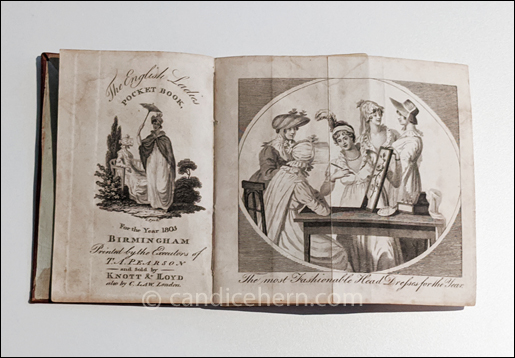
                            </note> ; for the one side is as clean as the other."</p>
            <p>“It was in his pocket-book that we found it."</p>
            <p>“Preserve it carefully, then, Miss , for it may prove to be of use to us. I begin to
               suspect that this matter may turn out to be much deeper and more subtle than I at
               first supposed. I must reconsider my ideas." He leaned back in the cab, and I could
               see by his drawn brow and his vacant eye that he was thinking intently. Miss and I
               chatted in an undertone about our present expedition and its possible outcome, but
               our companion maintained his impenetrable reserve until the end of our journey.</p>
            <p/>
            <p>It was a September evening, and not yet seven o’clock, but the day had been a dreary
               one, and a dense drizzly fog lay low upon <ref target="greatcity_" corresp="greatcity">the great city</ref>
               <note xml:id="greatcity" target="greatcity_" type="editorial" resp="editors.xml#GG">Being the capital of the largest empire on the planet AND the world's most
                  populated in the 19th century meant one thing: pollution. In 1890s London, there
                  were approximately 300,000 horses throughout the streets, leaving behind
                  excruciating amounts of excrement which you would have to navigate around.
                  According to <ref target="https://en.wikipedia.org/wiki/Historical_urban_community_sizes">Wikipedia</ref>, in 1875, London's population was 4.24 million, compared to
                  Beijing's 1.31 million, Paris's 2.25 million, and NYC's 1.9 million. Check out
                  this author interview <ref target="https://www.npr.org/2015/03/12/392332431/dirty-old-london-a-history-of-the-victorians-infamous-filthe">Dirty Old London': A History Of The Victorians' Infamous Filth</ref> on
                  NPR.</note> . Mud-coloured clouds drooped sadly over the muddy streets. Down the
               Strand the lamps were but misty splotches of diffused light which threw a feeble
               circular glimmer upon the slimy pavement. The yellow glare from the shop-windows
               streamed out into the steamy,<pb n="158" facs="pageImages/158.jpg"/> vaporous air,
               and threw a murky, shifting radiance across the crowded thoroughfare. There was, to
               my mind, something eerie and ghost-like in the endless procession of faces which
               flitted across these narrow bars of light,—sad faces and glad, haggard and merry.
               Like all human kind, they flitted from the gloom into the light, and so back into the
               gloom once more. I am not subject to impressions, but the dull, heavy evening, with
               the strange business upon which we were engaged, combined to make me nervous and
               depressed. I could see from Miss ’s manner that she was suffering from the same
               feeling. Holmes alone could rise superior to petty influences. He held his open
               note-book upon his knee, and from time to time he jotted down figures and memoranda
               in the light of his pocket-lantern.</p>
            <p>At the Lyceum Theatre the crowds were already thick at the side-entrances. In front a
               continuous stream of hansoms and four-wheelers were rattling up, discharging their
               cargoes of shirt-fronted men and beshawled, bediamonded women. We had hardly reached
               the third pillar, which was our rendezvous, before a small, dark, brisk man in the
               dress of a coachman accosted us.</p>
            <p>“Are you the parties who come with Miss ?" he asked.</p>
            <p>“I am Miss , and these two gentlemen are my friends," said she.</p>
            <p>He bent a pair of wonderfully penetrating and questioning eyes upon us. “You will
               excuse me, miss," he said with a certain dogged manner, “but I was to ask you to give
               me your word that neither of your companions is a police-officer."</p>
            <p>“I give you my word on that," she answered.</p>
            <p>He gave a shrill whistle, on which a <ref target="streetarab_" corresp="streetarab">street Arab</ref>
               <note xml:id="streetarab" target="streetarab_" type="gloss" resp="editors.xml#TH">Now
                  an offensive term, a "street Arab" is a destitute and unhomed young person, and
                  according to the OED, its usage dates to the mid-nineteenth century. It is a term
                  of British origin. The notion of such children being Arab may refer to the
                  presumption of a nomadic lifestyle, or perhaps to their darker skin, a product of
                  the filth of the London streets.</note> led across a four-wheeler and opened the
               door. The man who had addressed us mounted to the box, while we took our places
               inside. We had hardly done so before the driver whipped up his horse, and we plunged
               away at a furious pace through the foggy streets.</p>
            <p>The situation was a curious one. We were driving to an unknown place, on an unknown
               errand. Yet our invitation was either a complete hoax,—which was an inconceivable
               hypothesis,—or else we had good reason to think that important issues might hang upon
               our journey. Miss ’s demeanor was as resolute and collected as ever. I endeavored to
               cheer and amuse her by reminiscences of my adventures in <placeName type="tgn" key="7016612">Afghanistan</placeName>; but, to tell the truth, I was myself so
               excited at our situation and so curious as to our destination that my stories were
               slightly involved. To this day she declares that I told her one moving anecdote as to
               how a musket looked into my tent at the dead of night, and how I fired a
               double-barrelled tiger cub at it. At first I had some idea as to the direction in
               which we were driving; but soon, what with our pace, the fog, and my own limited
               knowledge of <placeName type="tgn" key="7011781">London</placeName>, I lost my
               bearings, and knew nothing, save that we seemed to be going a very long way. Sherlock
               Holmes was never at fault, however, and he muttered the names as the cab rattled
               through squares and in and out by tortuous by-streets.</p>
            <p>“Rochester Row," said he. “Now Vincent Square. Now we come out on the Vauxhall Bridge
               Road. We are making for the<pb n="159" facs="pageImages/159.jpg"/>
               <ref target="surreyside_" corresp="surreyside">
                                <placeName type="tgn" key="7008175">Surrey</placeName> side</ref>
               <note xml:id="surreyside" target="surreyside_" resp="editors.xml#TH" type="gloss">
                                <graphic url="notes/map-of-london-max.jpg" source="https://ontheworldmap.com/uk/city/london" alt="a map of London boroughs and surrounding areas, via On the World Map" desc="A map of London boroughs"/>Surrey is a county in southern
                  England; in this context, Surrey side refers to the south side of the river
                  Thames, which divides the city of London. This image, from <ref target="https://ontheworldmap.com/uk/city/london/"> On The World Map</ref>,
                  shows London boroughs and surrounding areas. </note>, apparently. Yes, I thought
               so. Now we are on the bridge. You can catch glimpses of the river."</p>
            <p>We did indeed get a fleeting view of a stretch of the <placeName type="tgn" key="7011913">Thames</placeName> with the lamps shining upon the broad, silent
               water; but our cab dashed on, and was soon involved in a labyrinth of streets upon
               the other side.</p>
            <p>“Wordsworth Road," said my companion. “Priory Road. Lark Hall Lane. Stockwell Place.
               Robert Street. Cold Harbor Lane. Our quest does not appear to take us to very
               fashionable regions."</p>
            <p>We had, indeed, reached a questionable and forbidding neighbourhood. Long lines of
               dull brick houses were only relieved by the coarse glare and tawdry brilliancy of
               public houses at the corner. Then came rows of two-storied villas each with a
               fronting of miniature garden, and then again interminable lines of new staring brick
               buildings,—the monster tentacles which the giant city was throwing out into the
               country. At last the cab drew up at the third house in a new terrace. None of the
               other houses were inhabited, and that at which we stopped was as dark as its
               neighbours, save for a single glimmer in the kitchen window. On our knocking,
               however, the door was instantly thrown open by a Hindoo servant clad in a yellow
               turban, white loose-fitting clothes, and a yellow sash. There was something strangely
               incongruous in this Oriental figure framed in the commonplace doorway of a third-rate
               suburban dwelling-house.</p>
            <p>“The <ref target="sahib_" corresp="sahib">Sahib</ref>
               <note xml:id="sahib" target="sahib_" type="gloss" resp="editors.xml#GG">Sahib is a
                  title used by an Indian to address an English or European person. It may also
                  refer to a gentleman or socially acceptable person. (OED)</note> awaits you," said
               he, and even as he spoke there came a high piping voice from some inner room. “Show
               them in to me, <ref target="khitmutgar_" corresp="khitmutgar">khitmutgar</ref>
               <note xml:id="khitmutgar" target="khitmutgar_" type="gloss" resp="editors.xml#GG">A
                  khitmutgar is a male servant who serves a table. (OED)</note> ," it cried. “Show
               them straight in to me."</p>
         </div>
         <div>
            <head>CHAPTER IV.</head>
            <head type="sub">THE STORY OF THE BALD-HEADED MAN.</head>
            <p>We followed the Indian down a sordid and common passage, ill-lit and worse furnished,
               until he came to a door upon the right, which he threw open. A blaze of yellow light
               streamed out upon us, and in the centre of the glare there stood a small man with a
               very high head, a bristle of red hair all round the fringe of it, and a bald, shining
               scalp which shot out from among it like a mountain-peak from fir-trees. He writhed
               his hands together as he stood, and his features were in a perpetual jerk, now
               smiling, now scowling, but never for an instant in repose. Nature had given him a
               pendulous lip, and a too visible line of yellow and irregular teeth, which he strove
               feebly to conceal by constantly passing his hand over the lower part of his face. In
               spite of his obtrusive baldness, he gave the impression of youth. In point of fact he
               had just turned his thirtieth year.</p>
            <p>“Your servant, Miss ," he kept repeating, in a thin, high voice. “Your servant,
               gentlemen. Pray step into my little sanctum. A small place, miss, but furnished to my
               own liking. An oasis of art in the howling desert of South <placeName type="tgn" key="7011781">London</placeName>."</p>
            <p>We were all astonished by the appearance of the apartment into which he invited us.
               In that sorry house it looked as out of place as a diamond of the first water in a
               setting of brass. The richest and<pb n="160" facs="pageImages/160.jpg"/> glossiest of
               curtains and tapestries draped the walls, looped back here and there to expose some
               richly-mounted painting or Oriental vase. The carpet was of amber-and-black, so soft
               and so thick that the foot sank pleasantly into it, as into a bed of moss. Two great
               tiger-skins thrown athwart it increased the suggestion of Eastern luxury, as did a
               huge <ref target="hookah_" corresp="hookah">hookah</ref>
               <note xml:id="hookah" target="hookah_" resp="editors.xml#GG" type="gloss">
                                <graphic url="notes/hookah.jpg" source="https://upload.wikimedia.org/wikipedia/commons/3/3f/Qalyoon.jpg" alt="A photograph showing a Persian woman with a hooka (1900)" desc="Persian woman with a hooka, 1900 (Wikimedia Commons)"/>A hookah is a single or multi-stemmed device used to
                  smoke flavored tobacco, among other things, by vaporizing through a glass basin
                  before being inhaled. To read further, check out <ref target="https://en.wikipedia.org/wiki/Hookah">Wikipedia</ref>. This photo, <ref target="https://upload.wikimedia.org/wikipedia/commons/3/3f/Qalyoon.jpg?20070522150348">taken by Antoin Sevruguin in 1900, from Wikimedia Commons</ref>, shows a
                  Persian woman with hookah (qalyan).</note> which stood upon a mat in the corner. A
               lamp in the fashion of a silver dove was hung from an almost invisible golden wire in
               the centre of the room. As it burned it filled the air with a subtle and aromatic
               odour.</p>
            <p>“Mr. Thaddeus Sholto," said the little man, still jerking and smiling. “That is my
               name. You are Miss , of course. And these gentlemen—"</p>
            <p>“This is Mr. Sherlock Holmes, and this is Dr. Watson."</p>
            <p>“A doctor, eh?" cried he, much excited. “Have you your stethoscope? Might I ask
               you—would you have the kindness? I have grave doubts as to my mitral valve, if you
               would be so very good. The aortic I may rely upon, but I should value your opinion
               upon the mitral."</p>
            <p>I listened to his heart, as requested, but was unable to find anything amiss, save
               indeed that he was in an ecstasy of fear, for he shivered from head to foot. “It
               appears to be normal," I said. “You have no cause for uneasiness."</p>
            <p>“You will excuse my anxiety, Miss ," he remarked, airily. “I am a great sufferer, and
               I have long had suspicions as to that valve. I am delighted to hear that they are
               unwarranted. Had your father, Miss , refrained from throwing a strain upon his heart,
               he might have been alive now."</p>
            <p>I could have struck the man across the face, so hot was I at this callous and
               off-hand reference to so delicate a matter. Miss sat down, and her face grew white to
               the lips. “I knew in my heart that he was dead," said she.</p>
            <p>“I can give you every information," said he, “and, what is more, I can do you
               justice; and I will, too, whatever Brother Bartholomew may say. I am so glad to have
               your friends here, not only as an escort to you, but also as witnesses to what I am
               about to do and say. The three of us can show a bold front to Brother Bartholomew.
               But let us have no outsiders,—no police or officials. We can settle everything
               satisfactorily among ourselves, without any interference. Nothing would annoy Brother
               Bartholomew more than any publicity." He sat down upon a low settee and blinked at us
               inquiringly with his weak, watery blue eyes.</p>
            <p>“For my part," said Holmes, “whatever you may choose to say will go no further."</p>
            <p>I nodded to show my agreement.</p>
            <p>“That is well! That is well!" said he. “May I offer you a glass of Chianti, Miss ? Or
               of Tokay? I keep no other wines. Shall I open a flask? No? Well, then, I trust that
               you have no objection to tobacco-smoke, to the mild balsamic odour of the Eastern
               tobacco. I am a little nervous, and I find my hookah an invaluable sedative." He
               applied a taper to the great bowl, and the smoke bubbled <pb n="161 [break after bub-]" facs="pageImages/161.jpg"/>merrily through the
               rose-water. We sat all three in a semi-circle, with our heads advanced, and our chins
               upon our hands, while the strange, jerky little fellow, with his high, shining head,
               puffed uneasily in the centre.</p>
            <p>“When I first determined to make this communication to you," said he, “I might have
               given you my address, but I feared that you might disregard my request and bring
               unpleasant people with you. I took the liberty, therefore, of making an appointment
               in such a way that my man Williams might be able to see you first. I have complete
               confidence in his discretion, and he had orders, if he were dissatisfied, to proceed
               no further in the matter. You will excuse these precautions, but I am a man of
               somewhat retiring, and I might even say refined, tastes, and there is nothing more
               unæsthetic than a policeman. I have a natural shrinking from all forms of rough
               materialism. I seldom come in contact with the rough crowd. I live, as you see, with
               some little atmosphere of elegance around me. I may call myself a patron of the arts.
               It is my weakness. <ref target="corot_" corresp="corot">The landscape is a genuine
                  Corot</ref>
               <note xml:id="corot" target="corot_" resp="editors.xml#GG" type="gloss">
                                <graphic url="notes/corot.jpeg" alt="Corot's Evening on the Lake (c1872), via the                   National Gallery, London." desc="Corot, 'Evening on the Lake,' c1872 (National Gallery, London)" source="https://www.nationalgallery.org.uk/paintings/jean-baptiste-camille-corot-evening-on-the-lake"/>Jean-Baptiste-Camille Corot, 1796-1875, was a French
                  landscape painter who influenced the Impressionist movement You can learn more
                  about Corot from <ref target="https://www.nationalgallery.org.uk/artists/jean-baptiste-camille-corot"> the UK National Gallery</ref>. <ref target="https://www.nationalgallery.org.uk/paintings/jean-baptiste-camille-corot-evening-on-the-lake">The image included here is Corot's Evening on the Lake (c1872), via the
                     National Gallery, London.</ref>
                            </note> , and, though a connoisseur might
               perhaps throw a doubt upon that <ref target="salvator-rosa_" corresp="salvator-rosa">Salvator Rosa</ref>
               <note xml:id="salvator-rosa" target="salvator-rosa_" resp="editors.xml#GG" type="gloss">
                                <graphic url="notes/rosa-witches.jpeg" source="https://www.nationalgallery.org.uk/paintings/salvator-rosa-witches-at-their-incantations" alt="painting by Rosa, 'Witches at Their Incantations,' c1646" desc="Rosa, 'Witches at Their Incantations,' c1646 (National Gallery, London)"/>Salvator Rosa, 1615-1673, was
                  an Italian landscaper painter whose works also depicted scenes of witchcraft. You
                  can learn more about Rosa from <ref target="https://www.nationalgallery.org.uk/artists/salvator-rosa"> the UK
                     National Gallery</ref>. <ref target="https://www.nationalgallery.org.uk/paintings/salvator-rosa-witches-at-their-incantations">The image included here is Rosa's Witches at their Incantations (c1646), via
                     the National Gallery, London.</ref>
                            </note>, there cannot be the least question
               about the Bouguereau. I am partial to the modern French school."</p>
            <p>“You will excuse me, Mr. Sholto," said Miss , “but I am here at your request to learn
               something which you desire to tell me. It is very late, and I should desire the
               interview to be as short as possible."</p>
            <p>“At the best it must take some time," he answered; “for we shall certainly have to go
               to <placeName type="tgn" key="7029209">Norwood</placeName> and see Brother
               Bartholomew. We shall all go and try if we can get the better of Brother Bartholomew.
               He is very angry with me for taking the course which has seemed right to me. I had
               quite high words with him last night. You cannot imagine what a terrible fellow he is
               when he is angry."</p>
            <p>“If we are to go to <placeName type="tgn" key="7029209">Norwood</placeName> it would
               perhaps be as well to start at once," I ventured to remark.</p>
            <p>He laughed until his ears were quite red. “That would hardly do," he cried. “I don’t
               know what he would say if I brought you in that sudden way. No, I must prepare you by
               showing you how we all stand to each other. In the first place, I must tell you that
               there are several points in the story of which I am myself ignorant. I can only lay
               the facts before you as far as I know them myself.</p>
            <p>“My father was, as you may have guessed, Major John Sholto, once of the Indian army.
               He retired some eleven years ago, and came to live at Pondicherry Lodge in Upper
                  <placeName type="tgn" key="7029209">Norwood</placeName>. He had prospered in
              <placeName type="tgn" key="7000198"> India</placeName>, and brought back with him a considerable sum of money, a large collection of
               valuable curiosities, and a staff of native servants. With these advantages he bought
               himself a house, and lived in great luxury. My twin-brother Bartholomew and I were
               the only children.</p>
            <p>“I very well remember the sensation which was caused by the disappearance of Captain
               . We read the details in the papers, and, knowing that he had been a friend of our
               father’s, we discussed the case freely in his presence. He used to join in our
               speculations as to what could have happened. Never for an instant did we suspect
                  that<pb n="162" facs="pageImages/162.jpg"/> he had the whole secret hidden in his
               own breast,—that of all men he alone knew the fate of Arthur .</p>
            <p>“We did know, however, that some mystery—some positive danger—overhung our father. He
               was very fearful of going out alone, and he always employed two prize-fighters to act
               as porters at Pondicherry Lodge. Williams, who drove you to-night, was one of them.
               He was once light-weight champion of <placeName type="tgn" key="7002445"> England</placeName>. Our father would never tell us what it
               was he feared, but he had a most marked aversion to men with wooden legs. On one
               occasion he actually fired his revolver at a wooden-legged man, who proved to be a
               harmless tradesman canvassing for orders. We had to pay a large sum to hush the
               matter up. My brother and I used to think this a mere whim of my father’s, but events
               have since led us to change our opinion.</p>
            <p>“Early in 1882 my father received a letter from <placeName type="tgn" key="7000198"> India</placeName> which was a great shock to him.
               He nearly fainted at the breakfast-table when he opened it, and from that day he
               sickened to his death. What was in the letter we could never discover, but I could
               see as he held it that it was short and written in a scrawling hand. He had suffered
               for years from an enlarged spleen, but he now became rapidly worse, and towards the
               end of April we were informed that he was beyond all hope, and that he wished to make
               a last communication to us.</p>
            <p>“When we entered his room he was propped up with pillows and breathing heavily. He
               besought us to lock the door and to come upon either side of the bed. Then, grasping
               our hands, he made a remarkable statement to us, in a voice which was broken as much
               by emotion as by pain. I shall try and give it to you in his own very words.</p>
            <p>“‘I have only one thing,’ he said, ‘which weighs upon my mind at this supreme moment.
               It is my treatment of poor ’s orphan. The cursed greed which has been my besetting
               sin through life has withheld from her the treasure, half at least of which should
               have been hers. And yet I have made no use of it myself,—so blind and foolish a thing
               is avarice. The mere feeling of possession has been so dear to me that I could not
               bear to share it with another. See that chaplet dipped with pearls beside the
               quinine-bottle. Even that I could not bear to part with, although I had got it out
               with the design of sending it to her. You, my sons, will give her a fair share of the
               Agra treasure. But send her nothing—not even the chaplet—until I am gone. After all,
               men have been as bad as this and have recovered.</p>
            <p>“‘I will tell you how died,’ he continued. ‘He had suffered for years from a weak
               heart, but he concealed it from every one. I alone knew it. When in <placeName type="tgn" key="7000198"> India</placeName>, he and I,
               through a remarkable chain of circumstances, came into possession of a considerable
               treasure. I brought it over to <placeName type="tgn" key="7002445"> England</placeName>, and on the night of ’s arrival he came
               straight over here to claim his share. He walked over from the station, and was
               admitted by my faithful old Lal Chowdar, who is now dead. and I had a difference of
               opinion as to the division of the treasure, and we came to heated words. had sprung
               out of his chair in a paroxysm of anger, when he suddenly pressed his hand to his
               side, his face turned a dusky hue, and he fell backwards, cutting<pb n="163" facs="pageImages/163.jpg"/> his head against the corner of the treasure-chest.
               When I stooped over him I found, to my horror, that he was dead.</p>
            <p>“‘For a long time I sat half distracted, wondering what I should do. My first impulse
               was, of course, to call for assistance; but I could not but recognise that there was
               every chance that I would be accused of his murder. His death at the moment of a
               quarrel, and the gash in his head, would be black against me. Again, an official
               inquiry could not be made without bringing out some facts about the treasure, which I
               was particularly anxious to keep secret. He had told me that no soul upon earth knew
               where he had gone. There seemed to be no necessity why any soul ever should know.</p>
            <p>“‘I was still pondering over the matter, when, looking up, I saw my servant, Lal
               Chowdar, in the doorway. He stole in and bolted the door behind him. “Do not fear,
               Sahib," he said. “No one need know that you have killed him. Let us hide him away,
               and who is the wiser?" “I did not kill him," said I. Lal Chowdar shook his head and
               smiled. “I heard it all, Sahib," said he. “I heard you quarrel, and I heard the blow.
               But my lips are sealed. All are asleep in the house. Let us put him away together."
               That was enough to decide me. If my own servant could not believe my innocence, how
               could I hope to make it good before twelve foolish tradesmen in a jury-box? Lal
               Chowdar and I disposed of the body that night, and within a few days the <placeName type="tgn" key="7011781">London</placeName> papers were full of the mysterious
               disappearance of Captain . You will see from what I say that I can hardly be blamed
               in the matter. My fault lies in the fact that we concealed not only the body, but
               also the treasure, and that I have clung to ’s share as well as to my own. I wish
               you, therefore, to make restitution. Put your ears down to my mouth. The treasure is
               hidden in—’</p>
            <p>“At this instant a horrible change came over his expression; his eyes stared wildly,
               his jaw dropped, and he yelled, in a voice which I can never forget, ‘Keep him out!
               For Christ’s sake keep him out!’ We both stared round at the window behind us upon
               which his gaze was fixed. A face was looking in at us out of the darkness. We could
               see the whitening of the nose where it was pressed against the glass. It was a
               bearded, hairy face, with wild cruel eyes and an expression of concentrated
               malevolence. My brother and<pb n="164" facs="pageImages/164.jpg"/> I rushed towards
               the window, but the man was gone. When we returned to my father his head had dropped
               and his pulse had ceased to beat.</p>
            <p>“We searched the garden that night, but found no sign of the intruder, save that just
               under the window a single footmark was visible in the flower-bed. But for that one
               trace, we might have thought that our imaginations had conjured up that wild, fierce
               face. We soon, however, had another and a more striking proof that there were secret
               agencies at work all round us. The window of my father’s room was found open in the
               morning, his cupboards and boxes had been rifled, and upon his chest was fixed a torn
               piece of paper, with the words ‘The sign of the four’ scrawled across it. What the
               phrase meant, or who our secret visitor may have been, we never knew. As far as we
               can judge, none of my father’s property had been actually stolen, though everything
               had been turned out. My brother and I naturally associated this peculiar incident
               with the fear which haunted my father during his life; but it is still a complete
               mystery to us."</p>
            <p>The little man stopped to relight his hookah and puffed thoughtfully for a few
               moments. We had all sat absorbed, listening to his extraordinary narrative. At the
               short account of her father’s death Miss had turned deadly white, and for a moment I
               feared that she was about to faint. She rallied however, on drinking a glass of water
               which I quietly poured out for her from a <ref target="carafe_" corresp="carafe">a
                  Venetian carafe</ref>
               <note xml:id="carafe" target="carafe_" resp="editors.xml#TH" type="gloss">
                                <graphic url="notes/carafe.jpeg" desc="17th/18th-century Venetian glass carafe (VAM)" alt="a photograph from the Victoria and Albert Museum showing a 17th/18th-century Venetian glass carafe (VAM)" source="https://framemark.vam.ac.uk/collections/2013GN7862/full/735,/0/default.jpg"/>Here is an example of a 17th-18th century glass carafe
                  from Venice, via the <ref target="https://framemark.vam.ac.uk/collections/2013GN7862/full/735,/0/default.jpg">Victoria and Albert Museum</ref>. It gives some idea of Sholto's decorative
                  sensibility. </note> upon the side-table. Sherlock Holmes leaned back in his chair
               with an abstracted expression and the lids drawn low over his glittering eyes. As I
               glanced at him I could not but think how on that very day he had complained bitterly
               of the commonplaceness of life. Here at least was a problem which would tax his
               sagacity to the utmost. Mr. Thaddeus Sholto looked from one to the other of us with
               an obvious pride at the effect which his story had produced, and then continued
               between the puffs of his overgrown pipe.</p>
            <p>“My brother and I," said he, “were, as you may imagine, much excited as to the
               treasure which my father had spoken of. For weeks and for months we dug and delved in
               every part of the garden, without discovering its whereabouts. It was maddening to
               think that the hiding-place was on his very lips at the moment that he died. We could
               judge the splendour of the missing riches by the chaplet which he had taken out. Over
               this chaplet my brother Bartholomew and I had some little discussion. The pearls were
               evidently of great value, and he was averse to part with them, for, between friends,
               my brother was himself a little inclined to my father’s fault. He thought, too, that
               if we parted with the chaplet it might give rise to gossip and finally bring us into
               trouble. It was all that I could do to persuade him to let me find out Miss ’s
               address and send her a detached pearl at fixed intervals, so that at least she might
               never feel destitute."</p>
            <p>“It was a kindly thought," said our companion, earnestly. “It was extremely good of
               you."</p>
            <p>The little man waved his hand deprecatingly. “We were your trustees," he said. “That
               was the view which I took of it, though Brother Bartholomew could not altogether see
               it in that light. We had plenty of money ourselves. I desired no more. Besides, it
               would have been such bad taste to have treated a young lady in so scurvy a fashion.
               ‘Le mauvais goût mène au crime.’ The French have a very neat way of putting these
               things. Our difference of opinion on this subject went so far that I thought it best
               to set up rooms for myself: so I left Pondicherry Lodge, taking the old khitmutgar
               and Williams with me. Yesterday, however, I learn that an event of extreme importance
               has occurred. The treasure has been discovered. I instantly communicated with Miss ,
               and it only remains for us to drive out to <placeName type="tgn" key="7029209">Norwood</placeName> and demand our share. I explained my views last night to
               Brother Bartholomew: so we shall be expected, if not welcome, visitors."</p>
            <p>Mr. Thaddeus Sholto ceased, and sat twitching on his luxurious settee. We all
               remained silent, with our thoughts upon the new<pb n="165" facs="pageImages/165.jpg"/> development which the mysterious business had taken. Holmes was the first to
               spring to his feet.</p>
            <p>“You have done well, sir, from first to last," said he. “It is possible that we may
               be able to make you some small return by throwing some light upon that which is still
               dark to you. But, as Miss remarked just now, it is late, and we had best put the
               matter through without delay."</p>
            <p>Our new acquaintance very deliberately coiled up the tube of his hookah, and produced
               from behind a curtain a very long befrogged topcoat with <ref target="astrakhan_" corresp="astrakhan">Astrakhan collar and cuffs</ref>
               <note xml:id="astrakhan" target="astrakhan_" resp="editors.xml#GG" type="gloss">
                                <graphic url="notes/astrakhan.jpeg" source="https://upload.wikimedia.org/wikipedia/commons/thumb/7/70/Fur_coat_%28AM_2016.47.1-1%29.jpg/800px-Fur_coat_%28AM_2016.47.1-1%29.jpg" desc="Astrakhan fur coat (Wikimedia Commons)" alt="photograph of an astrakhan fur coat (Wikimedia Commons)"/>Astrakhan is wool from very young lambs,
                  resembling fur. It is mainly used as trimming on garments (OED). This image, <ref target="https://upload.wikimedia.org/wikipedia/commons/thumb/7/70/Fur_coat_%28AM_2016.47.1-1%29.jpg/800px-Fur_coat_%28AM_2016.47.1-1%29.jpg">from Raimon Furts Ltd on Wikimedia Commons</ref>, shows a fur coat from this
                  type of wool. </note>. This he buttoned tightly up, in spite of the extreme
               closeness of the night, and finished his attire by putting on a rabbit-skin cap with
               hanging lappets which covered the ears, so that no part of him was visible save his
               mobile and peaky face. “My health is somewhat fragile," he remarked, as he led the
               way down the passage. “I am compelled to be a <ref target="valetudinarian_" corresp="valetudinarian">valetudinarian</ref>
               <note xml:id="valetudinarian" target="valetudinarian_" type="gloss" resp="editors.xml#GG">A valetudinarian is someone who is in poor health, or is
                  always worried about their health. (OED)</note> ."</p>
            <p>Our cab was awaiting us outside, and our programme was evidently prearranged, for the
               driver started off at once at a rapid pace. Thaddeus Sholto talked incessantly, in a
               voice which rose high above the rattle of the wheels.</p>
            <p>“Bartholomew is a clever fellow," said he. “How do you think he found out where the
               treasure was? He had come to the conclusion that it was somewhere indoors: so he
               worked out all the cubic space of the house, and made measurements everywhere, so
               that not one inch should be unaccounted for. Among other things, he found that the
               height of the building was seventy-four feet, but on adding together the heights of
               all the separate rooms, and making every allowance for the space between, which he
               ascertained by borings, he could not bring the total to more than seventy feet. There
               were four feet unaccounted for. These could only be at the top of the building. He
               knocked a hole, therefore, in the lath-and-plaster ceiling of the highest room, and
               there, sure enough, he came upon another little garret above it, which had been
               sealed up and was known to no one. In the centre stood the treasure-chest, resting
               upon two rafters. He lowered it through the hole, and there it lies. He computes the
               value of the jewels at not less than half a million sterling."</p>
            <p>At the mention of this gigantic sum we all stared at one another open-eyed. Miss ,
               could we secure her rights, would change from a needy governess to the richest
               heiress in<placeName type="tgn" key="7002445"> England</placeName>. Surely it was the place of a loyal friend to rejoice at such
               news; yet I am ashamed to say that selfishness took me by the soul, and that my heart
               turned as heavy as lead within me. I stammered out some few halting words of
               congratulation, and then sat downcast, with my head drooped, deaf to the babble of
               our new acquaintance. He was clearly a confirmed hypochondriac, and I was dreamily
               conscious that he was pouring forth interminable trains of symptoms, and imploring
               information as to the composition and action of innumerable <ref target="quack_" corresp="quack">quack nostrums</ref>
               <note xml:id="quack" target="quack_" type="gloss" resp="editors.xml#TH">A "quack" is
                  someone who pretends to medical knowledge. Here, the Watson is describing Sholto's
                  many medical remedies--nostrums--as fake (OED).</note> , some of which he bore
               about in a leather case in his pocket. I trust that he may not remember any of the
               answers which I gave him that night. Holmes declares that he overheard me caution him
               against the great danger of taking more than two drops of castor oil, while I
                  recommended<pb n="166 [Break after recom-]" facs="pageImages/166.jpg"/> strychnine
               in large doses as a sedative. However that may be, I was certainly relieved when our
               cab pulled up with a jerk and the coachman sprang down to open the door.</p>
            <p>“This, Miss , is Pondicherry Lodge," said Mr. Thaddeus Sholto, as he handed her
               out.</p>
         </div>
         <div>
            <head>CHAPTER V.</head>
            <head type="sub">THE TRAGEDY OF PONDICHERRY LODGE.</head>
            <p>It was nearly eleven o’clock when we reached this final stage of our night’s
               adventures. We had left the damp fog of the great city behind us, and the night was
               fairly fine. A warm wind blew from the westward, and heavy clouds moved slowly across
               the sky, with half a moon peeping occasionally through the rifts. It was clear enough
               to see for some distance, but Thaddeus Sholto took down one of the side-lamps from
               the carriage to give us a better light upon our way.</p>
            <p>Pondicherry Lodge stood in its own grounds, and was girt round with a very high stone
               wall topped with broken glass. A single narrow iron-clamped door formed the only
               means of entrance. On this our guide knocked with a peculiar postman-like
               rat-tat.</p>
            <p>“Who is there?" cried a gruff voice from within.</p>
            <p>“It is I, McMurdo. You surely know my knock by this time."</p>
            <p>There was a grumbling sound and a clanking and jarring of keys. The door swung
               heavily back, and a short, deep-chested man stood in the opening, with the yellow
               light of the lantern shining upon his protruded face and twinkling distrustful
               eyes.</p>
            <p>“That you, Mr. Thaddeus? But who are the others? I had no orders about them from the
               master."</p>
            <p>“No, McMurdo? You surprise me! I told my brother last night that I should bring some
               friends."</p>
            <p>“He ain’t been out o’ his room to-day, Mr. Thaddeus, and I have no orders. You know
               very well that I must stick to regulations. I can let you in, but your friends must
               just stop where they are."</p>
            <p>This was an unexpected obstacle. Thaddeus Sholto looked about him in a perplexed and
               helpless manner. “This is too bad of you, McMurdo!" he said. “If I guarantee them,
               that is enough for you. There is the young lady, too. She cannot wait on the public
               road at this hour."</p>
            <p>“Very sorry, Mr. Thaddeus," said the porter, inexorably. “Folk may be friends o’
               yours, and yet no friends o’ the master’s. He pays me well to do my duty, and my duty
               I’ll do. I don’t know none o’ your friends."</p>
            <p>“Oh, yes you do, McMurdo," cried Sherlock Holmes, genially. “I don’t think you can
               have forgotten me. Don’t you remember the amateur who fought three rounds with you at
                  <ref target="alisons-rooms_" corresp="alisons-rooms">tAlison’s rooms</ref>
               <note xml:id="alisons-rooms" target="alisons-rooms_" type="editorial" resp="editors.xml#TH">Boxing was a popular and illegal sport throughout the
                  18th-19th centuries. Here is a collection of primary source accounts of boxing
                  during the Victorian era, which often took place in tavern or pub rooms. Here, the
                  "benefit" refers to an evening's entertainment a portion of the proceeds from
                  which would go to benefit the boxer or performer.<ref target="https://www.victorianlondon.org/entertainment/boxing.htm">Victorian
                     London: Boxing</ref>.</note> on the night of your benefit four years back?"</p>
            <p>“Not Mr. Sherlock Holmes!" roared the prize-fighter. “God’s truth! how could I have
               mistook you? If instead o’ standin’ there<pb n="167" facs="pageImages/167.jpg"/> so
               quiet you had just stepped up and given me that cross-hit of yours under the jaw, I’d
               ha’ known you without a question. Ah, you’re one that has wasted your gifts, you
               have! You might have aimed high, if you had joined the fancy."</p>
            <p>“You see, Watson, if all else fails me I have still one of the scientific professions
               open to me," said Holmes, laughing. “Our friend won’t keep us out in the cold now, I
               am sure."</p>
            <p>“In you come, sir, in you come,—you and your friends," he answered. “Very sorry, Mr.
               Thaddeus, but orders are very strict. Had to be certain of your friends before I let
               them in."</p>
            <p>Inside, a gravel path wound through desolate grounds to a huge clump of a house,
               square and prosaic, all plunged in shadow save where a moonbeam struck one corner and
               glimmered in a garret window. The vast size of the building, with its gloom and its
               deathly silence, struck a chill to the heart. Even Thaddeus Sholto seemed ill at
               ease, and the lantern quivered and rattled in his hand.</p>
            <p>“I cannot understand it," he said. “There must be some mistake. I distinctly told
               Bartholomew that we should be here, and yet there is no light in his window. I do not
               know what to make of it."</p>
            <p>“Does he always guard the premises in this way?" asked Holmes.</p>
            <p>“Yes; he has followed my father’s custom. He was the favourite son, you know, and I
               sometimes think that my father may have told him more than he ever told me. That is
               Bartholomew’s window up there where the moonshine strikes. It is quite bright, but
               there is no light from within, I think."</p>
            <p>“None," said Holmes. “But I see the glint of a light in that little window beside the
               door."</p>
            <p>“Ah, that is the housekeeper’s room. That is where old Mrs. Bernstone sits. She can
               tell us all about it. But perhaps you would not mind waiting here for a minute or
               two, for if we all go in together and she has no word of our coming she may be
               alarmed. But hush! what is that?"</p>
            <p>He held up the lantern, and his hand shook until the circles of light flickered and
               wavered all round us. Miss seized my wrist, and we all stood with thumping hearts,
               straining our ears. From the great black house there sounded through the silent night
               the saddest and most pitiful of sounds,—the shrill, broken whimpering of a frightened
               woman.</p>
            <p>“It is Mrs. Bernstone," said Sholto. “She is the only woman in the house. Wait here.
               I shall be back in a moment." He hurried for the door, and knocked in his peculiar
               way. We could see a tall old woman admit him, and sway with pleasure at the very
               sight of him.</p>
            <p>“Oh, Mr. Thaddeus, sir, I am so glad you have come! I am so glad you have come, Mr.
               Thaddeus, sir!" We heard her reiterated rejoicings until the door was closed and her
               voice died away into a muffled monotone.</p>
            <p>Our guide had left us the lantern. Holmes swung it slowly round, and peered keenly at
               the house, and at the great rubbish-heaps which cumbered the grounds. Miss and I
               stood together, and her hand was in mine. A wondrous subtle thing is love, for here
               were we<pb n="168" facs="pageImages/168.jpg"/> two who had never seen each other
               before that day, between whom no word or even look of affection had ever passed, and
               yet now in an hour of trouble our hands instinctively sought for each other. I have
               marvelled at it since, but at the time it seemed the most natural thing that I should
               go out to her so, and, as she has often told me, there was in her also the instinct
               to turn to me for comfort and protection. So we stood hand in hand, like two
               children, and there was peace in our hearts for all the dark things that surrounded
               us.</p>
            <p>“What a strange place!" she said, looking round.</p>
            <p>“It looks as though all the moles in <placeName type="tgn" key="7002445">England</placeName> had been let loose in it. I have seen
               something of the sort on the side of a hill near Ballarat, where the prospectors had
               been at work."</p>
            <p>“And from the same cause," said Holmes. “These are the traces of the
               treasure-seekers. You must remember that they were six years looking for it. No
               wonder that the grounds look like a gravel-pit."</p>
            <p>At that moment the door of the house burst open, and Thaddeus Sholto came running
               out, with his hands thrown forward and terror in his eyes.</p>
            <p>“There is something amiss with Bartholomew!" he cried. “I am frightened! My nerves
               cannot stand it." He was, indeed, half blubbering with fear, and his twitching feeble
               face peeping out from the great Astrakhan collar had the helpless appealing
               expression of a terrified child.</p>
            <p>“Come into the house," said Holmes, in his crisp, firm way.</p>
            <p>“Yes, do!" pleaded Thaddeus Sholto. “I really do not feel equal to giving
               directions."</p>
            <p>We all followed him into the housekeeper’s room, which stood upon the left-hand side
               of the passage. The old woman was pacing up and down with a scared look and restless
               picking fingers, but the sight of Miss appeared to have a soothing effect upon
               her.</p>
            <p>“God bless your sweet calm face!" she cried, with an hysterical sob. “It does me good
               to see you. Oh, but I have been sorely tried this day!"</p>
            <p>Our companion patted her thin, work-worn hand, and murmured some few words of kindly
               womanly comfort which brought the colour back into the other’s bloodless cheeks.</p>
            <p>“Master has locked himself in and will not answer me," she explained. “All day I have
               waited to hear from him, for he often likes to be alone; but an hour ago I feared
               that something was amiss, so I went up and peeped through the key-hole. You must go
               up, Mr. Thaddeus,—you must go up and look for yourself. I have seen Mr. Bartholomew
               Sholto in joy and in sorrow for ten long years, but I never saw him with such a face
               on him as that."</p>
            <p>Sherlock Holmes took the lamp and led the way, for Thaddeus Sholto’s teeth were
               chattering in his head. So shaken was he that I had to pass my hand under his arm as
               we went up the stairs, for his knees were trembling under him. Twice as we ascended
               Holmes whipped his lens out of his pocket and carefully examined marks which appeared
               to me to be mere shapeless smudges of dust upon the cocoa-nut matting which served as
               a stair-carpet. He walked slowly from step to<pb n="169" facs="pageImages/169.jpg"/>
               step, holding the lamp, and shooting keen glances to right and left. Miss had
               remained behind with the frightened housekeeper.</p>
            <p>The third flight of stairs ended in a straight passage of some length, with a great
               picture in Indian tapestry upon the right of it and three doors upon the left. Holmes
               advanced along it in the same slow and methodical way, while we kept close at his
               heels, with our long black shadows streaming backwards down the corridor. The third
               door was that which we were seeking. Holmes knocked without receiving any answer, and
               then tried to turn the handle and force it open. It was locked on the inside,
               however, and by a broad and powerful bolt, as we could see when we set our lamp up
               against it. The key being turned, however, the hole was not entirely closed. Sherlock
               Holmes bent down to it, and instantly rose again with a sharp intaking of the
               breath.</p>
            <p>“There is something devilish in this, Watson," said he, more moved than I had ever
               before seen him. “What do you make of it?"</p>
            <p>I stooped to the hole, and recoiled in horror. Moonlight was streaming into the room,
               and it was bright with a vague and shifty radiance. Looking straight at me, and
               suspended, as it were, in the air, for all beneath was in shadow, there hung a
               face,—the very face of our companion Thaddeus. There was the same high, shining head,
               the same circular bristle of red hair, the same bloodless countenance. The features
               were set, however, in a horrible smile, a fixed and unnatural grin, which in that
               still and moonlit room was more jarring to the nerves than any scowl or contortion.
               So like was the face to that of our little friend that I looked round at him to make
               sure that he was indeed with us. Then I recalled to mind that he had mentioned to us
               that his brother and he were twins.</p>
            <p>“This is terrible!" I said to Holmes. “What is to be done?"</p>
            <p>“The door must come down," he answered, and, springing against it, he put all his
               weight upon the lock. It creaked and groaned, but did not yield. Together we flung
               ourselves upon it once more, and this time it gave way with a sudden snap, and we
               found ourselves within Bartholomew Sholto’s chamber.</p>
            <p>It appeared to have been fitted up as a chemical laboratory. A double line of
               glass-stoppered bottles was drawn up upon the wall opposite the door, and the table
               was littered over with Bunsen burners, test-tubes, and <ref target="retort_" corresp="retort">retorts</ref>
               <note xml:id="retort" target="retort_" type="gloss" resp="editors.xml#GG">A retort is
                  a glass container with a bulb used to distill liquids. (OED)</note> . In the
               corners stood <ref target="carboy_" corresp="carboy">carboys</ref>
               <note xml:id="carboy" target="carboy_" type="gloss" resp="editors.xml#GG">A carboy is
                  a large glass bottle with a narrow neck to hold corrosive or pharmaceutical
                  chemicals. (OED)</note> of acid in wicker baskets. One of these appeared to leak
               or to have been broken, for a stream of dark-coloured liquid had trickled out from
               it, and the air was heavy with a peculiarly pungent, tar-like odour. A set of steps
               stood at one side of the room, in the midst of a litter of <ref target="lath_" corresp="lath">lath and plaster</ref>
               <note xml:id="lath" target="lath_" type="gloss" resp="editors.xml#GG">Lath and
                  plaster refers to materials used to build walls or partitions, usually from thin
                  strips of wood. (OED)</note>, and above them there was an opening in the ceiling
               large enough for a man to pass through. At the foot of the steps a long coil of rope
               was thrown carelessly together.</p>
            <p>By the table, in a wooden arm-chair, the master of the house was seated all in a
               heap, with his head sunk upon his left shoulder, and that ghastly, inscrutable smile
               upon his face. He was stiff and cold, and had clearly been dead many hours. It seemed
               to me that not only his features but all his limbs were twisted and turned in the
               most fantastic fashion. By his hand upon the table there lay a peculiar
                  instrument,—<pb n="170" facs="pageImages/170.jpg"/>a brown, close-grained stick,
               with a stone head like a hammer, rudely lashed on with coarse twine. Beside it was a
               torn sheet of note-paper with some words scrawled upon it. Holmes glanced at it, and
               then handed it to me.</p>
            <p>“You see," he said, with a significant raising of the eyebrows.</p>
            <p>In the light of the lantern I read, with a thrill of horror, “The sign of the
               four."</p>
            <p>“In God’s name, what does it all mean?" I asked.</p>
            <p>“It means murder," said he, stooping over the dead man. “Ah, I expected it. Look
               here!" He pointed to what looked like a long, dark thorn stuck in the skin just above
               the ear.</p>
            <p>“It looks like a thorn," said I.</p>
            <p>“It is a thorn. You may pick it out. But be careful, for it is poisoned."</p>
            <p>I took it up between my finger and thumb. It came away from the skin so readily that
               hardly any mark was left behind. One tiny speck of blood showed where the puncture
               had been.</p>
            <p>“This is all an insoluble mystery to me," said I. “It grows darker instead of
               clearer."</p>
            <p>“On the contrary," he answered, “it clears every instant. I only require a few
               missing links to have an entirely connected case."</p>
            <p>We had almost forgotten our companion’s presence since we entered the chamber. He was
               still standing in the doorway, the very picture of terror, wringing his hands and
               moaning to himself. Suddenly, however, he broke out into a sharp, querulous cry.</p>
            <p>“The treasure is gone!" he said. “They have robbed him of the treasure! There is the
               hole through which we lowered it. I helped him to do it! I was the last person who
               saw him! I left him here last night, and I heard him lock the door as I came
               downstairs."</p>
            <p>“What time was that?"</p>
            <p>“It was ten o’clock. And now he is dead, and <ref target="vicpolice_" corresp="vicpolice">the police</ref>
               <note xml:id="vicpolice" target="vicpolice_" type="editorial" resp="editors.xml#GG">During the Victorian Era, at first the public did not trust police forces,
                  because they felt that it was a way the government suppressed free speech. To read
                  more about the police during this time, check out <ref target="https://thejacktherippertour.com/blog/the-police-in-victorian-england-what-were-they-like/">The Jack the Ripper Tour</ref>.</note> will be called in, and I shall be
               suspected of having had a hand in it. Oh, yes, I am sure I shall. But you don’t think
               so, gentlemen? Surely you don’t think that it was I? Is it likely that I would have
               brought you here if it were I? Oh, dear! oh, dear! I know that I shall go mad!" He
               jerked his arms and stamped his feet in a kind of convulsive frenzy.</p>
            <p>“You have no reason for fear, Mr. Sholto," said Holmes, kindly, putting his hand upon
               his shoulder. “Take my advice, and drive down to the station to report this matter to
               the police. Offer to assist them in every way. We shall wait here until your
               return."</p>
            <p>The little man obeyed in a half-stupefied fashion, and we heard him stumbling down
               the stairs in the dark.</p>
         </div>
         <div>
            <head>CHAPTER VI.</head>
            <head type="sub">SHERLOCK HOLMES GIVES A DEMONSTRATION.</head>
            <p>“Now, Watson," said Holmes, rubbing his hands, “we have half an hour to ourselves.
               Let us make good use of it. My case is, as I have told you, almost complete; but we
               must not err on the side of<pb n="171" facs="pageImages/171.jpg"/> over-confidence.
               Simple as the case seems now, there may be something deeper underlying it."</p>
            <p>“Simple!" I ejaculated.</p>
            <p>“Surely," said he, with something of the air of a clinical professor expounding to
               his class. “Just sit in the corner there, that your footprints may not complicate
               matters. Now to work! In the first place, how did these folk come, and how did they
               go? The door has not been opened since last night. How of the window?" He carried the
               lamp across to it, muttering his observations aloud the while, but addressing them to
               himself rather than to me. “Window is <ref target="snib_" corresp="snib">snibbed</ref>
               <note xml:id="snib" target="snib_" type="gloss" resp="editors.xml#GG">A snib is a
                  fastening on a window, door, or lock (OED). Here, the window is been locked on the
                  inside.</note> on the inner side. Framework is solid. No hinges at the side. Let
               us open it. No water-pipe near. Roof quite out of reach. Yet a man has mounted by the
               window. It rained a little last night. Here is the print of a foot in mould upon the
               sill. And here is a circular muddy mark, and here again upon the floor, and here
               again by the table. See here, Watson! This is really a very pretty
               demonstration."</p>
            <p>I looked at the round, well-defined muddy discs. “This is not a <ref target="footmark_" corresp="footmark">footmark</ref>
               <note xml:id="footmark" target="footmark_" type="editorial" resp="editors.xml#GG">Sherlock Holmes was a man of science who had worked in a chemistry laboratory.
                  Conan Doyle described a number of forensic methods before they were adopted by the
                  police force. See <ref target="https://www.britannica.com/topic/Sherlock-Holmes-Pioneer-in-Forensic-Science-1976713">Sherlock Holmes: Pioneer in Forensic Science</ref> in the Encyclopedia
                  Britannica.</note>," said I.</p>
            <p>“It is something much more valuable to us. It is the impression of a wooden stump.
               You see here on the sill is the boot-mark, a heavy boot with the broad metal heel,
               and beside it is the mark of the timber-toe."</p>
            <p>“It is the wooden-legged man."</p>
            <p>“Quite so. But there has been some one else,—a very able and efficient ally. Could
               you scale that wall, doctor?"</p>
            <p>I looked out of the open window. The moon still shone brightly on that angle of the
               house. We were a good sixty feet from the ground, and, look where I would, I could
               see no foothold, nor as much as a crevice in the brick-work.</p>
            <p>“It is absolutely impossible," I answered.</p>
            <p>“Without aid it is so. But suppose you had a friend up here who lowered you this good
               stout rope which I see in the corner, securing one end of it to this great hook in
               the wall. Then, I think, if you were an active man, You might swarm up, wooden leg
               and all. You would depart, of course, in the same fashion, and your ally would draw
               up the rope, untie it from the hook, shut the window, snib it on the inside, and get
               away in the way that he originally came. As a minor point it may be noted," he
               continued, fingering the rope, “that our wooden-legged friend, though a fair climber,
               was not a professional sailor. His hands were far from horny. My lens discloses more
               than one blood-mark, especially towards the end of the rope, from which I gather that
               he slipped down with such velocity that he took the skin off his hand."</p>
            <p>“This is all very well," said I, “but the thing becomes more unintelligible than
               ever. How about this mysterious ally? How came he into the room?"</p>
            <p>“Yes, the ally!" repeated Holmes, pensively. “There are features of interest about
               this ally. He lifts the case from the regions of the commonplace. I fancy that this
               ally breaks fresh ground in the annals of crime in this country,—though parallel
               cases suggest themselves from <placeName type="tgn" key="7000198"> India</placeName>, and, if my memory serves me, from
               Senegambia."</p>
            <pb n="172" facs="pageImages/172.jpg"/>
            <p>“How came he, then?" I reiterated. “The door is locked, the window is inaccessible.
               Was it through the chimney?"</p>
            <p>“The grate is much too small," he answered. “I had already considered that
               possibility."</p>
            <p>“How then?" I persisted.</p>
            <p>“You will not apply my precept," he said, shaking his head. “How often have I said to
               you that when you have eliminated the impossible whatever remains, however
               improbable, must be the truth? We know that he did not come through the door, the
               window, or the chimney. We also know that he could not have been concealed in the
               room, as there is no concealment possible. Whence, then, did he come?"</p>
            <p>“He came through the hole in the roof," I cried.</p>
            <p>“Of course he did. He must have done so. If you will have the kindness to hold the
               lamp for me, we shall now extend our researches to the room above,—the secret room in
               which the treasure was found."</p>
            <p>He mounted the steps, and, seizing a rafter with either hand, he swung himself up
               into the garret. Then, lying on his face, he reached down for the lamp and held it
               while I followed him.</p>
            <p>The chamber in which we found ourselves was about ten feet one way and six the other.
               The floor was formed by the rafters, with thin lath-and-plaster between, so that in
               walking one had to step from beam to beam. The roof ran up to an apex, and was
               evidently the inner shell of the true roof of the house. There was no furniture of
               any sort, and the accumulated dust of years lay thick upon the floor.</p>
            <p>“Here you are, you see," said Sherlock Holmes, putting his hand against the sloping
               wall. “This is a trap-door which leads out on to the roof. I can press it back, and
               here is the roof itself, sloping at a gentle angle. This, then, is the way by which
               Number One entered. Let us see if we can find any other traces of his
               individuality."</p>
            <p>He held down the lamp to the floor, and as he did so I saw for the second time that
               night a startled, surprised look come over his face. For myself, as I followed his
               gaze my skin was cold under my clothes. The floor was covered thickly with the prints
               of a naked foot,—clear, well defined, perfectly formed, but scarce half the size of
               those of an ordinary man.</p>
            <p>“Holmes," I said, in a whisper, “a child has done the horrid thing."</p>
            <p>He had recovered his self-possession in an instant. “I was staggered for the moment,"
               he said, “but the thing is quite natural. My memory failed me, or I should have been
               able to foretell it. There is nothing more to be learned here. Let us go down."</p>
            <p>“What is your theory, then, as to those footmarks?" I asked, eagerly, when we had
               regained the lower room once more.</p>
            <p>“My dear Watson, try a little analysis yourself," said he, with a touch of
               impatience. “You know my methods. Apply them, and it will be instructive to compare
               results."</p>
            <p>“I cannot conceive anything which will cover the facts," I answered.</p>
            <p>“It will be clear enough to you soon," he said, in an off-hand way. “I think that
               there is nothing else of importance here, but I will look."<pb n="173" facs="pageImages/173.jpg"/> He whipped out his lens and a tape measure, and
               hurried about the room on his knees, measuring, comparing, examining, with his long
               thin nose only a few inches from the planks, and his beady eyes gleaming and deep-set
               like those of a bird. So swift, silent, and furtive were his movements, like those of
               a trained blood-hound picking out a scent, that I could not but think what a terrible
               criminal he would have made had he turned his energy and sagacity against the law,
               instead of exerting them in its defence. As he hunted about, he kept muttering to
               himself, and finally he broke out into a loud crow of delight.</p>
            <p>“We are certainly in luck," said he. “We ought to have very little trouble now.
               Number One has had the misfortune to tread in the creosote. You can see the outline
               of the edge of his small foot here at the side of this evil-smelling mess. The carboy
               has been cracked, You see, and the stuff has leaked out."</p>
            <p>“What then?" I asked.</p>
            <p>“Why, we have got him, that’s all," said he. “I know a dog that would follow that
               scent to the world’s end. If a pack can track a trailed herring across a shire, how
               far can a specially-trained hound follow so pungent a smell as this? It sounds like a
               sum in the rule of three. The answer should give us the—But halloa! here are the
               accredited representatives of the law."</p>
            <p>Heavy steps and the clamour of loud voices were audible from below, and the hall door
               shut with a loud crash.</p>
            <p>“Before they come," said Holmes, “just put your hand here on this poor fellow’s arm,
               and here on his leg. What do you feel?"</p>
            <p>“The muscles are as hard as a board," I answered.</p>
            <p>“Quite so. They are in a state of extreme contraction, far exceeding the usual rigor
               mortis. Coupled with this distortion of the face, this Hippocratic smile, or ‘<ref target="risus_" corresp="risus">‘risus sardonicus,’</ref>
               <note xml:id="risus" target="risus_" type="gloss" resp="editors.xml#GG">Risus
                  sardonicus, from Latin for laugh and scorn, is a spasm of the face that results in
                  a grin (OED).</note>,’ as the old writers called it, what conclusion would it
               suggest to your mind?"</p>
            <p>“Death from some powerful vegetable alkaloid," I answered,—“some strychnine-like
               substance which would produce tetanus."</p>
            <p>“That was the idea which occurred to me the instant I saw the drawn muscles of the
               face. On getting into the room I at once looked for the means by which the poison had
               entered the system. As you saw, I discovered a thorn which had been driven or shot
               with no great force into the scalp. You observe that the part struck was that which
               would be turned towards the hole in the ceiling if the man were erect in his chair.
               Now examine the thorn."</p>
            <p>I took it up gingerly and held it in the light of the lantern. It was long, sharp,
               and black, with a glazed look near the point as though some gummy substance had dried
               upon it. The blunt end had been trimmed and rounded off with a knife.</p>
            <p>“Is that an <ref target="thorn_" corresp="thorn">English thorn</ref>
                            <note xml:id="thorn" target="thorn_" type="editorial" resp="editors.xml#TH">Watson is
                  here likely referring to the Hawthorne tree, which has a rich mythological and
                  ideological association with Englishness. To read more about the Hawthorne tree,
                  visit <ref target="https://treesforlife.org.uk/into-the-forest/trees-plants-animals/trees/hawthorn/">Trees for Life, a UK-based nonprofit dedicated to
               reforestation.</ref>
                            </note>?" he asked.</p>
            <p>“No, it certainly is not."</p>
            <p>“With all these data you should be able to draw some just inference. But here are the
               regulars; so the auxiliary forces may beat a retreat."</p>
            <p>As he spoke, the steps which had been coming nearer sounded loudly on the passage,
               and a very stout, portly man in a gray suit<pb n="173" facs="pageImages/173.jpg"/>
               strode heavily into the room. He was red-faced, burly and plethoric, with a pair of
               very small twinkling eyes which looked keenly out from between swollen and puffy
               pouches. He was closely followed by an inspector in uniform, and by the still
               palpitating Thaddeus Sholto.</p>
            <p>“Here’s a business!" he cried, in a muffled, husky voice. “Here’s a pretty business!
               But who are all these? Why, the house seems to be as full as a rabbit-warren!"</p>
            <p>“I think you must recollect me, Mr. Athelney Jones," said Holmes, quietly.</p>
            <p>“Why, of course I do!" he wheezed. “It’s Mr. Sherlock Holmes, the theorist. Remember
               you! I’ll never forget how you lectured us all on causes and inferences and effects
               in the Bishopgate jewel case. It’s true you set us on the right track; but you’ll own
               now that it was more by good luck than good guidance."</p>
            <p>“It was a piece of very simple reasoning."</p>
            <p>“Oh, come, now, come! Never be ashamed to own up. But what is all this? Bad business!
               Bad business! Stern facts here,—no room for theories. How lucky that I happened to be
               out at <placeName type="tgn" key="7029209">Norwood</placeName> over another case! I
               was at the station when the message arrived. What d’you think the man died of?"</p>
            <p>“Oh, this is hardly a case for me to theorise over," said Holmes, dryly.</p>
            <p>“No, no. Still, we can’t deny that you hit the nail on the head sometimes. Dear me!
               Door locked, I understand. Jewels worth half a million missing. How was the
               window?"</p>
            <p>“Fastened; but there are steps on the sill."</p>
            <p>“Well, well, if it was fastened the steps could have nothing to do with the matter.
               That’s common sense. Man might have died in a fit; but then the jewels are missing.
               Ha! I have a theory. These flashes come upon me at times.—Just step outside,
               sergeant, and you, Mr. Sholto. Your friend can remain.—What do you think of this,
               Holmes? Sholto was, on his own confession, with his brother last night. The brother
               died in a fit, on which Sholto walked off with the treasure. How’s that?"</p>
            <p>“On which the dead man very considerately got up and locked the door on the
               inside."</p>
            <p>“Hum! There’s a flaw there. Let us apply common sense to the matter. This Thaddeus
               Sholto was with his brother; there was a quarrel; so much we know. The brother is
               dead and the jewels are gone. So much also we know. No one saw the brother from the
               time Thaddeus left him. His bed had not been slept in. Thaddeus is evidently in a
               most disturbed state of mind. His appearance is—well, not attractive. You see that I
               am weaving my web round Thaddeus. The net begins to close upon him."</p>
            <p>“You are not quite in possession of the facts yet," said Holmes. “This splinter of
               wood, which I have every reason to believe to be poisoned, was in the man’s scalp
               where you still see the mark; this card, inscribed as you see it, was on the table;
               and beside it lay this rather curious stone-headed instrument. How does all that fit
               into your theory?"</p>
            <pb n="175" facs="pageImages/175.jpg"/>
            <p>“Confirms it in every respect," said the fat detective, pompously. “House is full of
               Indian curiosities. Thaddeus brought this up, and if this splinter be poisonous
               Thaddeus may as well have made murderous use of it as any other man. The card is some
               hocus-pocus,—a blind, as like as not. The only question is, how did he depart? Ah, of
               course, here is a hole in the roof." With great activity, considering his bulk, he
               sprang up the steps and squeezed through into the garret, and immediately afterwards
               we heard his exulting voice proclaiming that he had found the trap-door.</p>
            <p>“He can find something," remarked Holmes, shrugging his shoulders. “He has occasional
               glimmerings of reason. Il n’y a pas des sots si incommodes que ceux qui ont de
               l’esprit!"</p>
            <p>“You see!" said Athelney Jones, reappearing down the steps again. “Facts are better
               than mere theories, after all. My view of the case is confirmed. There is a trap-door
               communicating with the roof, and it is partly open."</p>
            <p>“It was I who opened it."</p>
            <p>“Oh, indeed! You did notice it, then?" He seemed a little crestfallen at the
               discovery. “Well, whoever noticed it, it shows how our gentleman got away.
               Inspector!"</p>
            <p>“Yes, sir," from the passage.</p>
            <p>“Ask Mr. Sholto to step this way.—Mr. Sholto, it is my duty to inform you that
               anything which you may say will be used against you. I arrest you in the Queen’s name
               as being concerned in the death of your brother."</p>
            <p>“There, now! Didn’t I tell you!" cried the poor little man, throwing out his hands,
               and looking from one to the other of us.</p>
            <p>“Don’t trouble yourself about it, Mr. Sholto," said Holmes. “I think that I can
               engage to clear you of the charge."</p>
            <p>“Don’t promise too much, Mr. Theorist,—don’t promise too much!" snapped the
               detective. “You may find it a harder matter than you think."</p>
            <p>“Not only will I clear him, Mr. Jones, but I will make you a free present of the name
               and description of one of the two people who were in this room last night. His name,
               I have every reason to believe, is Jonathan Small. He is a poorly-educated man,
               small, active, with his right leg off, and wearing a wooden stump which is worn away
               upon the inner side. His left boot has a coarse, square-toed sole, with an iron band
               round the heel. He is a middle-aged man, much sunburned, and has been a convict.
               These few indications may be of some assistance to you, coupled with the fact that
               there is a good deal of skin missing from the palm of his hand. The other man—"</p>
            <p>“Ah! the other man—?" asked Athelney Jones, in a sneering voice, but impressed none
               the less, as I could easily see, by the precision of the other’s manner.</p>
            <p>“Is a rather curious person," said Sherlock Holmes, turning upon his heel. “I hope
               before very long to be able to introduce you to the pair of them.—A word with you,
               Watson."</p>
            <p>He led me out to the head of the stair. “This unexpected occurrence," <pb n="176 [Break after occur-]" facs="pageImages/176.jpg"/>he said, “has caused us
               rather to lose sight of the original purpose of our journey."</p>
            <p>“I have just been thinking so," I answered. “It is not right that Miss should remain
               in this stricken house."</p>
            <p>“No. You must escort her home. She lives with Mrs. Cecil Forrester, in Lower
               Camberwell: so it is not very far. I will wait for you here if you will drive out
               again. Or perhaps you are too tired?"</p>
            <p>“By no means. I don’t think I could rest until I know more of this fantastic
               business. I have seen something of the rough side of life, but I give you my word
               that this quick succession of strange surprises to-night has shaken my nerve
               completely. I should like, however, to see the matter through with you, now that I
               have got so far."</p>
            <p>“Your presence will be of great service to me," he answered. “We shall work the case
               out independently, and leave this fellow Jones to exult over any mare’s-nest which he
               may choose to construct. When you have dropped Miss I wish you to go on to No. 3,
               Pinchin Lane, down near the water’s edge at Lambeth. The third house on the
               right-hand side is a bird-stuffer’s: Sherman is the name. You will see a weasel
               holding a young rabbit in the window. Knock old Sherman up, and tell him, with my
               compliments, that I want Toby at once. You will bring Toby back in the cab with
               you."</p>
            <p>“A dog, I suppose."</p>
            <p>“Yes,—a queer mongrel, with a most amazing power of scent. I would rather have Toby’s
               help than that of the whole detective force of <placeName type="tgn" key="7011781">London</placeName>."</p>
            <p>“I shall bring him, then," said I. “It is one now. I ought to be back before three,
               if I can get a fresh horse."</p>
            <p>“And I," said Holmes, “shall see what I can learn from Mrs. Bernstone, and from the
               Indian servant, who, Mr. Thaddeus tell me, sleeps in the next garret. Then I shall
               study the great Jones’s methods and listen to his not too delicate sarcasms. <ref target="faust-quote_" corresp="faust-quote">‘Wir sind gewohnt das die Menschen
                  verhöhnen was sie nicht verstehen.’</ref>
               <note xml:id="faust-quote" target="faust-quote_" type="editorial" resp="editors.xml#TH">This is a direct quote from Goethe's Faust (part 1, scene 3,
                  line 1200), which translates to "We're used to people scoffing at what they don't
                  understand." Goethe was a German polymath who became representative of the
                  Romantic period on the European continent. His most famous work, Faust, is a two
                  part verse drama published in the early 19th century about a magician who makes a
                  deal with the devil Mephistopholes to acquire knowledge and power. If you'd like
                  to read Faust, you can do so on <ref target="https://www.gutenberg.org/files/2229/2229-h/2229-h.htm">Project
                     Gutenberg</ref>.To read more about Goethe and his play, Faust, see <ref target="https://www.britannica.com/biography/Johann-Wolfgang-von-Goethe">Encyclopedia Britannica.</ref>.</note> Goethe is always pithy."</p>
         </div>
         <div>
            <head>CHAPTER VII.</head>
            <head type="sub">THE EPISODE OF THE BARREL.</head>
            <p>The police had brought a cab with them, and in this I escorted Miss back to her home.
               After the angelic fashion of women, she had borne trouble with a calm face as long as
               there was some one weaker than herself to support, and I had found her bright and
               placid by the side of the frightened housekeeper. In the cab, however, she first
               turned faint, and then burst into a passion of weeping,—so sorely had she been tried
               by the adventures of the night. She has told me since that she thought me cold and
               distant upon that journey. She little guessed the struggle within my breast, or the
               effort of self-restraint which held me back. My sympathies and my love went out to
               her, even as my hand had in the garden. I felt that years of the conventionalities<pb n="177 [Break after conven-]" facs="pageImages/177.jpg"/> of life could not teach
               me to know her sweet, brave nature as had this one day of strange experiences. Yet
               there were two thoughts which sealed the words of affection upon my lips. She was
               weak and helpless, shaken in mind and nerve. It was to take her at a disadvantage to
               obtrude love upon her at such a time. Worse still, she was rich. If Holmes’s
               researches were successful, she would be an heiress. Was it fair, was it honourable,
               that a half-pay surgeon should take such advantage of an intimacy which chance had
               brought about? Might she not look upon me as a mere vulgar fortune-seeker? I could
               not bear to risk that such a thought should cross her mind. This Agra treasure
               intervened like an impassable barrier between us.</p>
            <p>It was nearly two o’clock when we reached Mrs. Cecil Forrester’s. The servants had
               retired hours ago, but Mrs. Forrester had been so interested by the strange message
               which Miss had received that she had sat up in the hope of her return. She opened the
               door herself, a middle-aged, graceful woman, and it gave me joy to see how tenderly
               her arm stole round the other’s waist and how motherly was the voice in which she
               greeted her. She was clearly no mere paid dependant, but an honoured friend. I was
               introduced, and Mrs. Forrester earnestly begged me to step in and tell her our
               adventures. I explained, however, the importance of my errand, and promised
               faithfully to call and report any progress which we might make with the case. As we
               drove away I stole a glance back, and I still seem to see that little group on the
               step, the two graceful, clinging figures, the half-opened door, the hall-light
               shining through stained glass, the barometer, and the bright stair-rods. It was
               soothing to catch even that passing glimpse of a tranquil English home in the midst
               of the wild, dark business which had absorbed us.</p>
            <p>And the more I thought of what had happened, the wilder and darker it grew. I
               reviewed the whole extraordinary sequence of events as I rattled on through the
               silent gas-lit streets. There was the original problem: that at least was pretty
               clear now. The death of Captain , the sending of the pearls, the advertisement, the
               letter,—we had had light upon all those events. They had only led us, however, to a
               deeper and far more tragic mystery. The Indian treasure, the curious plan found among
               ’s baggage, the strange scene at Major Sholto’s death, the rediscovery of the
               treasure immediately followed by the murder of the discoverer, the very singular
               accompaniments to the crime, the footsteps, the remarkable weapons, the words upon
               the card, corresponding with those upon Captain ’s chart,—here was indeed a labyrinth
               in which a man less singularly endowed than my fellow-lodger might well despair of
               ever finding the clue.</p>
            <p>Pinchin Lane was a row of shabby two-storied brick houses in the lower quarter of
               <placeName type="tgn" key="7011842">Lambeth</placeName>. I had to knock for some time at No. 3 before I could make my impression. At
               last, however, there was the glint of a candle behind the blind, and a face looked
               out at the upper window.</p>
            <p>“Go on, you drunken <ref target="vagabone_" corresp="vagabone">vagabone</ref>
               <note xml:id="vagabone" target="vagabone_" type="gloss" resp="editors.xml#GG">A
                  vagabone (also spelled vagabond), is a person without a job or home who wanders
                  from place to place. (OED)</note>," said the face. “If you kick up any more row
               I’ll open the kennels and let out forty-three dogs upon you."</p>
            <pb n="178" facs="pageImages/178.jpg"/>
            <p>“If you’ll let one out it’s just what I have come for," said I.</p>
            <p>“Go on!" yelled the voice. “So help me gracious, I have a wiper in the bag, an’ I’ll
               drop it on your ’ead if you don’t hook it."</p>
            <p>“But I want a dog," I cried.</p>
            <p>“I won’t be argued with!" shouted Mr. Sherman. “Now stand clear, for when I say
               ‘three,’ down goes the wiper."</p>
            <p>“Mr. Sherlock Holmes—" I began, but the words had a most magical effect, for the
               window instantly slammed down, and within a minute the door was unbarred and open.
               Mr. Sherman was a lanky, lean old man, with stooping shoulders, a stringy neck, and
               blue-tinted glasses.</p>
            <p>“A friend of Mr. Sherlock is always welcome," said he. “Step in, sir. Keep clear of
               the badger; for he bites. Ah, naughty, naughty, would you take a nip at the
               gentleman?" This to a stoat which thrust its wicked head and red eyes between the
               bars of its cage. “Don’t mind that, sir: it’s only a slow-worm. It hain’t got no
               fangs, so I gives it the run o’ the room, for it keeps the beetles down. You must not
               mind my bein’ just a little short wi’ you at first, for I’m guyed at by the children,
               and there’s many a one just comes down this lane to knock me up. What was it that Mr.
               Sherlock Holmes wanted, sir?"</p>
            <p>“He wanted a dog of yours."</p>
            <p>“Ah! that would be Toby."</p>
            <p>“Yes, Toby was the name."</p>
            <p>“Toby lives at No. 7 on the left here." He moved slowly forward with his candle among
               the queer animal family which he had gathered round him. In the uncertain, shadowy
               light I could see dimly that there were glancing, glimmering eyes peeping down at us
               from every cranny and corner. Even the rafters above our heads were lined by solemn
               fowls, who lazily shifted their weight from one leg to the other as our voices
               disturbed their slumbers.</p>
            <p>Toby proved to be an ugly, long-haired, lop-eared creature, half spaniel and half
                  <ref target="lurcher_" corresp="lurcher">lurcher</ref>
               <note xml:id="lurcher" target="lurcher_" resp="editors.xml#GG" type="gloss">
                                <graphic url="notes/lurcher.jpeg" source="https://www.dogbreedinfo.com/images14/Lurchergreyhoundsalukibeardedcollieuntitled.jpg" alt="a photograph of a 4-year-old lurcher dog" desc="A 4-year-old lurcher (Dog Breed Info)"/>A lurcher is a type of dog breed of half greyhound
                  and half sighthound (terrier or herding dog). Lurchers were bred in England for
                  hunting game. To learn more about these dogs, check out <ref target="https://www.dogbreedinfo.com/lurcher.htm">Dog Breed Info</ref>. This
                  photo from <ref target="https://www.dogbreedinfo.com/images14/Lurchergreyhoundsalukibeardedcollieuntitled.jpg">Dog Breed Info</ref>, shows a 4 year old Lurcher. Note that Toby is
                  half-spaniel and half-lurcher.</note>, brown-and-white in colour, with a very
               clumsy waddling gait. It accepted after some hesitation a lump of sugar which the old
               naturalist handed to me, and, having thus sealed an alliance, it followed me to the
               cab, and made no difficulties about accompanying me. It had just struck three on the
               Palace clock when I found myself back once more at Pondicherry Lodge. The
               ex-prize-fighter McMurdo had, I found, been arrested as an accessory, and both he and
               Mr. Sholto had been marched off to the station. Two constables guarded the narrow
               gate, but they allowed me to pass with the dog on my mentioning the detective’s
               name.</p>
            <p>Holmes was standing on the door-step, with his hands in his pockets, smoking his
               pipe.</p>
            <p>“Ah, you have him there!" said he. “Good dog, then! Atheney Jones has gone. We have
               had an immense display of energy since you left. He has arrested not only friend
               Thaddeus, but the gatekeeper, the housekeeper, and the Indian servant. We have the
               place to ourselves, but for a sergeant upstairs. Leave the dog here, and come
               up."</p>
            <p>We tied Toby to the hall table, and re-ascended the stairs. The room was as he had
               left it, save that a sheet had been draped over<pb n="179" facs="pageImages/179.jpg"/> the central figure. A weary-looking police-sergeant reclined in the corner.</p>
            <p>“Lend me your bull’s-eye, sergeant," said my companion. “Now tie this bit of card
               round my neck, so as to hang it in front of me. Thank you. Now I must kick off my
               boots and stockings.—Just you carry them down with you, Watson. I am going to do a
               little climbing. And dip my handkerchief into the creasote. That will do. Now come up
               into the garret with me for a moment."</p>
            <p>We clambered up through the hole. Holmes turned his light once more upon the
               footsteps in the dust.</p>
            <p>“I wish you particularly to notice these footmarks," he said. “Do you observe
               anything noteworthy about them?"</p>
            <p>“They belong," I said, “to a child or a small woman."</p>
            <p>“Apart from their size, though. Is there nothing else?"</p>
            <p>“They appear to be much as other footmarks."</p>
            <p>“Not at all. Look here! This is the print of a right foot in the dust. Now I make one
               with my naked foot beside it. What is the chief difference?"</p>
            <p>“Your toes are all cramped together. The other print has each toe distinctly
               divided."</p>
            <p>“Quite so. That is the point. Bear that in mind. Now, would you kindly step over to
               that flap-window and smell the edge of the wood-work? I shall stay here, as I have
               this handkerchief in my hand."</p>
            <p>I did as he directed, and was instantly conscious of a strong tarry smell.</p>
            <p>“That is where he put his foot in getting out. If you can trace him, I should think
               that Toby will have no difficulty. Now run downstairs, loose the dog, and look out
               for Blondin."</p>
            <p>By the time that I got out into the grounds Sherlock Holmes was on the roof, and I
               could see him like an enormous glow-worm crawling very slowly along the ridge. I lost
               sight of him behind a stack of chimneys, but he presently reappeared, and then
               vanished once more upon the opposite side. When I made my way round there I found him
               seated at one of the corner eaves.</p>
            <p>“That you, Watson?" he cried.</p>
            <p>“Yes."</p>
            <p>“This is the place. What is that black thing down there?"</p>
            <p>“A water-barrel."</p>
            <p>“Top on it?"</p>
            <p>“Yes."</p>
            <p>“No sign of a ladder?"</p>
            <p>“No."</p>
            <p>“Confound the fellow! It’s a most break-neck place. I ought to be able to come down
               where he could climb up. The water-pipe feels pretty firm. Here goes, anyhow."</p>
            <p>There was a scuffling of feet, and the lantern began to come steadily down the side
               of the wall. Then with a light spring he came on to the barrel, and from there to the
               earth.</p>
            <p>“It was easy to follow him," he said, drawing on his stockings and<pb n="180" facs="pageImages/180.jpg"/> boots. “Tiles were loosened the whole way along, and
               in his hurry he had dropped this. It confirms my diagnosis, as you doctors express
               it."</p>
            <p>The object which he held up to me was a small pocket or pouch woven out of coloured
               grasses and with a few tawdry beads strung round it. In shape and size it was not
               unlike a cigarette-case. Inside were half a dozen spines of dark wood, sharp at one
               end and rounded at the other, like that which had struck Bartholomew Sholto.</p>
            <p>“They are hellish things," said he. “Look out that you don’t prick yourself. I’m
               delighted to have them, for the chances are that they are all he has. There is the
               less fear of you or me finding one in our skin before long. I would sooner face a
                  <ref target="martini-bullet_" corresp="martini-bullet">Martini bullet</ref>
               <note xml:id="martini-bullet" target="martini-bullet_" resp="editors.xml#GG" type="gloss">
                                <graphic url="notes/martini-bullet.jpg" source="https://upload.wikimedia.org/wikipedia/commons/thumb/9/99/Snider-Martini-Enfield_Cartridges.JPG/300px-Snider-Martini-Enfield_Cartridges.JPG" alt="a photograph of Martini-Enfield brass bullets" desc="Martini-Enfield cartridges (Wikimedia Commons)"/>A Martini bullet was a black
                  powder round bullet used by the British army in the 19th century. This image, <ref target="https://upload.wikimedia.org/wikipedia/commons/thumb/9/99/Snider-Martini-Enfield_Cartridges.JPG/300px-Snider-Martini-Enfield_Cartridges.JPG">from Wikimedia Commons</ref>, shows Martini-Enfield brass bullets.</note>, myself. Are
               you game for a six-mile trudge, Watson?"</p>
            <p>“Certainly," I answered.</p>
            <p>“Your leg will stand it?"</p>
            <p>“Oh, yes."</p>
            <p>“Here you are, doggy! Good old Toby! Smell it, Toby, smell it!" He pushed the
               creasote handkerchief under the dog’s nose, while the creature stood with its fluffy
               legs separated, and with a most comical cock to its head, like a connoisseur sniffing
               the bouquet of a famous vintage. Holmes then threw the handkerchief to a distance,
               fastened a stout cord to the mongrel’s collar, and led him to the foot of the
               water-barrel. The creature instantly broke into a succession of high, tremulous
               yelps, and, with his nose on the ground, and his tail in the air, pattered off upon
               the trail at a pace which strained his leash and kept us at the top of our speed.</p>
            <p>The east had been gradually whitening, and we could now see some distance in the cold
               grey light. The square, massive house, with its black, empty windows and high, bare
               walls, towered up, sad and forlorn, behind us. Our course led right across the
               grounds, in and out among the trenches and pits with which they were scarred and
               intersected. The whole place, with its scattered dirt-heaps and ill-grown shrubs, had
               a blighted, ill-omened look which harmonized with the black tragedy which hung over
               it.</p>
            <p>On reaching the boundary wall Toby ran along, whining eagerly, underneath its shadow,
               and stopped finally in a corner screened by a young beech. Where the two walls
               joined, several bricks had been loosened, and the crevices left were worn down and
               rounded upon the lower side, as though they had frequently been used as a ladder.
               Holmes clambered up, and, taking the dog from me, he dropped it over upon the other
               side.</p>
            <p>“There’s the print of wooden-leg’s hand," he remarked, as I mounted up beside him.
               “You see the slight smudge of blood upon the white plaster. What a lucky thing it is
               that we have had no very heavy rain since yesterday! The scent will lie upon the road
               in spite of their eight-and-twenty hours’ start."</p>
            <p>I confess that I had my doubts myself when I reflected upon the great traffic which
               had passed along the <placeName type="tgn" key="7011781">London</placeName> road in
               the interval. My fears were soon appeased, however. Toby never hesitated or swerved,
               but waddled on in his peculiar rolling fashion. Clearly, the pungent smell of the
               creasote rose high above all other contending scents.</p>
            <pb n="181" facs="pageImages/181.jpg"/>
            <p>“Do not imagine," said Holmes, “that I depend for my success in this case upon the
               mere chance of one of these fellows having put his foot in the chemical. I have
               knowledge now which would enable me to trace them in many different ways. This,
               however, is the readiest and, since fortune has put it into our hands, I should be
               culpable if I neglected it. It has, however, prevented the case from becoming the
               pretty little intellectual problem which it at one time promised to be. There might
               have been some credit to be gained out of it, but for this too palpable clue."</p>
            <p>“There is credit, and to spare," said I. “I assure you, Holmes, that I marvel at the
               means by which you obtain your results in this case, even more than I did in the
               Jefferson Hope Murder. The thing seems to me to be deeper and more inexplicable. How,
               for example, could you describe with such confidence the wooden-legged man?"</p>
            <p>“Pshaw, my dear boy! it was simplicity itself. I don’t wish to be theatrical. It is
               all patent and above-board. Two officers who are in command of a convict-guard learn
               an important secret as to buried treasure. A map is drawn for them by an Englishman
               named Jonathan Small. You remember that we saw the name upon the chart in Captain ’s
               possession. He had signed it in behalf of himself and his associates,—the sign of the
               four, as he somewhat dramatically called it. Aided by this chart, the officers—or one
               of them—gets the treasure and brings it to <placeName type="tgn" key="7002445"> England</placeName>, leaving, we will suppose, some
               condition under which he received it unfulfilled. Now, then, why did not Jonathan
               Small get the treasure himself? The answer is obvious. The chart is dated at a time
               when was brought into close association with convicts. Jonathan Small did not get the
               treasure because he and his associates were themselves convicts and could not get
               away."</p>
            <p>“But that is mere speculation," said I.</p>
            <p>“It is more than that. It is the only hypothesis which covers the facts. Let us see
               how it fits in with the sequel. Major Sholto remains at peace for some years, happy
               in the possession of his treasure. Then he receives a letter from <placeName type="tgn" key="7000198"> India</placeName> which gives
               him a great fright. What was that?"</p>
            <p>“A letter to say that the men whom he had wronged had been set free."</p>
            <p>“Or had escaped. That is much more likely, for he would have known what their term of
               imprisonment was. It would not have been a surprise to him. What does he do then? He
               guards himself against a wooden-legged man,—a white man, mark you, for he mistakes a
               white tradesman for him, and actually fires a pistol at him. Now, only one white
               man’s name is on the chart. The others are Hindoos or Mohammedans. There is no other
               white man. Therefore we may say with confidence that the wooden-legged man is
               identical with Jonathan Small. Does the reasoning strike you as being faulty?"</p>
            <p>“No: it is clear and concise."</p>
            <p>“Well, now, let us put ourselves in the place of Jonathan Small. Let us look at it
               from his point of view. He comes to <placeName type="tgn" key="7002445"> England</placeName> with the double idea of regaining what he
               would consider to be his rights and of having his revenge upon the man who had
               wronged him. He found<pb n="182" facs="pageImages/182.jpg"/> out where Sholto lived,
               and very possibly he established communications with some one inside the house. There
               is this butler, Lal Rao, whom we have not seen. Mrs. Bernstone gives him far from a
               good character. Small could not find out, however, where the treasure was hid, for no
               one ever knew, save the major and one faithful servant who had died. Suddenly Small
               learns that the major is on his death-bed. In a frenzy lest the secret of the
               treasure die with him, he runs the gauntlet of the guards, makes his way to the dying
               man’s window, and is only deterred from entering by the presence of his two sons. Mad
               with hate, however, against the dead man, he enters the room that night, searches his
               private papers in the hope of discovering some memorandum relating to the treasure,
               and finally leaves a momento of his visit in the short inscription upon the card. He
               had doubtless planned beforehand that should he slay the major he would leave some
               such record upon the body as a sign that it was not a common murder, but, from the
               point of view of the four associates, something in the nature of an act of justice.
               Whimsical and bizarre conceits of this kind are common enough in the annals of crime,
               and usually afford valuable indications as to the criminal. Do you follow all
               this?"</p>
            <p>“Very clearly."</p>
            <p>“Now, what could Jonathan Small do? He could only continue to keep a secret watch
               upon the efforts made to find the treasure. Possibly he leaves <placeName type="tgn" key="7002445">England</placeName> and only comes
               back at intervals. Then comes the discovery of the garret, and he is instantly
               informed of it. We again trace the presence of some confederate in the household.
               Jonathan, with his wooden leg, is utterly unable to reach the lofty room of
               Bartholomew Sholto. He takes with him, however, a rather curious associate, who gets
               over this difficulty, but dips his naked foot into creasote, whence comes Toby, and a
               six-mile limp for a half-pay officer with a damaged tendo Achillis."</p>
            <p>“But it was the associate, and not Jonathan, who committed the crime."</p>
            <p>“Quite so. And rather to Jonathan’s disgust, to judge by the way he stamped about
               when he got into the room. He bore no grudge against Bartholomew Sholto, and would
               have preferred if he could have been simply bound and gagged. He did not wish to put
               his head in a halter. There was no help for it, however: the savage instincts of his
               companion had broken out, and the poison had done its work: so Jonathan Small left
               his record, lowered the treasure-box to the ground, and followed it himself. That was
               the train of events as far as I can decipher them. Of course as to his personal
               appearance he must be middle-aged, and must be sunburned after serving his time in
               such an oven as the Andamans. His height is readily calculated from the length of his
               stride, and we know that he was bearded. His hairiness was the one point which
               impressed itself upon Thaddeus Sholto when he saw him at the window. I don’t know
               that there is anything else."</p>
            <p>“The associate?"</p>
            <p>“Ah, well, there is no great mystery in that. But you will know all about it soon
               enough. How sweet the morning air is! See how<pb n="183" facs="pageImages/183.jpg"/>
               that one little cloud floats like a pink feather from some gigantic flamingo. Now the
               red rim of the sun pushes itself over the <placeName type="tgn" key="7011781">London</placeName> cloud-bank. It shines on a good many folk, but on none, I dare
               bet, who are on a stranger errand than you and I. How small we feel with our petty
               ambitions and strivings in the presence of the great elemental forces of nature! Are
               you well up in your <ref target="jeanpaul_" corresp="jeanpaul">Jean Paul</ref>
               <note xml:id="jeanpaul" target="jeanpaul_" type="gloss" resp="editors.xml#GG">Jean
                  Paul, pen name of Johann Paul Friedrich Richter, was a 19th century German writer
                  who popularized the shift to Romanticism in literature. Read more about Jean Paul
                  on <ref target="https://www.britannica.com/biography/Jean-Paul)">Britannica</ref>.</note>?"</p>
            <p>“Fairly so. I worked back to him through <ref target="carlyle_" corresp="carlyle">Carlyle</ref>
                            <note xml:id="carlyle" target="carlyle_" type="gloss" resp="editors.xml#TH">Thomas Carlyle was a Scottish writer, well-known for <hi rend="italic">Sartor Resartus</hi>, a novel that explores his concept of
                  "Natural Supernaturalism." He was among the first to make German literature
                  available for English readers, often through translations, which is what Watson
                  means here when he says he came to Jean Paul by way of Carlyle. To read more about
                  Carlyle, role in the " , </note>."</p>
            <p>“That was like following the brook to the parent lake. He makes one curious but
               profound remark. It is that the chief proof of man’s real greatness lies in his
               perception of his own smallness. It argues, you see, a power of comparison and of
               appreciation which is in itself a proof of nobility. There is much food for thought
               in Richter. You have not a pistol, have you?"</p>
            <p>“I have my stick."</p>
            <p>“It is just possible that we may need something of the sort if we get to their lair.
               Jonathan I shall leave to you, but if the other turns nasty I shall shoot him dead."
               He took out his revolver as he spoke, and, having loaded two of the chambers, he put
               it back into the right-hand pocket of his jacket.</p>
            <p>We had during this time been following the guidance of Toby down the half-rural
               villa-lined roads which lead to the metropolis. Now, however, we were beginning to
               come among continuous streets, where labourers and dockmen were already astir, and
               slatternly women were taking down shutters and brushing door-steps. At the
               square-topped corner public houses business was just beginning, and rough-looking men
               were emerging, rubbing their sleeves across their beards after their morning wet.
               Strange dogs sauntered up and stared wonderingly at us as we passed, but our
               inimitable Toby looked neither to the right nor to the left, but trotted onwards with
               his nose to the ground and an occasional eager whine which spoke of a hot scent.</p>
            <p>We had traversed <placeName type="tgn" key="1005668">Streatham</placeName>, <placeName type="tgn" key="7466913">Brixton</placeName>,<placeName type="tgn" key="7011830"> Camberwell</placeName>, and now found ourselves in
               Kennington Lane, having borne away through the side-streets to the east of <ref target="theoval_" corresp="theoval">the Oval</ref>
               <note xml:id="theoval" target="theoval_" resp="editors.xml#GG" type="gloss">
                                <graphic url="notes/the-oval-1891.jpg" source="https://upload.wikimedia.org/wikipedia/commons/thumb/b/bb/Cricket%2C_WG_Grace%2C_1891-_Kennington_Oval.jpg/1920px-Cricket%2C_WG_Grace%2C_1891-_Kennington_Oval.jpg" alt="The Oval, depicted in 1891" desc="The Oval, 1891 (Wikimedia Commons)"/>The Oval is an international cricket ground in
                  Kensington, South London. It also hosted a number of historical sporting events.
                  To read more, see <ref target="https://en.wikipedia.org/wiki/The_Oval">Wikipedia</ref>. This image, <ref target="https://upload.wikimedia.org/wikipedia/commons/thumb/b/bb/Cricket%2C_WG_Grace%2C_1891-_Kennington_Oval.jpg/1920px-Cricket%2C_WG_Grace%2C_1891-_Kennington_Oval.jpg">from Wikimedia Commons</ref>, depicts the Oval in 1891. </note>. The men whom
               we pursued seemed to have taken a curiously zigzag road, with the idea probably of
               escaping observation. They had never kept to the main road if a parallel side-street
               would serve their turn. At the foot of Kennington Lane they had edged away to the
               left through Bond Street and Miles Street. Where the latter street turns into
               Knight’s Place, Toby ceased to advance, but began to run backwards and forwards with
               one ear cocked and the other drooping, the very picture of canine indecision. Then he
               waddled round in circles, looking up to us from time to time, as if to ask for
               sympathy in his embarrassment.</p>
            <p>“What the deuce is the matter with the dog?" growled Holmes. “They surely would not
               take a cab, or go off in a balloon."</p>
            <p>“Perhaps they stood here for some time," I suggested.</p>
            <p>“Ah! it’s all right. He’s off again," said my companion, in a tone of relief.</p>
            <p>He was indeed off, for after sniffing round again he suddenly made up his mind, and
               darted away with an energy and determination such as he had not yet shown. The scent
               appeared to be much hotter than<pb n="184" facs="pageImages/184.jpg"/> before, for he
               had not even to put his nose on the ground, but tugged at his leash and tried to
               break into a run. I could see by the gleam in Holmes’s eyes that he thought we were
               nearing the end of our journey.</p>
            <p>Our course now ran down Nine Elms until we came to Broderick and Nelson’s large
               timber-yard, just past the White Eagle tavern. Here the dog, frantic with excitement,
               turned down through the side-gate into the enclosure, where the sawyers were already
               at work. On the dog raced through sawdust and shavings, down an alley, round a
               passage, between two wood-piles, and finally, with a triumphant yelp, sprang upon a
               large barrel which still stood upon the hand-trolley on which it had been brought.
               With lolling tongue and blinking eyes, Toby stood upon the cask, looking from one to
               the other of us for some sign of appreciation. The staves of the barrel and the
               wheels of the trolley were smeared with a dark liquid, and the whole air was heavy
               with the smell of creasote.</p>
            <p>Sherlock Holmes and I looked blankly at each other, and then burst simultaneously
               into an uncontrollable fit of laughter.</p>
         </div>
         <div>
            <head>CHAPTER VIII.</head>
            <head type="sub">THE BAKER STREET IRREGULARS.</head>
            <p>“What now?" I asked. “Toby has lost his character for infallibility."</p>
            <p>“He acted according to his lights," said Holmes, lifting him down from the barrel and
               walking him out of the timber-yard. “If you consider how much creasote is carted
               about <placeName type="tgn" key="7011781">London</placeName> in one day, it is no
               great wonder that our trail should have been crossed. It is much used now, especially
               for the seasoning of wood. Poor Toby is not to blame."</p>
            <p>“We must get on the main scent again, I suppose."</p>
            <p>“Yes. And, fortunately, we have no distance to go. Evidently what puzzled the dog at
               the corner of Knight’s Place was that there were two different trails running in
               opposite directions. We took the wrong one. It only remains to follow the other."</p>
            <p>There was no difficulty about this. On leading Toby to the place where he had
               committed his fault, he cast about in a wide circle and finally dashed off in a fresh
               direction.</p>
            <p>“We must take care that he does not now bring us to the place where the
               creasote-barrel came from," I observed.</p>
            <p>“I had thought of that. But you notice that he keeps on the pavement, whereas the
               barrel passed down the roadway. No, we are on the true scent now."</p>
            <p>It tended down towards the river-side, running through Belmont Place and Prince’s
               Street. At the end of Broad Street it ran right down to the water’s edge, where there
               was a small wooden <ref target="wharf_" corresp="wharf">wharf</ref>
               <note xml:id="wharf" target="wharf_" type="gloss" resp="editors.xml#GG">A wharf is a
                  small structure built along the water so ships can load and unload (OED).</note>.
               Toby led us to the very edge of this, and there stood whining, looking out on the
               dark current beyond.</p>
            <p>“We are out of luck," said Holmes. “They have taken to a boat<pb n="185" facs="pageImages/185.jpg"/> here." Several small punts and skiffs were lying about
               in the water and on the edge of the wharf. We took Toby round to each in turn, but,
               though he sniffed earnestly, he made no sign.</p>
            <p>Close to the rude landing-stage was a small brick house, with a wooden placard slung
               out through the second window. “Mordecai Smith" was printed across it in large
               letters, and, underneath, “Boats to hire by the hour or day." A second inscription
               above the door informed us that a <ref target="steam-launch_" corresp="steam-launch">steam launch</ref>
               <note xml:id="steam-launch" target="steam-launch_" type="gloss" resp="editors.xml#GG">A steam launch is a large boat propelled by steam to transport passengers.
                  (OED)</note> was kept,—a statement which was confirmed by a great pile of coke
               upon the jetty. Sherlock Holmes looked slowly round, and his face assumed an ominous
               expression.</p>
            <p>“This looks bad," said he. “These fellows are sharper than I expected. They seem to
               have covered their tracks. There has, I fear, been preconcerted management here."</p>
            <p>He was approaching the door of the house, when it opened, and a little, curly-headed
               lad of six came running out, followed by a stoutish, red-faced woman with a large
               sponge in her hand.</p>
            <p>“You come back and be washed, Jack," she shouted. “Come back, you young imp; for if
               your father comes home and finds you like that, he’ll let us hear of it."</p>
            <p>“Dear little chap!" said Holmes, strategically. “What a rosy-cheeked young rascal!
               Now, Jack, is there anything you would like?"</p>
            <p>The youth pondered for a moment. “I’d like a shillin’," said he.</p>
            <p>“Nothing you would like better?"</p>
            <p>“I’d like two shillin’ better," the prodigy answered, after some thought.</p>
            <p>“Here you are, then! Catch!—A fine child, Mrs. Smith!"</p>
            <p>“Lor’ bless you, sir, he is that, and forward. He gets a’most too much for me to
               manage, ’specially when my man is away days at a time."</p>
            <p>“Away, is he?" said Holmes, in a disappointed voice. “I am sorry for that, for I
               wanted to speak to Mr. Smith."</p>
            <p>“He’s been away since yesterday mornin’, sir, and, truth to tell, I am beginnin’ to
               feel frightened about him. But if it was about a boat, sir, maybe I could serve as
               well."</p>
            <p>“I wanted to hire his steam launch."</p>
            <p>“Why, bless you, sir, it is in the steam launch that he has gone. That’s what puzzles
               me; for I know there ain’t more coals in her than would take her to about<placeName type="tgn" key="7011805"> Woolwich</placeName>
               and back. If he’d been away in the barge I’d ha’ thought nothin’; for many a time a
               job has taken him as far as <placeName type="tgn" key="7011614">Gravesend</placeName>, and then if there was much doin’ there he
               might ha’ stayed over. But what good is a steam launch without coals?"</p>
            <p>“He might have bought some at a wharf down the river."</p>
            <p>“He might, sir, but it weren’t his way. Many a time I’ve heard him call out at the
               prices they charge for a few odd bags. Besides, I don’t like that wooden-legged man,
               wi’ his ugly face and outlandish talk. What did he want always knockin’ about here
               for?"</p>
            <p>“A wooden-legged man?" said Holmes, with bland surprise.</p>
            <p>“Yes, sir, a brown, monkey-faced chap that’s called more’n once for my old man. It
               was him that roused him up yesternight, and, what’s<pb n="186" facs="pageImages/186.jpg"/> more, my man knew he was comin’, for he had steam up
               in the launch. I tell you straight, sir, I don’t feel easy in my mind about it."</p>
            <p>“But, my dear Mrs. Smith," said Holmes, shrugging his shoulders, “You are frightening
               yourself about nothing. How could you possibly tell that it was the wooden-legged man
               who came in the night? I don’t quite understand how you can be so sure."</p>
            <p>“His voice, sir. I knew his voice, which is kind o’ thick and foggy. He tapped at the
               winder,—about three it would be. ‘Show a leg, matey,’ says he: ‘time to turn out
               guard.’ My old man woke up Jim,—that’s my eldest,—and away they went, without so much
               as a word to me. I could hear the wooden leg clackin’ on the stones."</p>
            <p>“And was this wooden-legged man alone?"</p>
            <p>“Couldn’t say, I am sure, sir. I didn’t hear no one else."</p>
            <p>“I am sorry, Mrs. Smith, for I wanted a steam launch, and I have heard good reports
               of the—Let me see, what is her name?"</p>
            <p>“The Aurora, sir."</p>
            <p>“Ah! She’s not that old green launch with a yellow line, very broad in the beam?"</p>
            <p>“No, indeed. She’s as trim a little thing as any on the river. She’s been fresh
               painted, black with two red streaks."</p>
            <p>“Thanks. I hope that you will hear soon from Mr. Smith. I am going down the river;
               and if I should see anything of the Aurora I shall let him know that you are uneasy.
               A black funnel, you say?"</p>
            <p>“No, sir. Black with a white band."</p>
            <p>“Ah, of course. It was the sides which were black. Good-morning, Mrs. Smith.—There is
               a boatman here with a wherry, Watson. We shall take it and cross the river.</p>
            <p>“The main thing with people of that sort," said Holmes, as we sat in the sheets of
               the <ref target="wherry_" corresp="wherry">wherry</ref>
               <note xml:id="wherry" target="wherry_" resp="editors.xml#GG" type="gloss">
                                <graphic url="notes/wherry.jpg" source="https://upload.wikimedia.org/wikipedia/commons/3/37/Wherry01.JPG" alt="a wherry built to 18th-century design specifications" desc="Wherry, Kingston upon Thames (Wikimedia Commons)"/>A wherry is a type of boat used to carry passengers in
                  canals in England. This image, <ref target="https://upload.wikimedia.org/wikipedia/commons/3/37/Wherry01.JPG">from
                     Wikimedia Commons</ref> , shows an example of a wherry built to 18th-century
                  design at Kingston upon Thames.</note>, “is never to let them think that their
               information can be of the slightest importance to you. If you do, they will instantly
               shut up like an oyster. If you listen to them under protest, as it were, you are very
               likely to get what you want."</p>
            <p>“Our course now seems pretty clear," said I.</p>
            <p>“What would you do, then?"</p>
            <p>“I would engage a launch and go down the river on the track of the Aurora."</p>
            <p>“My dear fellow, it would be a colossal task. She may have touched at any wharf on
               either side of the stream between here and <placeName type="tgn" key="7018915">Greenwich</placeName>. Below the bridge there is a
               perfect labyrinth of landing-places for miles. It would take you days and days to
               exhaust them, if you set about it alone."</p>
            <p>“Employ the police, then."</p>
            <p>“No. I shall probably call Athelney Jones in at the last moment. He is not a bad
               fellow, and I should not like to do anything which would injure him professionally.
               But I have a fancy for working it out myself, now that we have gone so far."</p>
            <p>“Could we advertise, then, asking for information from wharfingers?"</p>
            <p>“Worse and worse! Our men would know that the chase was hot at their heels, and they
               would be off out of the country. As it is, they<pb n="187" facs="pageImages/187.jpg"/> are likely enough to leave, but as long as they think they are perfectly safe they
               will be in no hurry. Jones’s energy will be of use to us there, for his view of the
               case is sure to push itself into the daily press, and the runaways will think that
               every one is off on the wrong scent."</p>
            <p>“What are we to do, then?" I asked, as we landed near Millbank Penitentiary.</p>
            <p>“Take this <ref target="hansom_" corresp="hansom">hansom</ref>
               <note xml:id="hansom" target="hansom_" type="gloss" resp="editors.xml#GG">
                                <graphic url="notes/London_Cabmen.jpeg" alt="photograph of a hansom cab with driver, 1887" desc="Hansom cab with driver, 1877 (Wikimedia Commons)" source="https://commons.wikimedia.org/wiki/File:London_Cabmen.jpg"/>A hansom is a low-hanging two-wheeled horse
                  carriage that can seat two people, with the driver elevated behind (OED). The
                  image included here is a photograph of a hansom cab with driver from 1877, via
                     <ref target="https://commons.wikimedia.org/wiki/File:London_Cabmen.jpg">Wikimedia Commons</ref>. </note>, drive home, have some breakfast, and get an
               hour’s sleep. It is quite on the cards that we may be afoot to-night again. Stop at a
               telegraph-office, cabby! We will keep Toby, for he may be of use to us yet."</p>
            <p>We pulled up at the Great Peter Street post-office, and Holmes despatched his wire.
               “Whom do you think that is to?" he asked, as we resumed our journey.</p>
            <p>“I am sure I don’t know."</p>
            <p>“You remember the Baker Street division of the detective police force whom I employed
               in the Jefferson Hope case?"</p>
            <p>“Well," said I, laughing.</p>
            <p>“This is just the case where they might be invaluable. If they fail, I have other
               resources; but I shall try them first. That wire was to my dirty little lieutenant,
               Wiggins, and I expect that he and his gang will be with us before we have finished
               our breakfast."</p>
            <p>It was between eight and nine o’clock now, and I was conscious of a strong reaction
               after the successive excitements of the night. I was limp and weary, befogged in mind
               and fatigued in body. I had not the professional enthusiasm which carried my
               companion on, nor could I look at the matter as a mere abstract intellectual problem.
               As far as the death of Bartholomew Sholto went, I had heard little good of him, and
               could feel no intense antipathy to his murderers. The treasure, however, was a
               different matter. That, or part of it, belonged rightfully to Miss . While there was
               a chance of recovering it I was ready to devote my life to the one object. True, if I
               found it it would probably put her forever beyond my reach. Yet it would be a petty
               and selfish love which would be influenced by such a thought as that. If Holmes could
               work to find the criminals, I had a tenfold stronger reason to urge me on to find the
               treasure.</p>
            <p>A bath at Baker Street and a complete change freshened me up wonderfully. When I came
               down to our room I found the breakfast laid and Homes pouring out the coffee.</p>
            <p>“Here it is," said he, laughing, and pointing to an open newspaper. “The energetic
               Jones and the ubiquitous reporter have fixed it up between them. But you have had
               enough of the case. Better have your ham and eggs first."</p>
            <p>I took the paper from him and read the short notice, which was headed “Mysterious
               Business at Upper <placeName type="tgn" key="7029209">Norwood</placeName>."</p>
            <p>“About twelve o’clock last night," said the Standard, “Mr. Bartholomew Sholto, of
               Pondicherry Lodge, Upper <placeName type="tgn" key="7029209">Norwood</placeName>, was
               found dead in his room under circumstances which point to foul play. As far as we can
               learn, no actual traces of violence were found upon Mr. Sholto’s person, but a
               valuable collection of Indian gems which the<pb n="188" facs="pageImages/188.jpg"/>
               deceased gentleman had inherited from his father has been carried off. The discovery
               was first made by Mr. Sherlock Holmes and Dr. Watson, who had called at the house
               with Mr. Thaddeus Sholto, brother of the deceased. By a singular piece of good
               fortune, Mr. Athelney Jones, the well-known member of the detective police force,
               happened to be at the <placeName type="tgn" key="7029209">Norwood</placeName> Police
               Station, and was on the ground within half an hour of the first alarm. His trained
               and experienced faculties were at once directed towards the detection of the
               criminals, with the gratifying result that the brother, Thaddeus Sholto, has already
               been arrested, together with the housekeeper, Mrs. Bernstone, an Indian butler named
               Lal Rao, and a porter, or gatekeeper, named McMurdo. It is quite certain that the
               thief or thieves were well acquainted with the house, for Mr. Jones’s well-known
               technical knowledge and his powers of minute observation have enabled him to prove
               conclusively that the miscreants could not have entered by the door or by the window,
               but must have made their way across the roof of the building, and so through a
               trap-door into a room which communicated with that in which the body was found. This
               fact, which has been very clearly made out, proves conclusively that it was no mere
               haphazard burglary. The prompt and energetic action of the officers of the law shows
               the great advantage of the presence on such occasions of a single vigorous and
               masterful mind. We cannot but think that it supplies an argument to those who would
               wish to see our detectives more decentralised, and so brought into closer and more
               effective touch with the cases which it is their duty to investigate."</p>
            <p>“Isn’t it gorgeous!" said Holmes, grinning over his coffee-cup. “What do you think of
               it?"</p>
            <p>“I think that we have had a close shave ourselves of being arrested for the
               crime."</p>
            <p>“So do I. I wouldn’t answer for our safety now, if he should happen to have another
               of his attacks of energy."</p>
            <p>At this moment there was a loud ring at the bell, and I could hear Mrs. Hudson, our
               landlady, raising her voice in a wail of expostulation and dismay.</p>
            <p>“By heaven, Holmes," I said, half rising, “I believe that they are really after
               us."</p>
            <p>“No, it’s not quite so bad as that. It is the unofficial force,—the Baker Street
               irregulars."</p>
            <p>As he spoke, there came a swift pattering of naked feet upon the stairs, a clatter of
               high voices, and in rushed a dozen dirty and ragged little street-Arabs. There was
               some show of discipline among them, despite their tumultuous entry, for they
               instantly drew up in line and stood facing us with expectant faces. One of their
               number, taller and older than the others, stood forward with an air of lounging
               superiority which was very funny in such a disreputable little scarecrow.</p>
            <p>“Got your message, sir," said he, “and brought ’em on sharp. Three bob and a tanner
               for tickets."</p>
            <p>“Here you are," said Holmes, producing some silver. “In future they can report to
               you, Wiggins, and you to me. I cannot have the house invaded in this way. However, it
               is just as well that you should<pb n="189" facs="pageImages/189.jpg"/> all hear the
               instructions. I want to find the whereabouts of a steam launch called the Aurora,
               owner Mordecai Smith, black with two red streaks, funnel black with a white band. She
               is down the river somewhere. I want one boy to be at Mordecai Smith’s landing-stage
               opposite Millbank to say if the boat comes back. You must divide it out among
               yourselves, and do both banks thoroughly. Let me know the moment you have news. Is
               that all clear?"</p>
            <p>“Yes, guv’nor," said Wiggins.</p>
            <p>“The old scale of pay, and a guinea to the boy who finds the boat. Here’s a day in
               advance. Now off you go!" He handed them a shilling each, and away they buzzed down
               the stairs, and I saw them a moment later streaming down the street.</p>
            <p>“If the launch is above water they will find her," said Holmes, as he rose from the
               table and lit his pipe. “They can go everywhere, see everything, overhear every one.
               I expect to hear before evening that they have spotted her. In the meanwhile, we can
               do nothing but await results. We cannot pick up the broken trail until we find either
               the Aurora or Mr. Mordecai Smith."</p>
            <p>“Toby could eat these scraps, I dare say. Are you going to bed, Holmes?"</p>
            <p>“No; I am not tired. I have a curious constitution. I never remember feeling tired by
               work, though idleness exhausts me completely. I am going to smoke and to think over
               this queer business to which my fair client has introduced us. If ever man had an
               easy task, this of ours ought to be. Wooden-legged men are not so common, but the
               other man must, I should think, be absolutely unique."</p>
            <p>“That other man again!"</p>
            <p>“I have no wish to make a mystery of him,—to you, anyway. But you must have formed
               your own opinion. Now, do consider the data. Diminutive footmarks, toes never
               fettered by boots, naked feet, stone-headed wooden mace, great agility, small
               poisoned darts. What do you make of all this?"</p>
            <p>“A savage!" I exclaimed. “Perhaps one of those Indians who were the associates of
               Jonathan Small."</p>
            <p>“Hardly that," said he. “When first I saw signs of strange weapons I was inclined to
               think so; but the remarkable character of the footmarks caused me to reconsider my
               views. Some of the inhabitants of the <placeName type="tgn" key="7000198">Indian Peninsula</placeName> are small men, but none could
               have left such marks as that. The Hindoo proper has long and thin feet. The
               sandal-wearing <ref target="Mohammedan_" corresp="Mohammedan">Mohammedans</ref>
               <note xml:id="Mohammedan" target="Mohammedan_" type="gloss" resp="editors.xml#GG">A
                  Mohammedan refers to one who follows the prophet Muhammed, or Islam. The term is
                  now considered offensive (OED).</note> has the great toe well separated from the
               others, because the thong is commonly passed between. These little darts, too, could
               only be shot in one way. They are from a blow-pipe. Now, then, where are we to find
               our savage?"</p>
            <p>“South American," I hazarded.</p>
            <p>He stretched his hand up, and took down a bulky volume from the shelf. “This is the
               first volume of a <ref target="gazetteer_" corresp="gazetteer">gazetteer</ref>
               <note xml:id="gazetteer" target="gazetteer_" type="gloss" resp="editors.xml#GG">A
                  gazetteer is an index or directory of a place that's used along a map or atlas.
                  Ancient Greeks were the first known to use gazetteers, and they became popular in
                  19th century Britain to note the many places across the empire. Source: <ref target="https://www.europa.uk.com/what-is-a-gazetteer/)">Europa
                     Technologies</ref>.</note> which is now being published. It may be looked upon
               as the very latest authority. What have we here? ‘<placeName type="tgn" key="1009838">Andaman Islands</placeName>, situated 340 miles
               to the north of <placeName type="tgn" key="7016484">Sumatra</placeName>, in the <placeName type="tgn" key="1112667">Bay of Bengal</placeName>.’ Hum! hum! What’s all this? Moist
               climate, coral reefs, sharks, <placeName type="tgn" key="1076627">Port Blair</placeName>, convict-barracks, <placeName type="tgn" key="1008839">Rutland</placeName>
                            <pb n="190" facs="pageImages/190.jpg"/> Island, cottonwoods—Ah, here we are. ‘The aborigines
               of the <placeName type="tgn" key="1009838">Andaman Islands</placeName> may perhaps claim the distinction of being the smallest race
               upon this earth, though some anthropologists prefer the Bushmen of Africa, the Digger
               Indians of America, and the Terra del Fuegians. The average height is rather below
               four feet, although many full-grown adults may be found who are very much smaller
               than this. They are a fierce, morose, and intractable people, though capable of
               forming most devoted friendships when their confidence has once been gained.’ Mark
               that, Watson. Now, then, listen to this. ‘They are naturally hideous, having large,
               misshapen heads, small, fierce eyes, and distorted features. Their feet and hands,
               however, are remarkably small. So intractable and fierce are they that all the
               efforts of the British official have failed to win them over in any degree. They have
               always been a terror to shipwrecked crews, braining the survivors with their
               stone-headed clubs, or shooting them with their poisoned arrows. These massacres are
               invariably concluded by a cannibal feast.’ Nice, amiable people, Watson! If this
               fellow had been left to his own unaided devices this affair might have taken an even
               more ghastly turn. I fancy that, even as it is, Jonathan Small would give a good deal
               not to have employed him."</p>
            <p>“But how came he to have so singular a companion?"</p>
            <p>“Ah, that is more than I can tell. Since, however, we had already determined that
               Small had come from the <placeName type="tgn" key="1009838">Andamans</placeName>, it is not so very wonderful that this islander
               should be with him. No doubt we shall know all about it in time. Look here, Watson;
               you look regularly done. Lie down there on the sofa, and see if I can put you to
               sleep."</p>
            <p>He took up his violin from the corner, and as I stretched myself out he began to play
               some low, dreamy, melodious air,—his own, no doubt, for he had a remarkable gift for
               improvisation. I have a vague remembrance of his gaunt limbs, his earnest face, and
               the rise and fall of his bow. Then I seemed to be floated peacefully away upon a soft
               sea of sound, until I found myself in dreamland, with the sweet face of Mary looking
               down upon me.</p>
         </div>
         <div>
            <head>CHAPTER IX.</head>
            <head type="sub">A BREAK IN THE CHAIN.</head>
            <p>It was late in the afternoon before I woke, strengthened and refreshed. Sherlock
               Holmes still sat exactly as I had left him, save that he had laid aside his violin
               and was deep in a book. He looked across at me, as I stirred, and I noticed that his
               face was dark and troubled.</p>
            <p>“You have slept soundly," he said. “I feared that our talk would wake you."</p>
            <p>“I heard nothing," I answered. “Have you had fresh news, then?"</p>
            <p>“Unfortunately, no. I confess that I am surprised and disappointed. I expected
               something definite by this time. Wiggins has just been up to report. He says that no
               trace can be found of the launch. It is a provoking check, for every hour is of
               importance."</p>
            <pb n="191" facs="pageImages/191.jpg"/>
            <p>“Can I do anything? I am perfectly fresh now, and quite ready for another night’s
               outing."</p>
            <p>“No, we can do nothing. We can only wait. If we go ourselves, the message might come
               in our absence, and delay be caused. You can do what you will, but I must remain on
               guard."</p>
            <p>“Then I shall run over to Camberwell and call upon Mrs. Cecil Forrester. She asked me
               to, yesterday."</p>
            <p>“On Mrs. Cecil Forrester?" asked Holmes, with the twinkle of a smile in his eyes.</p>
            <p>“Well, of course Miss too. They were anxious to hear what happened."</p>
            <p>“I would not tell them too much," said Holmes. “Women are never to be entirely
               trusted,—not the best of them."</p>
            <p>I did not pause to argue over this atrocious sentiment. “I shall be back in an hour
               or two," I remarked.</p>
            <p>“All right! Good luck! But, I say, if you are crossing the river you may as well
               return Toby, for I don’t think it is at all likely that we shall have any use for him
               now."</p>
            <p>I took our mongrel accordingly, and left him, together with a half-sovereign, at the
               old naturalist’s in Pinchin Lane. At Camberwell I found Miss a little weary after her
               night’s adventures, but very eager to hear the news. Mrs. Forrester, too, was full of
               curiosity. I told them all that we had done, suppressing, however, the more dreadful
               parts of the tragedy. Thus, although I spoke of Mr. Sholto’s death, I said nothing of
               the exact manner and method of it. With all my omissions, however, there was enough
               to startle and amaze them.</p>
            <p>“It is a <ref target="romance_" corresp="romance">romance</ref>
               <note xml:id="romance" target="romance_" type="gloss" resp="editors.xml#GG">A romance
                  is a fictitious narrative, where the events described are far removed from
                  everyday life, offering sensation to its theme. (OED)</note>!" cried Mrs.
               Forrester. “An injured lady, half a million in treasure, a black cannibal, and a
               wooden-legged ruffian. They take the place of the conventional dragon or wicked
               earl."</p>
            <p>“And two knight-errants to the rescue," added Miss , with a bright glance at me.</p>
            <p>“Why, Mary, your fortune depends upon the issue of this search. I don’t think that
               you are nearly excited enough. Just imagine what it must be to be so rich, and to
               have the world at your feet!"</p>
            <p>It sent a little thrill of joy to my heart to notice that she showed no sign of
               elation at the prospect. On the contrary, she gave a toss of her proud head, as
               though the matter were one in which she took small interest.</p>
            <p>“It is for Mr. Thaddeus Sholto that I am anxious," she said. “Nothing else is of any
               consequence; but I think that he has behaved most kindly and honourably throughout.
               It is our duty to clear him of this dreadful and unfounded charge."</p>
            <p>It was evening before I left Camberwell, and quite dark by the time I reached home.
               My companion’s book and pipe lay by his chair, but he had disappeared. I looked about
               in the hope of seeing a note, but there was none.</p>
            <p>“I suppose that Mr. Sherlock Holmes has gone out," I said to Mrs. Hudson as she came
               up to lower the blinds.</p>
            <p>“No, sir. He has gone to his room, sir. Do you know, sir,"<pb n="192" facs="pageImages/192.jpg"/> sinking her voice into an impressive whisper, “I am
               afraid for his health?"</p>
            <p>“Why so, Mrs. Hudson?"</p>
            <p>“Well, he’s that strange, sir. After you was gone he walked and he walked, up and
               down, and up and down, until I was weary of the sound of his footstep. Then I heard
               him talking to himself and muttering, and every time the bell rang out he came on the
               stairhead, with ‘What is that, Mrs. Hudson?’ And now he has slammed off to his room,
               but I can hear him walking away the same as ever. I hope he’s not going to be ill,
               sir. I ventured to say something to him about cooling medicine, but he turned on me,
               sir, with such a look that I don’t know how ever I got out of the room."</p>
            <p>“I don’t think that you have any cause to be uneasy, Mrs. Hudson," I answered. “I
               have seen him like this before. He has some small matter upon his mind which makes
               him restless." I tried to speak lightly to our worthy landlady, but I was myself
               somewhat uneasy when through the long night I still from time to time heard the dull
               sound of his tread, and knew how his keen spirit was chafing against this involuntary
               inaction.</p>
            <p>At breakfast-time he looked worn and haggard, with a little fleck of feverish colour
               upon either cheek.</p>
            <p>“You are knocking yourself up, old man," I remarked. “I heard you marching about in
               the night."</p>
            <p>“No, I could not sleep," he answered. “This infernal problem is consuming me. It is
               too much to be balked by so petty an obstacle, when all else had been overcome. I
               know the men, the launch, everything; and yet I can get no news. I have set other
               agencies at work, and used every means at my disposal. The whole river has been
               searched on either side, but there is no news, nor has Mrs. Smith heard of her
               husband. I shall come to the conclusion soon that they have scuttled the craft. But
               there are objections to that."</p>
            <p>“Or that Mrs. Smith has put us on a wrong scent."</p>
            <p>“No, I think that may be dismissed. I had inquiries made, and there is a launch of
               that description."</p>
            <p>“Could it have gone up the river?"</p>
            <p>“I have considered that possibility too, and there is a search-party who will work up
               as far as Richmond. If no news comes to-day, I shall start off myself to-morrow, and
               go for the men rather than the boat. But surely, surely, we shall hear
               something."</p>
            <p>We did not, however. Not a word came to us either from Wiggins or from the other
               agencies. There were articles in most of the papers upon the <placeName type="tgn" key="7029209">Norwood</placeName> tragedy. They all appeared to be rather hostile
               to the unfortunate Thaddeus Sholto. No fresh details were to be found, however, in
               any of them, save that an inquest was to be held upon the following day. I walked
               over to Camberwell in the evening to report our ill success to the ladies, and on my
               return I found Holmes dejected and somewhat morose. He would hardly reply to my
               questions, and busied himself all evening in an abstruse chemical analysis which
               involved much heating of retorts and distilling of vapours, ending at last in a smell
               which fairly drove me out of the apartment. Up to<pb n="193" facs="pageImages/193.jpg"/> the small hours of the morning I could hear the
               clinking of his test-tubes which told me that he was still engaged in his malodorous
               experiment.</p>
            <p>In the early dawn I woke with a start, and was surprised to find him standing by my
               bedside, clad in a rude sailor dress with a pea-jacket, and a coarse red scarf round
               his neck.</p>
            <p>“I am off down the river, Watson," said he. “I have been turning it over in my mind,
               and I can see only one way out of it. It is worth trying, at all events."</p>
            <p>“Surely I can come with you, then?" said I.</p>
            <p>“No; you can be much more useful if you will remain here as my representative. I am
               loath to go, for it is quite on the cards that some message may come during the day,
               though Wiggins was despondent about it last night. I want you to open all notes and
               telegrams, and to act on your own judgment if any news should come. Can I rely upon
               you?"</p>
            <p>“Most certainly."</p>
            <p>“I am afraid that you will not be able to wire to me, for I can hardly tell yet where
               I may find myself. If I am in luck, however, I may not be gone so very long. I shall
               have news of some sort or other before I get back."</p>
            <p>I had heard nothing of him by breakfast-time. On opening <ref target="thestandard_" corresp="thestandard">the Standard </ref>
               <note xml:id="thestandard" target="thestandard_" type="gloss" resp="editors.xml#GG">The Standard, later known as the Evening Standard, is a London newspaper that was
                  launched in 1827. To learn more about the history of the Standard and where it
                  stands today, check out<ref target="https://www.theguardian.com/media/2009/jan/14/history-london-evening-standard">A history of the London Evening Standard: seeing off rivals for 181
                     years</ref> in The Guardian.</note>, however, I found that there was a fresh
               allusion to the business. “With reference to the Upper <placeName type="tgn" key="7029209">Norwood</placeName> tragedy," it remarked, “we have reason to
               believe that the matter promises to be even more complex and mysterious than was
               originally supposed. Fresh evidence has shown that it is quite impossible that Mr.
               Thaddeus Sholto could have been in any way concerned in the matter. He and the
               housekeeper, Mrs. Bernstone, were both released yesterday evening. It is believed,
               however, that the police have a clue as to the real culprits, and that it is being
               prosecuted by Mr. Athelney Jones, of Scotland Yard, with all his well-known energy
               and sagacity. Further arrests may be expected at any moment."</p>
            <p>“That is satisfactory so far as it goes," thought I. “Friend Sholto is safe, at any
               rate. I wonder what the fresh clue may be; though it seems to be a stereotyped form
               whenever the police have made a blunder."</p>
            <p>I tossed the paper down upon the table, but at that moment my eye caught an
               advertisement in <ref target="agony_" corresp="agony">the agony column</ref>
               <note xml:id="agony" target="agony_" type="gloss" resp="editors.xml#GG">An agony
                  column is a section in the newspaper that features advertisements for missing
                  friends and relatives, or readers' questions on personal issues, with responses
                  from columnists. To read more, see <ref target="https://wordhistories.net/2017/01/27/agony-column/)">Word
                     Histories</ref>.</note>. It ran in this way:</p>
            <p>“Lost.—Whereas Mordecai Smith, boatman, and his son, Jim, left Smith’s Wharf at or
               about three o’clock last Tuesday morning in the steam launch Aurora, black with two
               red stripes, funnel black with a white band, the sum of five pounds will be paid to
               any one who can give information to Mrs. Smith, at Smith’s Wharf, or at 221b Baker
               Street, as to the whereabouts of the said Mordecai Smith and the launch Aurora."</p>
            <p>This was clearly Holmes’s doing. The Baker Street address was enough to prove that.
               It struck me as rather ingenious, because it might be read by the fugitives without
               their seeing in it more than the natural anxiety of a wife for her missing
               husband.</p>
            <pb n="194" facs="pageImages/194.jpg"/>
            <p>It was a long day. Every time that a knock came to the door, or a sharp step passed
               in the street, I imagined that it was either Holmes returning or an answer to his
               advertisement. I tried to read, but my thoughts would wander off to our strange quest
               and to the ill-assorted and villainous pair whom we were pursuing. Could there be, I
               wondered, some radical flaw in my companion’s reasoning. Might he be suffering from
               some huge self-deception? Was it not possible that his nimble and speculative mind
               had built up this wild theory upon faulty premises? I had never known him to be
               wrong; and yet the keenest reasoner may occasionally be deceived. He was likely, I
               thought, to fall into error through the over-refinement of his logic,—his preference
               for a subtle and bizarre explanation when a plainer and more commonplace one lay
               ready to his hand. Yet, on the other hand, I had myself seen the evidence, and I had
               heard the reasons for his deductions. When I looked back on the long chain of curious
               circumstances, many of them trivial in themselves, but all tending in the same
               direction, I could not disguise from myself that even if Holmes’s explanation were
               incorrect the true theory must be equally outré and startling.</p>
            <p>At three o’clock in the afternoon there was a loud peal at the bell, an authoritative
               voice in the hall, and, to my surprise, no less a person than Mr. Athelney Jones was
               shown up to me. Very different was he, however, from the brusque and masterful
               professor of common sense who had taken over the case so confidently at Upper
                  <placeName type="tgn" key="7029209">Norwood</placeName>. His expression was
               downcast, and his bearing meek and even apologetic.</p>
            <p>“Good-day, sir; good-day," said he. “Mr. Sherlock Holmes is out, I understand."</p>
            <p>“Yes, and I cannot be sure when he will be back. But perhaps you would care to wait.
               Take that chair and try one of these cigars."</p>
            <p>“Thank you; I don’t mind if I do," said he, mopping his face with a red bandanna
               handkerchief.</p>
            <p>“And a whiskey-and-soda?"</p>
            <p>“Well, half a glass. It is very hot for the time of year; and I have had a good deal
               to worry and try me. You know my theory about this <placeName type="tgn" key="7029209">Norwood</placeName> case?"</p>
            <p>“I remember that you expressed one."</p>
            <p>“Well, I have been obliged to reconsider it. I had my net drawn tightly round Mr.
               Sholto, sir, when pop he went through a hole in the middle of it. He was able to
               prove an alibi which could not be shaken. From the time that he left his brother’s
               room he was never out of sight of some one or other. So it could not be he who
               climbed over roofs and through trap-doors. It’s a very dark case, and my professional
               credit is at stake. I should be very glad of a little assistance."</p>
            <p>“We all need help sometimes," said I.</p>
            <p>“Your friend Mr. Sherlock Holmes is a wonderful man, sir," said he, in a husky and
               confidential voice. “He’s a man who is not to be beat. I have known that young man go
               into a good many cases, but I never saw the case yet that he could not throw a light
               upon. He is irregular in his methods, and a little quick perhaps in jumping at
               theories, but, on the whole, I think he would have made a most promising officer, and
               I don’t care who knows it. I have had a wire from<pb n="195" facs="pageImages/195.jpg"/> him this morning, by which I understand that he has
               got some clue to this Sholto business. Here is the message."</p>
            <p>He took the telegram out of his pocket, and handed it to me. It was dated from Poplar
               at twelve o’clock. “Go to Baker Street at once," it said. “If I have not returned,
               wait for me. I am close on the track of the Sholto gang. You can come with us
               to-night if you want to be in at the finish."</p>          
            <p>“This sounds well. He has evidently picked up the scent again," said I.</p>
            <p>“Ah, then he has been at fault too," exclaimed Jones, with evident satisfaction.
               “Even the best of us are thrown off sometimes. Of course this may prove to be a false
               alarm; but it is my duty as an officer of the law to allow no chance to slip. But
               there is some one at the door. Perhaps this is he."</p>
            <p>A heavy step was heard ascending the stair, with a great wheezing and rattling as
               from a man who was sorely put to it for breath. Once or twice he stopped, as though
               the climb were too much for him, but at last he made his way to our door and entered.
               His appearance corresponded to the sounds which we had heard. He was an aged man,
               clad in seafaring garb, with an old pea-jacket buttoned up to his throat. His back
               was bowed, his knees were shaky, and his breathing was painfully asthmatic. As he
               leaned upon a thick oaken cudgel his shoulders heaved in the effort to draw the air
               into his lungs. He had a coloured scarf round his chin, and I could see little of his
               face save a pair of keen dark eyes, overhung by bushy white brows, and long grey
               side-whiskers. Altogether he gave me the impression of a respectable master mariner
               who had fallen into years and poverty.</p>
            <p>“What is it, my man?" I asked.</p>
            <p>He looked about him in the slow methodical fashion of old age.</p>
            <p>“Is Mr. Sherlock Holmes here?" said he.</p>
            <p>“No; but I am acting for him. You can tell me any message you have for him."</p>
            <p>“It was to him himself I was to tell it," said he.</p>
            <p>“But I tell you that I am acting for him. Was it about Mordecai Smith’s boat?"</p>
            <p>“Yes. I knows well where it is. An’ I knows where the men he is after are. An’ I
               knows where the treasure is. I knows all about it."</p>
            <p>“Then tell me, and I shall let him know."</p>
            <p>“It was to him I was to tell it," he repeated, with the petulant obstinacy of a very
               old man.</p>
            <p>“Well, you must wait for him."</p>
            <p>“No, no; I ain’t goin’ to lose a whole day to please no one. If Mr. Holmes ain’t
               here, then Mr. Holmes must find it all out for himself. I don’t care about the look
               of either of you, and I won’t tell a word."</p>
            <p>He shuffled towards the door, but Athelney Jones got in front of him.</p>
            <p>“Wait a bit, my friend," said he. “You have important information, and you must not
               walk off. We shall keep you, whether you like or not, until our friend returns."</p>
            <pb n="196" facs="pageImages/196.jpg"/>
            <p>The old man made a little run towards the door, but, as Athelney Jones put his broad
               back up against it, he recognised the uselessness of resistance.</p>
            <p>“Pretty sort o’ treatment this!" he cried, stamping his stick. “I come here to see a
               gentleman, and you two, who I never saw in my life, seize me and treat me in this
               fashion!"</p>
            <p>“You will be none the worse," I said. “We shall recompense you for the loss of your
               time. Sit over here on the sofa, and you will not have long to wait."</p>
            <p>He came across sullenly enough, and seated himself with his face resting on his
               hands. Jones and I resumed our cigars and our talk. Suddenly, however, Holmes’s voice
               broke in upon us.</p>
            <p>“I think that you might offer me a cigar too," he said.</p>
            <p>We both started in our chairs. There was Holmes sitting close to us with an air of
               quiet amusement.</p>
            <p>“Holmes!" I exclaimed. “You here! But where is the old man?"</p>
            <p>“Here is the old man," said he, holding out a heap of white hair. “Here he is,—wig,
               whiskers, eyebrows, and all. I thought my disguise was pretty good, but I hardly
               expected that it would stand that test."</p>
            <p>“Ah, You rogue!" cried Jones, highly delighted. “You would have made an actor, and a
               rare one. You had the proper workhouse cough, and those weak legs of yours are worth
               ten pounds a week. I thought I knew the glint of your eye, though. You didn’t get
               away from us so easily, You see."</p>
            <p>“I have been working in that get-up all day," said he, lighting his cigar. “You see,
               a good many of the criminal classes begin to know me,—especially since our friend
               here took to publishing some of my cases: so I can only go on the war-path under some
               simple disguise like this. You got my wire?"</p>
            <p>“Yes; that was what brought me here."</p>
            <p>“How has your case prospered?"</p>
            <p>“It has all come to nothing. I have had to release two of my prisoners, and there is
               no evidence against the other two."</p>
            <p>“Never mind. We shall give you two others in the place of them. But you must put
               yourself under my orders. You are welcome to all the official credit, but you must
               act on the line that I point out. Is that agreed?"</p>
            <p>“Entirely, if you will help me to the men."</p>
            <p>“Well, then, in the first place I shall want a fast police-boat—a steam launch—to be
               at the Westminster Stairs at seven o’clock."</p>
            <p>“That is easily managed. There is always one about there; but I can step across the
               road and telephone to make sure."</p>
            <p>“Then I shall want two stanch men, in case of resistance."</p>
            <p>“There will be two or three in the boat. What else?"</p>
            <p>“When we secure the men we shall get the treasure. I think that it would be a
               pleasure to my friend here to take the box round to the young lady to whom half of it
               rightfully belongs. Let her be the first to open it.—Eh, Watson?"</p>
            <pb n="197" facs="pageImages/197.jpg"/>
            <p>“It would be a great pleasure to me."</p>
            <p>“Rather an irregular proceeding," said Jones, shaking his head. “However, the whole
               thing is irregular, and I suppose we must wink at it. The treasure must afterwards be
               handed over to the authorities until after the official investigation."</p>
            <p>“Certainly. That is easily managed. One other point. I should much like to have a few
               details about this matter from the lips of Jonathan Small himself. You know I like to
               work the detail of my cases out. There is no objection to my having an unofficial
               interview with him, either here in my rooms or elsewhere, as long as he is
               efficiently guarded?"</p>
            <p>“Well, you are master of the situation. I have had no proof yet of the existence of
               this Jonathan Small. However, if you can catch him I don’t see how I can refuse you
               an interview with him."</p>
            <p>“That is understood, then?"</p>
            <p>“Perfectly. Is there anything else?"</p>
            <p>“Only that I insist upon your dining with us. It will be ready in half an hour. I
               have oysters and a brace of grouse, with something a little choice in white
               wines.—Watson, you have never yet recognised my merits as a housekeeper."</p>
         </div>
         <div>
            <head>CHAPTER X.</head>
            <head type="sub">THE END OF THE ISLANDER.</head>
            <p>Our meal was a merry one. Holmes could talk exceedingly well when he chose, and that
               night he did choose. He appeared to be in a state of nervous exaltation. I have never
               known him so brilliant. He spoke on a quick succession of subjects,—on miracle-plays,
               on mediæval pottery, on Stradivarius violins, on the Buddhism of <placeName type="tgn" key="1000110">Ceylon</placeName>, and on the
               war-ships of the future,—handling each as though he had made a special study of it.
               His bright humour marked the reaction from his black depression of the preceding
               days. Athelney Jones proved to be a sociable soul in his hours of relaxation, and
               faced his dinner with <ref target="bonvivant_" corresp="bonvivant">the air of a bon
                  vivant</ref>
               <note xml:id="bonvivant" target="bonvivant_" type="gloss" resp="editors.xml#GG">A bon
                  vivant is someone who is fond of good living. (OED)</note>. For myself, I felt
               elated at the thought that we were nearing the end of our task, and I caught
               something of Holmes’s gaiety. None of us alluded during dinner to the cause which had
               brought us together.</p>
            <p>When the cloth was cleared, Holmes glanced at his watch, and filled up three glasses
               with port. “One bumper," said he, “to the success of our little expedition. And now
               it is high time we were off. Have you a pistol, Watson?"</p>
            <p>“I have my old service-revolver in my desk."</p>
            <p>“You had best take it, then. It is well to be prepared. I see that the cab is at the
               door. I ordered it for half-past six."</p>
            <p>It was a little past seven before we reached the Westminster wharf, and found our
               launch awaiting us. Holmes eyed it critically.</p>
            <p>“Is there anything to mark it as a police-boat?"</p>
            <p>“Yes,—that green lamp at the side."</p>
            <pb n="198" facs="pageImages/198.jpg"/>
            <p>“Then take it off."</p>
            <p>The small change was made, we stepped on board, and the ropes were cast off. Jones,
               Holmes, and I sat in the stern. There was one man at the rudder, one to tend the
               engines, and two burly police-inspectors forward.</p>
            <p>“Where to?" asked Jones.</p>
            <p>“To the Tower. Tell them to stop opposite Jacobson’s Yard."</p>
            <p>Our craft was evidently a very fast one. We shot past the long lines of loaded barges
               as though they were stationary. Holmes smiled with satisfaction as we overhauled a
               river steamer and left her behind us.</p>
            <p>“We ought to be able to catch anything on the river," he said.</p>
            <p>“Well, hardly that. But there are not many launches to beat us."</p>
            <p>“We shall have to catch the Aurora, and she has a name for being a clipper. I will
               tell you how the land lies, Watson. You recollect how annoyed I was at being balked
               by so small a thing?"</p>
            <p>“Yes."</p>
            <p>“Well, I gave my mind a thorough rest by plunging into a chemical analysis. One of
               our greatest statesmen has said that a change of work is the best rest. So it is.
               When I had succeeded in dissolving the hydrocarbon which I was at work at, I came
               back to our problem of the Sholtos, and thought the whole matter out again. My boys
               had been up the river and down the river without result. The launch was not at any
               landing-stage or wharf, nor had it returned. Yet it could hardly have been scuttled
               to hide their traces,—though that always remained as a possible hypothesis if all
               else failed. I knew this man Small had a certain degree of low cunning, but I did not
               think him capable of anything in the nature of delicate finesse. That is usually a
               product of higher education. I then reflected that since he had certainly been in
                  <placeName type="tgn" key="7011781">London</placeName> some time—as we had
               evidence that he maintained a continual watch over Pondicherry Lodge—he could hardly
               leave at a moment’s notice, but would need some little time, if it were only a day,
               to arrange his affairs. That was the balance of probability, at any rate."</p>
            <p>“It seems to me to be a little weak," said I. “It is more probable that he had
               arranged his affairs before ever he set out upon his expedition."</p>
            <p>“No, I hardly think so. This lair of his would be too valuable a retreat in case of
               need for him to give it up until he was sure that he could do without it. But a
               second consideration struck me. Jonathan Small must have felt that the peculiar
               appearance of his companion, however much he may have top-coated him, would give rise
               to gossip, and possibly be associated with this <placeName type="tgn" key="7029209">Norwood</placeName> tragedy. He was quite sharp enough to see that. They had
               started from their head-quarters under cover of darkness, and he would wish to get
               back before it was broad light. Now, it was past three o’clock, according to Mrs.
               Smith, when they got the boat. It would be quite bright, and people would be about in
               an hour or so. Therefore, I argued, they did not go very far. They paid Smith well to
               hold his tongue, reserved his launch for the final escape, and hurried to their
               lodgings with the treasure-box. In a couple of nights, when they had time to see what
               view the papers<pb n="199" facs="pageImages/199.jpg"/> took, and whether there was
               any suspicion, they would make their way under cover of darkness to some ship at
               <placeName type="tgn" key="7011614">Gravesend</placeName> or in <placeName type="tgn" key="7011505">the Downs</placeName>, where no doubt they had already arranged for passages to
               America or <ref target="the-colonies_" corresp="the-colonies">the Colonies</ref>
               <note xml:id="the-colonies" target="the-colonies_" type="gloss" resp="editors.xml#GG">The colonial expansion of the British Empire in the 19th flourished, encompassing
                  lands from New Zealand, islands in the Pacific, India, and across Africa. During
                  this time, 1/4th of the world's population was under British rule. To learn more
                  about the historic British Empire, check out <ref target="https://www.britannica.com/place/British-Empire/Dominance-and-dominions">Britannica</ref>.</note>."</p>
            <p>“But the launch? They could not have taken that to their lodgings."</p>
            <p>“Quite so. I argued that the launch must be no great way off, in spite of its
               invisibility. I then put myself in the place of Small, and looked at it as a man of
               his capacity would. He would probably consider that to send back the launch or to
               keep it at a wharf would make pursuit easy if the police did happen to get on his
               track. How, then, could he conceal the launch and yet have her at hand when wanted? I
               wondered what I should do myself if I were in his shoes. I could only think of one
               way of doing it. I might land the launch over to some boat-builder or repairer, with
               directions to make a trifling change in her. She would then be removed to his shed or
               yard, and so be effectually concealed, while at the same time I could have her at a
               few hours’ notice."</p>
            <p>“That seems simple enough."</p>
            <p>“It is just these very simple things which are extremely liable to be overlooked.
               However, I determined to act on the idea. I started at once in this harmless seaman’s
               rig and inquired at all the yards down the river. I drew blank at fifteen, but at the
               sixteenth—Jacobson’s—I learned that the Aurora had been handed over to them two days
               ago by a wooden-legged man, with some trivial directions as to her rudder. ‘There
               ain’t naught amiss with her rudder,’ said the foreman. ‘There she lies, with the red
               streaks.’ At that moment who should come down but Mordecai Smith, the missing owner?
               He was rather the worse for liquor. I should not, of course, have known him, but he
               bellowed out his name and the name of his launch. ‘I want her to-night at eight
               o’clock,’ said he,—‘eight o’clock sharp, mind, for I have two gentlemen who won’t be
               kept waiting.’ They had evidently paid him well, for he was very flush of money,
               chucking shillings about to the men. I followed him some distance, but he subsided
               into an ale-house: so I went back to the yard, and, happening to pick up one of my
               boys on the way, I stationed him as a sentry over the launch. He is to stand at
               water’s edge and wave his handkerchief to us when they start. We shall be lying off
               in the stream, and it will be a strange thing if we do not take men, treasure, and
               all."</p>
            <p>“You have planned it all very neatly, whether they are the right men or not," said
               Jones; “but if the affair were in my hands I should have had a body of police in
               Jacobson’s Yard, and arrested them when they came down."</p>
            <p>“Which would have been never. This man Small is a pretty shrewd fellow. He would send
               a scout on ahead, and if anything made him suspicious lie snug for another week."</p>
            <p>“But you might have stuck to Mordecai Smith, and so been led to their hiding-place,"
               said I.</p>
            <p>“In that case I should have wasted my day. I think that it is a hundred to one
               against Smith knowing where they live. As long as he<pb n="200" facs="pageImages/200.jpg"/> has liquor and good pay, why should he ask questions?
               They send him messages what to do. No, I thought over every possible course, and this
               is the best."</p>
            <p>While this conversation had been proceeding, we had been shooting the long series of
               bridges which span the <placeName type="tgn" key="7011913">Thames</placeName>. As we
               passed the City the last rays of the sun were gilding the cross upon the summit of
               St. Paul’s. It was twilight before we reached the Tower.</p>
            <p>“That is Jacobson’s Yard," said Holmes, pointing to a bristle of masts and rigging on
               the Surrey side. “Cruise gently up and down here under cover of this string of
               lighters." He took a pair of <ref target="nightglass_" corresp="nightglass">night-glasses</ref>
               <note xml:id="nightglass" target="nightglass_" type="gloss" resp="editors.xml#GG">A
                  night-glass is a short telescope design to be used at night. (OED)</note> from his
               pocket and gazed some time at the shore. “I see my sentry at his post," he remarked,
               “but no sign of a handkerchief."</p>
            <p>“Suppose we go down-stream a short way and lie in wait for them," said Jones,
               eagerly. We were all eager by this time, even the policemen and stokers, who had a
               very vague idea of what was going forward.</p>
            <p>“We have no right to take anything for granted," Holmes answered. “It is certainly
               ten to one that they go down-stream, but we cannot be certain. From this point we can
               see the entrance of the yard, and they can hardly see us. It will be a clear night
               and plenty of light. We must stay where we are. See how the folk swarm over yonder in
               the gaslight."</p>
            <p>“They are coming from work in the yard."</p>
            <p>“Dirty-looking rascals, but I suppose every one has some little immortal spark
               concealed about him. You would not think it, to look at them. There is no a priori
               probability about it. A strange enigma is man!"</p>
            <p>“Some one calls him a soul concealed in an animal," I suggested.</p>
            <p>“Winwood Reade is good upon the subject," said Holmes. “He remarks that, while the
               individual man is an insoluble puzzle, in the aggregate he becomes a mathematical
               certainty. You can, for example, never foretell what any one man will do, but you can
               say with precision what an average number will be up to. Individuals vary, but
               percentages remain constant. So says the statistician. But do I see a handkerchief?
               Surely there is a white flutter over yonder."</p>
            <p>“Yes, it is your boy," I cried. “I can see him plainly."</p>
            <p>“And there is the Aurora," exclaimed Holmes, “and going like the devil! Full speed
               ahead, engineer. Make after that launch with the yellow light. By heaven, I shall
               never forgive myself if she proves to have the heels of us!"</p>
            <p>She had slipped unseen through the yard-entrance and passed behind two or three small
               craft, so that she had fairly got her speed up before we saw her. Now she was flying
               down the stream, near in to the shore, going at a tremendous rate. Jones looked
               gravely at her and shook his head.</p>
            <p>“She is very fast," he said. “I doubt if we shall catch her."</p>
            <p>“We must catch her!" cried Holmes, between his teeth. “Heap it on, stokers! Make her
               do all she can! If we burn the boat we must have them!"</p>
            <p>We were fairly after her now. The furnaces roared, and the powerful<pb n="201 [break after power-]" facs="pageImages/201.jpg"/> engines whizzed and
               clanked, like a great metallic heart. Her sharp, steep prow cut through the
               river-water and sent two rolling waves to right and to left of us. With every throb
               of the engines we sprang and quivered like a living thing. One great yellow lantern
               in our bows threw a long, flickering funnel of light in front of us. Right ahead a
               dark blur upon the water showed where the Aurora lay, and the swirl of white foam
               behind her spoke of the pace at which she was going. We flashed past barges,
               steamers, merchant-vessels, in and out, behind this one and round the other. Voices
               hailed us out of the darkness, but still the Aurora thundered on, and still we
               followed close upon her track.</p>
            <p/>
            <p>“Pile it on, men, pile it on!" cried Holmes, looking down into the engine-room, while
               the fierce glow from below beat upon his eager, aquiline face. “Get every pound of
               steam you can."</p>
            <p>“I think we gain a little," said Jones, with his eyes on the Aurora.</p>
            <p>“I am sure of it," said I. “We shall be up with her in a very few minutes."</p>
            <p>At that moment, however, as our evil fate would have it, a tug with three barges in
               tow blundered in between us. It was only by putting our helm hard down that we
               avoided a collision, and before we could round them and recover our way the Aurora
               had gained a good two hundred yards. She was still, however, well in view, and the
               murky uncertain twilight was setting into a clear starlit night. Our boilers were
               strained to their utmost, and the frail shell vibrated and creaked with the fierce
               energy which was driving us along. We had shot through the Pool, past the West India
               Docks, down the long Deptford Reach, and up again after rounding the <placeName type="tgn" key="1006968">Isle of Dogs</placeName>.
               The dull blur in front of us resolved itself now clearly enough into the dainty
               Aurora. Jones turned our search-light upon her, so that we could plainly see the
               figures upon her deck. One man sat by the stern, with something black between his
               knees over which he stooped. Beside him lay a dark mass which looked like a
               Newfoundland dog. The boy held the tiller, while against the red glare of the furnace
               I could see old Smith, stripped to the waist, and shovelling coals for dear life.
               They may have had some doubt at first as to whether we were really pursuing them, but
               now as we followed every winding and turning which they took there could no longer be
               any question about it. At <placeName type="tgn" key="7018915">Greenwich</placeName> we were about three hundred paces behind them. At
               Blackwall we could not have been more than two hundred and fifty. I have coursed many
               creatures in many countries during my checkered career, but never did sport give me
               such a wild thrill as this mad, flying man-hunt down the <placeName type="tgn" key="7011913">Thames</placeName>. Steadily we drew in upon them, yard by yard. In
               the silence of the night we could hear the panting and clanking of their machinery.
               The man in the stern still crouched upon the deck, and his arms were moving as though
               he were busy, while every now and then he would look up and measure with a glance the
               distance which still separated us. Nearer we came and nearer. Jones yelled to them to
               stop. We were not more than four boat’s lengths behind them, both boats flying at a
               tremendous pace. It was a clear reach of the river, with Barking Level upon one side
               and the melancholy Plumstead Marshes upon the<pb n="202" facs="pageImages/202.jpg"/>
               other. At our hail the man in the stern sprang up from the deck and shook his two
               clinched fists at us, cursing the while in a high, cracked voice. He was a
               good-sized, powerful man, and as he stood poising himself with legs astride I could
               see that from the thigh downwards there was but a wooden stump upon the right side.
               At the sound of his strident, angry cries there was movement in the huddled bundle
               upon the deck. It straightened itself into a little black man—the smallest I have
               ever seen—with a great, misshapen head and a shock of tangled, dishevelled hair.
               Holmes had already drawn his revolver, and I whipped out mine at the sight of this
               savage, distorted creature. He was wrapped in some sort of dark 
                  <ref target="ulster_" corresp="ulster">ulster</ref>
               <note xml:id="ulster" target="ulster_" type="gloss" resp="editors.xml#GG">An ulster
                  is a long overcoat made from rough fabric. (OED)</note> or blanket, which left
               only his face exposed; but that face was enough to give a man a sleepless night.
               Never have I seen features so deeply marked with all bestiality and cruelty. His
               small eyes glowed and burned with a sombre light, and his thick lips were writhed
               back from his teeth, which grinned and chattered at us with a half animal fury.</p>
            <p>“Fire if he raises his hand," said Holmes, quietly. We were within a boat’s-length by
               this time, and almost within touch of our quarry. I can see the two of them now as
               they stood, the white man with his legs far apart, shrieking out curses, and the <ref target="unhallowed_" corresp="unhallowed">unhallowed</ref>
               <note xml:id="unhallowed" target="unhallowed_" type="gloss" resp="editors.xml#GG">Unhallowed means wicked or unholy (OED). The dwarf here is being described as
                  "unhallowed."</note> dwarf with his hideous face, and his strong yellow teeth
               gnashing at us in the light of our lantern.</p>
            <p>It was well that we had so clear a view of him. Even as we looked he plucked out from
               under his covering a short, round piece of wood, like a school-ruler, and clapped it
               to his lips. Our pistols rang out together. He whirled round, threw up his arms, and
               with a kind of choking cough fell sideways into the stream. I caught one glimpse of
               his venomous, menacing eyes amid the white swirl of the waters. At the same moment
               the wooden-legged man threw himself upon the rudder and put it hard down, so that his
               boat made straight in for the southern bank, while we shot past her stern, only
               clearing her by a few feet. We were round after her in an instant, but she was
               already nearly at the bank. It was a wild and desolate place, where the moon
               glimmered upon a wide expanse of marsh-land, with pools of stagnant water and beds of
               decaying vegetation. The launch with a dull thud ran up upon the mud-bank, with her
               bow in the air and her stern flush with the water. The fugitive sprang out, but his
               stump instantly sank its whole length into the sodden soil. In vain he struggled and
               writhed. Not one step could he possibly take either forwards or backwards. He yelled
               in impotent rage, and kicked frantically into the mud with his other foot, but his
               struggles only bored his wooden pin the deeper into the sticky bank. When we brought
               our launch alongside he was so firmly anchored that it was only by throwing the end
               of a rope over his shoulders that we were able to haul him out, and to drag him, like
               some evil fish, over our side. The two Smiths, father and son, sat sullenly in their
               launch, but came aboard meekly enough when commanded. The Aurora herself we hauled
               off and made fast to our stern. A solid iron chest of Indian workmanship stood upon
               the deck. This, there could be no question, was the same that had contained the
               ill-omened treasure of the Sholtos. There was no key, but it was of considerable<pb n="203 [Break after con-]" facs="pageImages/203.jpg"/> weight, so we transferred
               it carefully to our own little cabin. As we steamed slowly up-stream again, we
               flashed our search-light in every direction, but there was no sign of the Islander.
               Somewhere in the dark ooze at the bottom of the <placeName type="tgn" key="7011913">Thames</placeName> lie the bones of that strange visitor to our shores.</p>
            <p>“See here," said Holmes, pointing to the wooden hatchway. “We were hardly quick
               enough with our pistols." There, sure enough, just behind where we had been standing,
               stuck one of those murderous darts which we knew so well. It must have whizzed
               between us at the instant that we fired. Holmes smiled at it and shrugged his
               shoulders in his easy fashion, but I confess that it turned me sick to think of the
               horrible death which had passed so close to us that night.</p>
         </div>
         <div>
            <head>CHAPTER XI.</head>
           <head type="sub">THE GREAT AGRA TREASURE.</head>
            <p>Our captive sat in the cabin opposite to the iron box which he had done so much and
               waited so long to gain. He was a sunburned, reckless-eyed fellow, with a network of
               lines and wrinkles all over his mahogany features, which told of a hard, open-air
               life. There was a singular prominence about his bearded chin which marked a man who
               was not to be easily turned from his purpose. His age may have been fifty or
               thereabouts, for his black, curly hair was thickly shot with grey. His face in repose
               was not an unpleasing one, though his heavy brows and aggressive chin gave him, as I
               had lately seen, a terrible expression when moved to anger. He sat now with his
               handcuffed hands upon his lap, and his head sunk upon his breast, while he looked
               with his keen, twinkling eyes at the box which had been the cause of his ill-doings.
               It seemed to me that there was more sorrow than anger in his rigid and contained
               countenance. Once he looked up at me with a gleam of something like humour in his
               eyes.</p>
            <p>“Well, Jonathan Small," said Holmes, lighting a cigar, “I am sorry that it has come
               to this."</p>
            <p>“And so am I, sir," he answered, frankly. “I don’t believe that I can swing over the
               job. I give you my word on the book that I never raised hand against Mr. Sholto. It
               was that little hell-hound Tonga who shot one of his cursed darts into him. I had no
               part in it, sir. I was as grieved as if it had been my blood-relation. I welted the
               little devil with the slack end of the rope for it, but it was done, and I could not
               undo it again."</p>
            <p>“Have a cigar," said Holmes; “and you had best take a pull out of my flask, for you
               are very wet. How could you expect so small and weak a man as this black fellow to
               overpower Mr. Sholto and hold him while you were climbing the rope?"</p>
            <p>“You seem to know as much about it as if you were there, sir. The truth is that I
               hoped to find the room clear. I knew the habits of the house pretty well, and it was
               the time when Mr. Sholto usually went down to his supper. I shall make no secret of
               the business. The best defence that I can make is just the simple truth. Now, if it
                  had<pb n="204" facs="pageImages/204.jpg"/> been the old major I would have swung
               for him with a light heart. I would have thought no more of knifing him than of
               smoking this cigar. But it’s cursed hard that I should be lagged over this young
               Sholto, with whom I had no quarrel whatever."</p>
            <p>“You are under the charge of Mr. Athelney Jones, of Scotland Yard. He is going to
               bring you up to my rooms, and I shall ask you for a true account of the matter. You
               must make a clean breast of it, for if you do I hope that I may be of use to you. I
               think I can prove that the poison acts so quickly that the man was dead before ever
               you reached the room."</p>
            <p>“That he was, sir. I never got such a turn in my life as when I saw him grinning at
               me with his head on his shoulder as I climbed through the window. It fairly shook me,
               sir. I’d have half killed Tonga for it if he had not scrambled off. That was how he
               came to leave his club, and some of his darts too, as he tells me, which I dare say
               helped to put you on our track; though how you kept on it is more than I can tell. I
               don’t feel no malice against you for it. But it does seem a queer thing," he added,
               with a bitter smile, “that I who have a fair claim to nigh upon half a million of
               money should spend the first half of my life building a <ref target="breakwater_" corresp="breakwater">breakwater</ref>
               <note xml:id="breakwater" target="breakwater_" type="gloss" resp="editors.xml#GG">A
                  breakwater is a barrier built on a beach to the force of waves, to protect a
                  harbor. See entry on the Andaman Islands and Ross Island Penal Colony.</note> in
               the Andamans, and am like to spend the other half digging drains at Dartmoor. It was
               an evil day for me when first I clapped eyes upon the merchant Achmet and had to do
               with the Agra treasure, which never brought anything but a curse yet upon the man who
               owned it. To him it brought murder, to Major Sholto it brought fear and guilt, to me
               it has meant slavery for life."</p>
            <p>At this moment Athelney Jones thrust his broad face and heavy shoulders into the tiny
               cabin. “Quite a family party," he remarked. “I think I shall have a pull at that
               flask, Holmes. Well, I think we may all congratulate each other. Pity we didn’t take
               the other alive; but there was no choice. I say, Holmes, you must confess that you
               cut it rather fine. It was all we could do to overhaul her."</p>
            <p>“All is well that ends well," said Holmes. “But I certainly did not know that the
               Aurora was such a clipper."</p>
            <p>“Smith says she is one of the fastest launches on the river, and that if he had had
               another man to help him with the engines we should never have caught her. He swears
               he knew nothing of this <placeName type="tgn" key="7029209">Norwood</placeName>
               business."</p>
            <p>“Neither he did," cried our prisoner,—“not a word. I chose his launch because I heard
               that she was a flier. We told him nothing, but we paid him well, and he was to get
               something handsome if we reached our vessel, the Esmeralda, at Gravesend, outward
               bound for the Brazils."</p>
            <p>“Well, if he has done no wrong we shall see that no wrong comes to him. If we are
               pretty quick in catching our men, we are not so quick in condemning them." It was
               amusing to notice how the consequential Jones was already beginning to give himself
               airs on the strength of the capture. From the slight smile which played over Sherlock
               Holmes’s face, I could see that the speech had not been lost upon him.</p>
            <pb n="205" facs="pageImages/205.jpg"/>
            <p>“We will be at Vauxhall Bridge presently," said Jones, “and shall land you, Dr.
               Watson, with the treasure-box. I need hardly tell you that I am taking a very grave
               responsibility upon myself in doing this. It is most irregular; but of course an
               agreement is an agreement. I must, however, as a matter of duty, send an inspector
               with you, since you have so valuable a charge. You will drive, no doubt?"</p>
            <p>“Yes, I shall drive."</p>
            <p>“It is a pity there is no key, that we may make an inventory first. You will have to
               break it open. Where is the key, my man?"</p>
            <p>“At the bottom of the river," said Small, shortly.</p>
            <p>“Hum! There was no use your giving this unnecessary trouble. We have had work enough
               already through you. However, doctor, I need not warn you to be careful. Bring the
               box back with you to the Baker Street rooms. You will find us there, on our way to
               the station."</p>
            <p>They landed me at Vauxhall, with my heavy iron box, and with a bluff, genial
               inspector as my companion. A quarter of an hour’s drive brought us to Mrs. Cecil
               Forrester’s. The servant seemed surprised at so late a visitor. Mrs. Cecil Forrester
               was out for the evening, she explained, and likely to be very late. Miss , however,
               was in the drawing-room: so to the drawing-room I went, box in hand, leaving the
               obliging inspector in the cab.</p>
            <p>She was seated by the open window, dressed in some sort of white diaphanous material,
               with a little touch of scarlet at the neck and waist. The soft light of a shaded lamp
               fell upon her as she leaned back in the basket chair, playing over her sweet, grave
               face, and tinting with a dull, metallic sparkle the rich coils of her luxuriant hair.
               One white arm and hand drooped over the side of the chair, and her whole pose and
               figure spoke of an absorbing melancholy. At the sound of my foot-fall she sprang to
               her feet, however, and a bright flush of surprise and of pleasure coloured her pale
               cheeks.</p>
            <p>“I heard a cab drive up," she said. “I thought that Mrs. Forrester had come back very
               early, but I never dreamed that it might be you. What news have you brought me?"</p>
            <p>“I have brought something better than news," said I, putting down the box upon the
               table and speaking jovially and boisterously, though my heart was heavy within me. “I
               have brought you something which is worth all the news in the world. I have brought
               you a fortune."</p>
            <p>She glanced at the iron box. “Is that the treasure, then?" she asked, coolly
               enough.</p>
            <p>“Yes, this is the great Agra treasure. Half of it is yours and half is Thaddeus
               Sholto’s. You will have a couple of hundred thousand each. Think of that! An annuity
               of ten thousand pounds. There will be few richer young ladies in <placeName type="tgn" key="7002445">England</placeName>. Is it not
               glorious?"</p>
            <p>I think that I must have been rather overacting my delight, and that she detected a
               hollow ring in my congratulations, for I saw her eyebrows rise a little, and she
               glanced at me curiously.</p>
            <p>“If I have it," said she, “I owe it to you."</p>
            <p>“No, no," I answered, “not to me, but to my friend Sherlock<pb n="205" facs="pageImages/205.jpg"/> Holmes. With all the will in the world, I could never
               have followed up a clue which has taxed even his analytical genius. As it was, we
               very nearly lost it at the last moment."</p>
            <p>“Pray sit down and tell me all about it, Dr. Watson," said she.</p>
            <p>I narrated briefly what had occurred since I had seen her last,—Holmes’s new method
               of search, the discovery of the Aurora, the appearance of Athelney Jones, our
               expedition in the evening, and the wild chase down the <placeName type="tgn" key="7011913">Thames</placeName>. She listened with parted lips and shining eyes
               to my recital of our adventures. When I spoke of the dart which had so narrowly
               missed us, she turned so white that I feared that she was about to faint.</p>
            <p>“It is nothing," she said, as I hastened to pour her out some water. “I am all right
               again. It was a shock to me to hear that I had placed my friends in such horrible
               peril."</p>
            <p>“That is all over," I answered. “It was nothing. I will tell you no more gloomy
               details. Let us turn to something brighter. There is the treasure. What could be
               brighter than that? I got leave to bring it with me, thinking that it would interest
               you to be the first to see it."</p>
            <p>“It would be of the greatest interest to me," she said. There was no eagerness in her
               voice, however. It had struck her, doubtless, that it might seem ungracious upon her
               part to be indifferent to a prize which had cost so much to win.</p>
            <p>“What a pretty box!" she said, stooping over it. “This is Indian work, I
               suppose?"</p>
            <p>“Yes; it is <ref target="benares_" corresp="benares">Benares metal-work</ref>
               <note xml:id="benares" target="benares_" resp="editors.xml#GG" type="gloss">
                                <graphic url="notes/benares.jpg" desc="Brass vessel of Benares brass, 19th century (British Museum)" source="https://media.britishmuseum.org/media/Repository/Documents/2014_11/1_2/b81508df_e37e_4a58_9004_a3d6002db2bb/preview_01046882_001.jpg" alt="a photograph of a 19th-century vessel made of Benares brass, housed in the British Museum"/>Benares brass comes from the city of Benares (today
                  known as Varanasi), India, which is a region rich in copper. This image, <ref target="https://media.britishmuseum.org/media/Repository/Documents/2014_11/1_2/b81508df_e37e_4a58_9004_a3d6002db2bb/preview_01046882_001.jpg">from The British Museum</ref>, shows a 19th-century vessel made from Benares
                  brass.</note>."</p>
            <p>“And so heavy!" she exclaimed, trying to raise it. “The box alone must be of some
               value. Where is the key?"</p>
            <p>“Small threw it into the <placeName type="tgn" key="7011913">Thames</placeName>," I
               answered. “I must borrow Mrs. Forrester’s poker." There was in the front a thick and
               broad hasp, wrought in the image of a sitting Buddha. Under this I thrust the end of
               the poker and twisted it outward as a lever. The hasp sprang open with a loud snap.
               With trembling fingers I flung back the lid. We both stood gazing in astonishment.
               The box was empty!</p>
            <p>No wonder that it was heavy. The iron-work was two-thirds of an inch thick all round.
               It was massive, well made, and solid, like a chest constructed to carry things of
               great price, but not one shred or crumb of metal or jewelry lay within it. It was
               absolutely and completely empty.</p>
            <p>“The treasure is lost," said Miss, calmly.</p>
            <p>As I listened to the words and realised what they meant, a great shadow seemed to
               pass from my soul. I did not know how this Agra treasure had weighed me down, until
               now that it was finally removed. It was selfish, no doubt, disloyal, wrong, but I
               could realise nothing save that the golden barrier was gone from between us. “Thank
               God!" I ejaculated from my very heart.</p>
            <p>She looked at me with a quick, questioning smile. “Why do you say that?" she
               asked.</p>
            <p>“Because you are within my reach again," I said, taking her hand. She did not
               withdraw it. “Because I love you, Mary, as truly as ever a man loved a woman. Because
               this treasure, these riches, sealed my<pb n="207" facs="pageImages/207.jpg"/> lips.
               Now that they are gone I can tell you how I love you. That is why I said, ‘Thank
               God.’"</p>
            <p>“Then I say, ‘Thank God,’ too," she whispered, as I drew her to my side. Whoever had
               lost a treasure, I knew that night that I had gained one.</p>
         </div>
         <div>
            <head>CHAPTER XII.</head>
            <head type="sub">THE STRANGE STORY OF JONATHAN SMALL.</head>
            <p>A very patient man was that inspector in the cab, for it was a weary time before I
               rejoined him. His face clouded over when I showed him the empty box.</p>
            <p>“There goes the reward!" said he, gloomily. “Where there is no money there is no pay.
               This night’s work would have been worth a tenner each to Sam Brown and me if the
               treasure had been there."</p>
            <p>“Mr. Thaddeus Sholto is a rich man," I said. “He will see that you are rewarded,
               treasure or no."</p>
            <p>The inspector shook his head despondently, however. “It’s a bad job," he repeated;
               “and so Mr. Athelney Jones will think."</p>
            <p>His forecast proved to be correct, for the detective looked blank enough when I got
               to Baker Street and showed him the empty box. They had only just arrived, Holmes, the
               prisoner, and he, for they had changed their plans so far as to report themselves at
               a station upon the way. My companion lounged in his arm-chair with his usual listless
               expression, while Small sat stolidly opposite to him with his wooden leg cocked over
               his sound one. As I exhibited the empty box he leaned back in his chair and laughed
               aloud.</p>
            <p>“This is your doing, Small," said Athelney Jones, angrily.</p>
            <p>“Yes, I have put it away where you shall never lay hand upon it," he cried,
               exultantly. “It is my treasure; and if I can’t have the loot I’ll take darned good
               care that no one else does. I tell you that no living man has any right to it, unless
               it is three men who are in the Andaman convict-barracks and myself. I know now that I
               cannot have the use of it, and I know that they cannot. I have acted all through for
               them as much as for myself. It’s been the sign of four with us always. Well I know
               that they would have had me do just what I have done, and throw the treasure into the
                  <placeName type="tgn" key="7011913">Thames</placeName> rather than let it go to
               kith or kin of Sholto or of . It was not to make them rich that we did for Achmet.
               You’ll find the treasure where the key is, and where little Tonga is. When I saw that
               your launch must catch us, I put the loot away in a safe place. There are no
               <ref target="rupee_" corresp="rupee">rupee</ref>
               <note xml:id="rupee" target="rupee_" type="gloss" resp="editors.xml#GG">A rupee is a
                  unit of money in India, Pakistan, Nepal, Sri Lanka, Mauritius, and the Seychelles.
                  (OED)</note> for you this journey."</p>
            <p>“You are deceiving us, Small," said Athelney Jones, sternly. “If you had wished to
               throw the treasure into the <placeName type="tgn" key="7011913">Thames</placeName> it
               would have been easier for you to have thrown box and all."</p>
            <p>“Easier for me to throw, and easier for you to recover," he answered, with a shrewd,
               sidelong look. “The man that was clever enough to hunt me down is clever enough to
               pick an iron box from the bottom of a river. Now that they are scattered over five
               miles or so,<pb n="208" facs="pageImages/208.jpg"/> it may be a harder job. It went
               to my heart to do it, though. I was half mad when you came up with us. However,
               there’s no good grieving over it. I’ve had ups in my life, and I’ve had downs, but
               I’ve learned not to cry over spilled milk."</p>
            <p>“This is a very serious matter, Small," said the detective. “If you had helped
               justice, instead of thwarting it in this way, you would have had a better chance at
               your trial."</p>
            <p>“Justice!" snarled the ex-convict. “A pretty justice! Whose loot is this, if it is
               not ours? Where is the justice that I should give it up to those who have never
               earned it? Look how I have earned it! Twenty long years in that fever-ridden swamp,
               all day at work under the mangrove-tree, all night chained up in the filthy
               convict-huts, bitten by mosquitoes, racked with ague, bullied by every cursed
               black-faced policeman who loved to take it out of a white man. That was how I earned
               the Agra treasure; and you talk to me of justice because I cannot bear to feel that I
               have paid this price only that another may enjoy it! I would rather swing a score of
               times, or have one of Tonga’s darts in my hide, than live in a convict’s cell and
               feel that another man is at his ease in a palace with the money that should be mine."
               Small had dropped his mask of stoicism, and all this came out in a wild whirl of
               words, while his eyes blazed, and the handcuffs clanked together with the impassioned
               movement of his hands. I could understand, as I saw the fury and the passion of the
               man, that it was no groundless or unnatural terror which had possessed Major Sholto
               when he first learned that the injured convict was upon his track.</p>
            <p>“You forget that we know nothing of all this," said Holmes quietly. “We have not
               heard your story, and we cannot tell how far justice may originally have been on your
               side."</p>
            <p>“Well, sir, you have been very fair-spoken to me, though I can see that I have you to
               thank that I have these bracelets upon my wrists. Still, I bear no grudge for that.
               It is all fair and above-board. If you want to hear my story I have no wish to hold
               it back. What I say to you is God’s truth, every word of it. Thank you; you can put
               the glass beside me here, and I’ll put my lips to it if I am dry.</p>
            <p>“I am a Worcestershire man myself,—born near Pershore. I dare say you would find a
               heap of Smalls living there now if you were to look. I have often thought of taking a
               look round there, but the truth is that I was never much of a credit to the family,
               and I doubt if they would be so very glad to see me. They were all steady,
               chapel-going folk, small farmers, well-known and respected over the country-side,
               while I was always a bit of a rover. At last, however, when I was about eighteen, I
               gave them no more trouble, for I got into a mess over a girl, and could only get out
               of it again by <ref target="QueensShilling_" corresp="QueensShilling">taking the
                  Queen’s shilling</ref>
                            <note xml:id="QueensShilling" target="QueensShilling_" resp="editors.xml#TH" type="gloss">To "take the Queen's shilling"--or the
                  King's--refers to the initial payment made to those who were recruited to serve in
                  the army or navy. Often, those recruited were in poverty, and so this inducement
                  was later seen as a sign of impressment. According to <ref target="https://en.wikipedia.org/wiki/King%27s_shilling">Wikipedia</ref>, the
                  practice is very old, but being associated unwilling recruitment, it was stopped
                  in 1879.</note> and joining the <ref target="thirdbuffs_" corresp="thirdbuffs">3rd
                  Buffs</ref>
               <note xml:id="thirdbuffs" target="thirdbuffs_" type="editorial" resp="editors.xml#GG">According to the UK National Army Museum, the Buffs was one of the first
                  regiments in the British Army, originating in 1577, and serving for 17 years in
                  India during the 19th century. The Buffs merged and now are part of The Queen's
                  Own Buffs, The Royal Kent Regiment. To read , see <ref target="https://www.nam.ac.uk/explore/buffs-royal-east-kent-regiment">The
                     National Army Museum</ref>.</note>, which was just starting for <placeName type="tgn" key="7000198">India</placeName>.</p>
            <p>“I wasn’t destined to do much soldiering, however. I had just got past the
               goose-step, and learned to handle my musket, when I was fool enough to go swimming in
               the Ganges. Luckily for me, my company sergeant, John Holder, was in the water at the
               same time, and he was one of the finest swimmers in the service. A crocodile took me,
               just as<pb n="209" facs="pageImages/209.jpg"/> I was half-way across, and nipped off
               my right leg as clean as a surgeon could have done it, just above the knee. What with
               the shock and the loss of blood, I fainted, and should have drowned if Holder had not
               caught hold of me and paddled for the bank. I was five months in hospital over it,
               and when at last I was able to limp out of it with this timber toe strapped to my
               stump I found myself invalided out of the army and unfitted for any active
               occupation.</p>
            <p>“I was, as you can imagine, pretty down on my luck at this time, for I was a useless
               cripple though not yet in my twentieth year. However, my misfortune soon proved to be
               a blessing in disguise. A man named Abel White, who had come out there as an <ref target="indigo_" corresp="indigo">indigo-planter</ref>
               <note xml:id="indigo" target="indigo_" type="gloss" resp="editors.xml#GG">Indigo
                  refers to a dye-like substance created from the powder of Indigofera plants (OED).
                  In British India, indigo plantations were greatly expanded because of the demand
                  for the dye in western Europe, leading to the exploitation of those who worked the
                  land. To learn more about the cultivation of indigo, see <ref target="https://indianculture.gov.in/video/agony-indigo-cultivators">this film
                     from the National Council of Science Museums, India</ref>.</note>, wanted an
               overseer to look after his coolies and keep them up to their work. He happened to be
               a friend of our colonel’s, who had taken an interest in me since the accident. To
               make a long story short, the colonel recommended me strongly for the post and, as the
               work was mostly to be done on horseback, my leg was no great obstacle, for I had
               enough knee left to keep good grip on the saddle. What I had to do was to ride over
               the plantation, to keep an eye on the men as they worked, and to report the idlers.
               The pay was fair, I had comfortable quarters, and altogether I was content to spend
               the remainder of my life in indigo-planting. Mr. Abel White was a kind man, and he
               would often drop into my little shanty and smoke a pipe with me, for white folk out
               there feel their hearts warm to each other as they never do here at home.</p>
            <p>“Well, I was never in luck’s way long. Suddenly, without a note of warning, <ref target="mutiny1857_" corresp="mutiny1857">the great mutiny</ref>
               <note xml:id="mutiny1857" target="mutiny1857_" type="gloss" resp="editors.xml#GG">The
                  Indian Mutiny of 1857, also referred to as the Rebellion, was an unsuccessful
                  attempt to overthrow British rulers in colonial India. It began with the uprising
                  of Indian troops (sepoys) against the British East India Company, ultimately
                  resulting in direct rule by the British raj for the following century. It is also
                  referred to as the First War of Independence in India. To learn more about this
                  historical event, see <ref target="https://www.britannica.com/event/Indian-Mutiny">Britannica</ref>.</note> broke upon us. One month <placeName type="tgn" key="7000198"> India</placeName> lay as still and
               peaceful, to all appearance, as <placeName type="tgn" key="7008175">Surrey</placeName> or <placeName type="tgn" key="7008153">Kent</placeName>; the next there were two hundred
               thousand black devils let loose, and the country was a perfect hell. Of course you
               know all about it, gentlemen,—a deal more than I do, very like, since reading is not
               in my line. I only know what I saw with my own eyes. Our plantation was at a place
               called <placeName type="tgn" key="7001569">Muttra</placeName>, near the border of the Northwest Provinces. Night after night the
               whole sky was alight with <ref target="bungalow_" corresp="bungalow">bungalows</ref>
               <note xml:id="bungalow" target="bungalow_" type="gloss" resp="editors.xml#TH">A 19th
                  century bungalow in India was typically a one-story building that sit on a large,
                  landscaped compound. The construction of Bungalows was rooted to British military
                  engineers who wanted to standardize permanent dwellings for the East India
                  Company. To learn more about this imperial architecture, check out <ref target="https://www.architectural-review.com/places/india/the-origin-and-indigenisation-of-the-imperial-bungalow-in-india?tkn=1">Architectural Review</ref>.</note>, and day after day we had small companies
               of Europeans passing through our estate with their wives and children, on their way
               to <placeName type="tgn" key="7001493">Agra</placeName>, where were the nearest troops. Mr. Abel White was an obstinate man. He had
               it in his head that the affair had been exaggerated, and that it would blow over as
               suddenly as it had sprung up. There he sat on his veranda, drinking whiskey-pegs and
               smoking cheroots, while the country was in a blaze about him. Of course we stuck by
               him, I and Dawson, who, with his wife, used to do the book-work and the managing.
               Well, one fine day the crash came. I had been away on a distant plantation, and was
               riding slowly home in the evening, when my eye fell upon something all huddled
               together at the bottom of a steep nullah. I rode down to see what it was, and the
               cold struck through my heart when I found it was Dawson’s wife, all cut into ribbons,
               and half eaten by jackals and native dogs. A little further up the road Dawson
               himself was lying on his face, quite dead, with an empty revolver in his hand and
               four greg.gillespie (edited) Sep 6 <ref target="sepoy_" corresp="sepoy">Sepoys</ref>
               <note xml:id="sepoy" target="sepoy_" type="gloss" resp="editors.xml#GG">A sepoy is a
                  native Indian who serves as a soldier in the British army. (OED).</note> lying
               across each other in front of him. I reined up my horse, wondering which way I should
               turn, but at that moment I saw thick smoke curling up from Abel White’s bungalow and
               the flames beginning to burst through the roof.<pb n="210" facs="pageImages/210.jpg"/> I knew then that I could do my employer no good, but would only throw my own life
               away if I meddled in the matter. From where I stood I could see hundreds of the black
               fiends, with their red coats still on their backs, dancing and howling round the
               burning house. Some of them pointed at me, and a couple of bullets sang past my head;
               so I broke away across the paddy-fields, and found myself late at night safe within
               the walls at <placeName type="tgn" key="7001493">Agra</placeName>.</p>
            <p>“As it proved, however, there was no great safety there, either. The whole country
               was up like a swarm of bees. Wherever the English could collect in little bands they
               held just the ground that their guns commanded. Everywhere else they were helpless
               fugitives. It was a fight of the millions against the hundreds; and the cruellest
               part of it was that these men that we fought against, foot, horse, and gunners, were
               our own picked troops, whom we had taught and trained, handling our own weapons, and
               blowing our own bugle-calls. At <placeName type="tgn" key="7001493">Agra</placeName> there were the 3rd Bengal Fusiliers, some <ref target="sikh_" corresp="sikh">Sikhs</ref>
               <note xml:id="sikh" target="sikh_" type="gloss" resp="editors.xml#GG">A Sikh is a
                  person who follows Sikhism, a monotheistic religion which originated in the Punjab
                  region of India in the 15h century. During the 19th century, the British Army
                  recruited a number Sikhs, who remained loyal to them during the 1857 rebellion and
                  decades afterwards. To read more about these people, see <ref target="https://en.wikipedia.org/wiki/Sikhs">Wikipedia</ref>.</note> , two
               troops of horse, and a battery of artillery. A volunteer corps of clerks and
               merchants had been formed, and this I joined, wooden leg and all. We went out to meet
               the rebels at Shahgunge early in July, and we beat them back for a time, but our
               powder gave out, and we had to fall back upon the city.</p>
            <p>“Nothing but the worst news came to us from every side,—which is not to be wondered
               at, for if you look at the map you will see that we were right in the heart of it.
               Lucknow is rather better than a hundred miles to the east, and Cawnpore about as far
               to the south. From every point on the compass there was nothing but torture and
               murder and outrage.</p>
            <p>“The city of <placeName type="tgn" key="7001493">Agra</placeName> is a great place, swarming with fanatics and fierce
               devil-worshippers of all sorts. Our handful of men were lost among the narrow,
               winding streets. Our leader moved across the river, therefore, and took up his
               position in <ref target="agrafort_" corresp="agrafort">the old fort at Agra</ref>
               <note xml:id="agrafort" target="agrafort_" type="gloss" resp="editors.xml#GG">The
                  historical fort in Agra, India, was bult in 1565-1573 for Mughal Emperor Akbar,
                  and used as the main residence for rulers until 1638, when the capital shifted to
                  Delhi. Agra Fort was the site of the 1857 rebellion, which resulted in the end of
                  the British East India Company's ruling of India, instead turning into direct
                  rule. To read more about this fort, see <ref target="https://en.wikipedia.org/wiki/Agra_Fort">Wikipedia</ref>.</note>. I
               don’t know if any of you gentlemen have ever read or heard anything of that old fort.
               It is a very queer place,—the queerest that ever I was in, and I have been in some
               rum corners, too. First of all, it is enormous in size. I should think that the
               enclosure must be acres and acres. There is a modern part, which took all our
               garrison, women, children, stores, and everything else, with plenty of room over. But
               the modern part is nothing like the size of the old quarter, where nobody goes, and
               which is given over to the scorpions and the centipedes. It is all full of great
               deserted halls, and winding passages, and long corridors twisting in and out, so that
               it is easy enough for folk to get lost in it. For this reason it was seldom that any
               one went into it, though now and again a party with torches might go exploring.</p>
            <p>“The river washes along the front of the old fort, and so protects it, but on the
               sides and behind there are many doors, and these had to be guarded, of course, in the
               old quarter as well as in that which was actually held by our troops. We were
               short-handed, with hardly men enough to man the angles of the building and to serve
               the guns. It was impossible for us, therefore, to station a strong guard at every one
               of the innumerable gates. What we did was to organise a central guard-house in the
               middle of the fort, and to leave each gate under the charge of one white man and two
               or three natives. I was selected to<pb n="211" facs="pageImages/211.jpg"/> take
               charge during certain hours of the night of a small isolated door upon the southwest
               side of the building. Two Sikh troopers were placed under my command, and I was
               instructed if anything went wrong to fire my musket, when I might rely upon help
               coming at once from the central guard. As the guard was a good two hundred paces
               away, however, and as the space between was cut up into a labyrinth of passages and
               corridors, I had great doubts as to whether they could arrive in time to be of any
               use in case of an actual attack.</p>
            <p>“Well, I was pretty proud at having this small command given me, since I was a raw
               recruit, and a game-legged one at that. For two nights I kept the watch with my
               Punjaubees. They were tall, fierce-looking chaps, Mahomet Singh and Abdullah Khan by
               name, both old fighting-men who had borne arms against us at Chilian-wallah. They
               could talk English pretty well, but I could get little out of them. They preferred to
               stand together and jabber all night in their queer Sikh lingo. For myself, I used to
               stand outside the gateway, looking down on the broad, winding river and on the
               twinkling lights of the great city. The beating of drums, the rattle of tomtoms, and
               the yells and howls of the rebels, drunk with opium and with bang, were enough to
               remind us all night of our dangerous neighbours across the stream. Every two hours
               the officer of the night used to come round to all the posts, to make sure that all
               was well.</p>
            <p>“The third night of my watch was dark and dirty, with a small, driving rain. It was
               dreary work standing in the gateway hour after hour in such weather. I tried again
               and again to make my Sikhs talk, but without much success. At two in the morning the
               rounds passed, and broke for a moment the weariness of the night. Finding that my
               companions would not be led into conversation, I took out my pipe, and laid down my
               musket to strike the match. In an instant the two Sikhs were upon me. One of them
               snatched my firelock up and levelled it at my head, while the other held a great
               knife to my throat and swore between his teeth that he would plunge it into me if I
               moved a step.</p>
            <p>“My first thought was that these fellows were in league with the rebels, and that
               this was the beginning of an assault. If our door were in the hands of the Sepoys the
               place must fall, and the women and children be treated as they were in <placeName type="tgn" key="7001527">Cawnpore</placeName>.
               Maybe you gentlemen think that I am just making out a case for myself, but I give you
               my word that when I thought of that, though I felt the point of the knife at my
               throat, I opened my mouth with the intention of giving a scream, if it was my last
               one, which might alarm the main guard. The man who held me seemed to know my
               thoughts; for, even as I braced myself to it, he whispered, ‘Don’t make a noise. The
               fort is safe enough. There are no rebel dogs on this side of the river.’ There was
               the ring of truth in what he said, and I knew that if I raised my voice I was a dead
               man. I could read it in the fellow’s brown eyes. I waited, therefore, in silence, to
               see what it was that they wanted from me.</p>
            <p>“‘Listen to me, Sahib,’ said the taller and fiercer of the pair, the one whom they
               called Abdullah Khan. ‘You must either be with us<pb n="212" facs="pageImages/212.jpg"/> now or you must be silenced forever. The thing is too
               great a one for us to hesitate. Either you are heart and soul with us on your oath on
               the cross of the Christians, or your body this night shall be thrown into the ditch
               and we shall pass over to our brothers in the rebel army. There is no middle way.
               Which is it to be, death or life? We can only give you three minutes to decide, for
               the time is passing, and all must be done before the rounds come again.’</p>
            <p>“‘How can I decide?’ said I. ‘You have not told me what you want of me. But I tell
               you now that if it is anything against the safety of the fort I will have no truck
               with it, so you can drive home your knife and welcome.’</p>
            <p>“‘It is nothing against the fort,’ said he. ‘We only ask you to do that which your
               countrymen come to this land for. We ask you to be rich. If you will be one of us
               this night, we will swear to you upon the naked knife, and by the threefold oath
               which no Sikh was ever known to break, that you shall have your fair share of the
               loot. A quarter of the treasure shall be yours. We can say no fairer.’</p>
            <p>“‘But what is the treasure, then?’ I asked. ‘I am as ready to be rich as you can be,
               if you will but show me how it can be done.’</p>
            <p>“‘You will swear, then,’ said he, ‘by the bones of your father, by the honour of your
               mother, by the cross of your faith, to raise no hand and speak no word against us,
               either now or afterwards?’</p>
            <p>“‘I will swear it,’ I answered, ‘provided that the fort is not endangered.’</p>
            <p>“‘Then my comrade and I will swear that you shall have a quarter of the treasure
               which shall be equally divided among the four of us.’</p>
            <p>“‘There are but three,’ said I.</p>
            <p>“‘No; Dost Akbar must have his share. We can tell the tale to you while we await
               them. Do you stand at the gate, Mahomet Singh, and give notice of their coming. The
               thing stands thus, Sahib, and I tell it to you because I know that an oath is binding
               upon a Feringhee, and that we may trust you. Had you been a lying Hindoo, though you
               had sworn by all the gods in their false temples, your blood would have been upon the
               knife, and your body in the water. But the Sikh knows the Englishman, and the
               Englishman knows the Sikh. Hearken, then, to what I have to say.</p>
            <p>“‘There is a <ref target="rajah_" corresp="rajah">rajah</ref>
               <note xml:id="rajah" target="rajah" type="gloss" resp="editors.xml#TH">A rajah is an
                  Indian king or prince (OED).</note> in the northern provinces who has much wealth,
               though his lands are small. Much has come to him from his father, and more still he
               has set by himself, for he is of a low nature and hoards his gold rather than spend
               it. When the troubles broke out he would be friends both with the lion and the
               tiger,—with the Sepoy and with the <ref target="companyraj_" corresp="companyraj">Company's Raj</ref>
               <note xml:id="companyraj" target="companyraj_" type="gloss" resp="editors.xml#TH">Company Raj refers to the individual appointed by the East India Company to take
                  charge in the area. To read more about this history, see <ref target="https://en.wikipedia.org/wiki/Company_rule_in_India">Wikipedia</ref>.</note>. Soon, however, it seemed to him that the white men’s day
               was come, for through all the land he could hear of nothing but of their death and
               their overthrow. Yet, being a careful man, he made such plans that, come what might,
               half at least of his treasure should be left to him. That which was in gold and
               silver he kept by him in the vaults of his palace, but the most precious stones and
               the choicest pearls that he had he put in an iron box, and sent it by a trusty
               servant who, under the guise of a merchant, should take it to the fort at <placeName type="tgn" key="7001493">Agra</placeName>, there
               to lie until the land is at peace. Thus, if the<pb n="213" facs="pageImages/213.jpg"/> rebels won he would have his money, but if the Company conquered his jewels would
               be saved to him. Having thus divided his hoard, he threw himself into the cause of
               the Sepoys, since they were strong upon his borders. By doing this, mark you, Sahib,
               his property becomes the due of those who have been true to their salt.</p>
            <p>“‘This pretended merchant, who travels under the name of Achmet, is now in the city
               of <placeName type="tgn" key="7001493">Agra</placeName>, and desires to gain his way into the fort. He has with him as
               travelling-companion my foster-brother Dost Akbar, who knows his secret. Dost Akbar
               has promised this night to lead him to a side-postern of the fort, and has chosen
               this one for his purpose. Here he will come presently, and here he will find Mahomet
               Singh and myself awaiting him. The place is lonely, and none shall know of his
               coming. The world shall know of the merchant Achmet no more, but the great treasure
               of the rajah shall be divided among us. What say you to it, Sahib?’</p>
            <p>“In Worcestershire the life of a man seems a great and a sacred thing; but it is very
               different when there is fire and blood all round you and you have been used to
               meeting death at every turn. Whether Achmet the merchant lived or died was a thing as
               light as air to me, but at the talk about the treasure my heart turned to it, and I
               thought of what I might do in the old country with it, and how my folk would stare
               when they saw their ne’er-do-well coming back with his pockets full of gold <ref target="moidore_" corresp="moidore">moidores</ref>
               <note xml:id="moidore" target="moidore_" type="gloss" resp="editors.xml#GG">A moidore
                  is a Portuguese gold coin from the 18th century. (OED)</note>. I had, therefore,
               already made up my mind. Abdullah Khan, however, thinking that I hesitated, pressed
               the matter more closely.</p>
            <p>“‘Consider, Sahib,’ said he, ‘that if this man is taken by the commandant he will be
               hung or shot, and his jewels taken by the government, so that no man will be a rupee
               the better for them. Now, since we do the taking of him, why should we not do the
               rest as well? The jewels will be as well with us as in the Company’s coffers. There
               will be enough to make every one of us rich men and great chiefs. No one can know
               about the matter, for here we are cut off from all men. What could be better for the
               purpose? Say again, then, Sahib, whether you are with us, or if we must look upon you
               as an enemy.’</p>
            <p>“‘I am with you heart and soul,’ said I.</p>
            <p>“‘It is well,’ he answered, handing me back my firelock. ‘You see that we trust you,
               for your word, like ours, is not to be broken. We have now only to wait for my
               brother and the merchant.’</p>
            <p>“‘Does your brother know, then, of what you will do?’ I asked.</p>
            <p>“‘The plan is his. He has devised it. We will go to the gate and share the watch with
               Mahomet Singh.’</p>
            <p>“The rain was still falling steadily, for it was just the beginning of the wet
               season. Brown, heavy clouds were drifting across the sky, and it was hard to see more
               than a stone-cast. A deep moat lay in front of our door, but the water was in places
               nearly dried up, and it could easily be crossed. It was strange to me to be standing
               there with those two wild Punjaubees waiting for the man who was coming to his
               death.</p>
            <p>“Suddenly my eye caught the glint of a shaded lantern at the other side of the moat.
               It vanished among the mound-heaps, and then appeared again coming slowly in our
               direction.</p>
            <pb n="214" facs="pageImages/214.jpg"/>
            <p>“‘Here they are!’ I exclaimed.</p>
            <p>“‘You will challenge him, Sahib, as usual,’ whispered Abdullah. ‘Give him no cause
               for fear. Send us in with him, and we shall do the rest while you stay here on guard.
               Have the lantern ready to uncover, that we may be sure that it is indeed the
               man.’</p>
            <p>“The light had flickered onwards, now stopping and now advancing, until I could see
               two dark figures upon the other side of the moat. I let them scramble down the
               sloping bank, splash through the mire, and climb half-way up to the gate, before I
               challenged them.</p>
            <p>“‘Who goes there?’ said I, in a subdued voice.</p>
            <p>“‘Friends,’ came the answer. I uncovered my lantern and threw a flood of light upon
               them. The first was an enormous Sikh, with a black beard which swept nearly down to
               his cummerbund. Outside of a show I have never seen so tall a man. The other was a
               little, fat, round fellow, with a great yellow turban, and a bundle in his hand, done
               up in a shawl. He seemed to be all in a quiver with fear, for his hands twitched as
               if he had the ague, and his head kept turning to left and right with two bright
               little twinkling eyes, like a mouse when he ventures out from his hole. It gave me
               the chills to think of killing him, but I thought of the treasure, and my heart set
               as hard as a flint within me. When he saw my white face he gave a little chirrup of
               joy and came running up towards me.</p>
            <p>“‘Your protection, Sahib,’ he panted,—‘your protection for the unhappy merchant
               Achmet. I have travelled across Rajpootana that I might seek the shelter of the fort
               at <placeName type="tgn" key="7001493">Agra</placeName>. I have been robbed and beaten and abused because I have been the friend of
               the Company. It is a blessed night this when I am once more in safety,—I and my poor
               possessions.’</p>
            <p>“‘What have you in the bundle?’ I asked.</p>
            <p>“‘An iron box,’ he answered, ‘which contains one or two little family matters which
               are of no value to others, but which I should be sorry to lose. Yet I am not a
               beggar; and I shall reward you, young Sahib, and your governor also, if he will give
               me the shelter I ask.’</p>
            <p>“I could not trust myself to speak longer with the man. The more I looked at his fat,
               frightened face, the harder did it seem that we should slay him in cold blood. It was
               best to get it over.</p>
            <p>“‘Take him to the main guard,’ said I. The two Sikhs closed in upon him on each side,
               and the giant walked behind, while they marched in through the dark gateway. Never
               was a man so compassed round with death. I remained at the gateway with the
               lantern.</p>
            <p>“I could hear the measured tramp of their footsteps sounding through the lonely
               corridors. Suddenly it ceased, and I heard voices, and a scuffle, with the sound of
               blows. A moment later there came, to my horror, a rush of footsteps coming in my
               direction, with the loud breathing of a running man. I turned my lantern down the
               long, straight passage, and there was the fat man, running like the wind, with a
               smear of blood across his face, and close at his heels, bounding like a tiger, the
               great black-bearded Sikh, with a knife flashing in his hand. I have never seen a man
               run so fast as that little merchant. He was gaining on the Sikh, and I could see that
               if he once passed<pb n="215" facs="pageImages/215.jpg"/> me and got to the open air
               he would save himself yet. My heart softened to him, but again the thought of his
               treasure turned me hard and bitter. I cast my firelock between his legs as he raced
               past, and he rolled twice over like a shot rabbit. Ere he could stagger to his feet
               the Sikh was upon him, and buried his knife twice in his side. The man never uttered
               moan nor moved muscle, but lay were he had fallen. I think myself that he may have
               broken his neck with the fall. You see, gentlemen, that I am keeping my promise. I am
               telling you every work of the business just exactly as it happened, whether it is in
               my favour or not."</p>
            <p>He stopped, and held out his manacled hands for the whiskey-and-water which Holmes
               had brewed for him. For myself, I confess that I had now conceived the utmost horror
               of the man, not only for this cold-blooded business in which he had been concerned,
               but even more for the somewhat flippant and careless way in which he narrated it.
               Whatever punishment was in store for him, I felt that he might expect no sympathy
               from me. Sherlock Holmes and Jones sat with their hands upon their knees, deeply
               interested in the story, but with the same disgust written upon their faces. He may
               have observed it, for there was a touch of defiance in his voice and manner as he
               proceeded.</p>
            <p>“It was all very bad, no doubt," said he. “I should like to know how many fellows in
               my shoes would have refused a share of this loot when they knew that they would have
               their throats cut for their pains. Besides, it was my life or his when once he was in
               the fort. If he had got out, the whole business would come to light, and I should
               have been court-martialled and shot as likely as not; for people were not very
               lenient at a time like that."</p>
            <p>“Go on with your story," said Holmes, shortly.</p>
            <p>“Well, we carried him in, Abdullah, Akbar, and I. A fine weight he was, too, for all
               that he was so short. Mahomet Singh was left to guard the door. We took him to a
               place which the Sikhs had already prepared. It was some distance off, where a winding
               passage leads to a great empty hall, the brick walls of which were all crumbling to
               pieces. The earth floor had sunk in at one place, making a natural grave, so we left
               Achmet the merchant there, having first covered him over with loose bricks. This
               done, we all went back to the treasure.</p>
            <p>“It lay where he had dropped it when he was first attacked. The box was the same
               which now lies open upon your table. A key was hung by a silken cord to that carved
               handle upon the top. We opened it, and the light of the lantern gleamed upon a
               collection of gems such as I have read of and thought about when I was a little lad
               at Pershore. It was blinding to look upon them. When we had feasted our eyes we took
               them all out and made a list of them. There were one hundred and forty-three diamonds
               of the first water, including one which has been called, I believe, ‘<ref target="greatmogul_" corresp="greatmogul">‘the Great Mogul’</ref>
               <note xml:id="greatmogul" target="greatmogul_" type="gloss" resp="editors.xml#TH">The
                  Great Mogul Diamond is the 3rd biggest diamond from India, brought to Iran in the
                  18th century by the Persian shah Nadir, weighing about 787 karats. Read more on
                  the <ref target="https://link.springer.com/referenceworkentry/10.1007/978-3-540-72816-0_9944">Dictionary of Gems and Gemology</ref>.</note> ’ and is said to be the second
               largest stone in existence. Then there were ninety-seven very fine emeralds, and one
               hundred and seventy rubies, some of which, however, were small. There were forty
               carbuncles, two hundred and ten sapphires, sixty-one agates, and a great quantity of
               beryls, onyxes, cats’-eyes, turquoises, and other stones, the very names of which I
               did not<pb n="216" facs="pageImages/216.jpg"/> know at the time, though I have become
               more familiar with them since. Besides this, there were nearly three hundred very
               fine pearls, twelve of which were set in a gold coronet. By the way, these last had
               been taken out of the chest and were not there when I recovered it.</p>
            <p>“After we had counted our treasures we put them back into the chest and carried them
               to the gateway to show them to Mahomet Singh. Then we solemnly renewed our oath to
               stand by each other and be true to our secret. We agreed to conceal our loot in a
               safe place until the country should be at peace again, and then to divide it equally
               among ourselves. There was no use dividing it at present, for if gems of such value
               were found upon us it would cause suspicion, and there was no privacy in the fort nor
               any place where we could keep them. We carried the box, therefore, into the same hall
               where we had buried the body, and there, under certain bricks in the best-preserved
               wall, we made a hollow and put our treasure. We made careful note of the place, and
               next day I drew four plans, one for each of us, and put the sign of the four of us at
               the bottom, for we had sworn that we should each always act for all, so that none
               might take advantage. That is an oath that I can put my hand to my heart and swear
               that I have never broken.</p>
            <p>“Well, there’s no use my telling you gentlemen what came of the Indian mutiny. After
               Wilson took Delhi and Sir Colin relieved Lucknow the back of the business was broken.
               Fresh troops came pouring in, and Nana Sahib made himself scarce over the frontier. A
               flying column under Colonel Greathed came round to <placeName type="tgn" key="7001493">Agra</placeName> and cleared the <ref target="pandies_" corresp="pandies">Pandies</ref>
               <note xml:id="pandies" target="pandies_" type="gloss" resp="editors.xml#GG">A pandy
                  (plural: pandies), refers to Indian soldiers who took part in the rebellion of
                  1857, named after Mangal Pandey, who played a significant role in it. To read
                  more, see <ref target="https://en.wikipedia.org/wiki/Mangal_Pandey)">Wikipedia</ref>. The term is used in a derogatory way.</note> away from it.
               Peace seemed to be settling upon the country, and we four were beginning to hope that
               the time was at hand when we might safely go off with our shares of the plunder. In a
               moment, however, our hopes were shattered by our being arrested as the murderers of
               Achmet.</p>
            <p>“It came about in this way. When the rajah put his jewels into the hands of Achmet he
               did it because he knew that he was a trusty man. They are suspicious folk in the
               East, however: so what does this rajah do but take a second even more trusty servant
               and set him to play the spy upon the first? This second man was ordered never to let
               Achmet out of his sight, and he followed him like his shadow. He went after him that
               night and saw him pass through the doorway. Of course he thought he had taken refuge
               in the fort, and applied for admission there himself next day, but could find no
               trace of Achmet. This seemed to him so strange that he spoke about it to a sergeant
               of guides, who brought it to the ears of the commandant. A thorough search was
               quickly made, and the body was discovered. Thus at the very moment that we thought
               that all was safe we were all four seized and brought to trial on a charge of
               murder,—three of us because we had held the gate that night, and the fourth because
               he was known to have been in the company of the murdered man. Not a word about the
               jewels came out at the trial, for the rajah had been deposed and driven out of <placeName type="tgn" key="7000198"> India</placeName>:
               so no one had any particular interest in them. The murder, however, was clearly made
               out, and it was certain that we must all have been concerned in it. The three Sikhs
               got penal servitude<pb n="217" facs="pageImages/217.jpg"/> for life, and I was
               condemned to death, though my sentence was afterwards commuted into the same as the
               others.</p>
            <p>“It was rather a queer position that we found ourselves in then. There we were all
               four tied by the leg and with precious little chance of ever getting out again, while
               we each held a secret which might have put each of us in a palace if we could only
               have made use of it. It was enough to make a man eat his heart out to have to stand
               the kick and the cuff of every petty jack-in-office, to have rice to eat and water to
               drink, when that gorgeous fortune was ready for him outside, just waiting to be
               picked up. It might have driven me mad; but I was always a pretty stubborn one, so I
               just held on and bided my time.</p>
            <p>“At last it seemed to me to have come. I was changed from <placeName type="tgn" key="7001493">Agra</placeName> to <placeName type="tgn" key="7001562">Madras</placeName>, and from
               there to Blair Island in the <placeName type="tgn" key="1009838">Andamans</placeName>. There are very few white convicts at this
               settlement, and, as I had behaved well from the first, I soon found myself a sort of
               privileged person. I was given a hut in <placeName type="tgn" key="7572388">Hope Town</placeName>, which is a small place on the
               slopes of Mount Harriet, and I was left pretty much to myself. It is a dreary,
               fever-stricken place, and all beyond our little clearings was infested with wild
               cannibal natives, who were ready enough to blow a poisoned dart at us if they saw a
               chance. There was digging, and ditching, and yam-planting, and a dozen other things
               to be done, so we were busy enough all day; though in the evening we had a little
               time to ourselves. Among other things, I learned to dispense drugs for the surgeon,
               and picked up a smattering of his knowledge. All the time I was on the lookout for a
               chance of escape; but it is hundreds of miles from any other land, and there is
               little or no wind in those seas: so it was a terribly difficult job to get away.</p>
            <p>“The surgeon, Dr. Somerton, was a fast, sporting young chap, and the other young
               officers would meet in his rooms of an evening and play cards. The surgery, where I
               used to make up my drugs, was next to his sitting-room, with a small window between
               us. Often, if I felt lonesome, I used to turn out the lamp in the surgery, and then,
               standing there, I could hear their talk and watch their play. I am fond of a hand at
               cards myself, and it was almost as good as having one to watch the others. There was
               Major Sholto, Captain , and Lieutenant Bromley Brown, who were in command of the
               native troops, and there was the surgeon himself, and two or three prison-officials,
               crafty old hands who played a nice sly safe game. A very snug little party they used
               to make.</p>
            <p>“Well, there was one thing which very soon struck me, and that was that the soldiers
               used always to lose and the civilians to win. Mind, I don’t say that there was
               anything unfair, but so it was. These prison-chaps had done little else than play
               cards ever since they had been at the <placeName type="tgn" key="1009838">Andamans</placeName>, and they knew each other’s game to a
               point, while the others just played to pass the time and threw their cards down
               anyhow. Night after night the soldiers got up poorer men, and the poorer they got the
               more keen they were to play. Major Sholto was the hardest hit. He used to pay in
               notes and gold at first, but soon it came to notes of hand and for big sums. He
               sometimes would win for a few deals, just to give him heart, and then the luck would
               set in<pb n="218" facs="pageImages/218.jpg"/> against him worse than ever. All day he
               would wander about as black as thunder, and he took to drinking a deal more than was
               good for him.</p>
            <p>“One night he lost even more heavily than usual. I was sitting in my hut when he and
               Captain came stumbling along on the way to their quarters. They were bosom friends,
               those two, and never far apart. The major was raving about his losses.</p>
            <p>“‘It’s all up, ,’ he was saying, as they passed my hut. ‘I shall have to send in my
               papers. I am a ruined man.’</p>
            <p>“‘Nonsense, old chap!’ said the other, slapping him upon the shoulder. ‘I’ve had a
               nasty facer myself, but—’ That was all I could hear, but it was enough to set me
               thinking.</p>
            <p>“A couple of days later Major Sholto was strolling on the beach: so I took the chance
               of speaking to him.</p>
            <p>“‘I wish to have your advice, major,’ said I.</p>
            <p>“‘Well, Small, what is it?’ he asked, taking his cheroot from his lips.</p>
            <p>“‘I wanted to ask you, sir,’ said I, ‘who is the proper person to whom hidden
               treasure should be handed over. I know where half a million worth lies, and, as I
               cannot use it myself, I thought perhaps the best thing that I could do would be to
               hand it over to the proper authorities, and then perhaps they would get my sentence
               shortened for me.’</p>
            <p>“‘Half a million, Small?’ he gasped, looking hard at me to see if I was in
               earnest.</p>
            <p>“‘Quite that, sir,—in jewels and pearls. It lies there ready for any one. And the
               queer thing about it is that the real owner is outlawed and cannot hold property, so
               that it belongs to the first comer.’</p>
            <p>“‘To government, Small,’ he stammered,—‘to government.’ But he said it in a halting
               fashion, and I knew in my heart that I had got him.</p>
            <p>“‘You think, then, sir, that I should give the information to the Governor-General?’
               said I, quietly.</p>
            <p>“‘Well, well, you must not do anything rash, or that you might repent. Let me hear
               all about it, Small. Give me the facts.’</p>
            <p>“I told him the whole story, with small changes so that he could not identify the
               places. When I had finished he stood stock still and full of thought. I could see by
               the twitch of his lip that there was a struggle going on within him.</p>
            <p>“‘This is a very important matter, Small,’ he said, at last. ‘You must not say a word
               to any one about it, and I shall see you again soon.’</p>
            <p>“Two nights later he and his friend Captain came to my hut in the dead of the night
               with a lantern.</p>
            <p>“‘I want you just to let Captain hear that story from your own lips, Small,’ said
               he.</p>
            <p>“I repeated it as I had told it before.</p>
            <p>“‘It rings true, eh?’ said he. ‘It’s good enough to act upon?’</p>
            <p>“Captain nodded.</p>
            <p>“‘Look here, Small,’ said the major. ‘We have been talking it over, my friend here
               and I, and we have come to the conclusion that<pb n="219" facs="pageImages/219.jpg"/>
               this secret of yours is hardly a government matter, after all, but is a private
               concern of your own, which of course you have the power of disposing of as you think
               best. Now, the question is, what price would you ask for it? We might be inclined to
               take it up, and at least look into it, if we could agree as to terms.’ He tried to
               speak in a cool, careless way, but his eyes were shining with excitement and
               greed.</p>
            <p>“‘Why, as to that, gentlemen,’ I answered, trying also to be cool, but feeling as
               excited as he did, ‘there is only one bargain which a man in my position can make. I
               shall want you to help me to my freedom, and to help my three companions to theirs.
               We shall then take you into partnership, and give you a fifth share to divide between
               you.’</p>
            <p>“‘Hum!’ said he. ‘A fifth share! That is not very tempting.’</p>
            <p>“‘It would come to fifty thousand apiece,’ said I.</p>
            <p>“‘But how can we gain your freedom? You know very well that you ask an
               impossibility.’</p>
            <p>“‘Nothing of the sort,’ I answered. ‘I have thought it all out to the last detail.
               The only bar to our escape is that we can get no boat fit for the voyage, and no
               provisions to last us for so long a time. There are plenty of little yachts and yawls
               at <placeName type="tgn" key="7030776">Calcutta</placeName> or <placeName type="tgn" key="7001562">Madras</placeName> which would serve our turn well. Do you bring one over. We
               shall engage to get aboard her by night, and if you will drop us on any part of the
               Indian coast you will have done your part of the bargain.’</p>
            <p>“‘If there were only one,’ he said.</p>
            <p>“‘None or all,’ I answered. ‘We have sworn it. The four of us must always act
               together.’</p>
            <p>“‘You see, ,’ said he, ‘Small is a man of his word. He does not flinch from his
               friend. I think we may very well trust him.’</p>
            <p>“‘It’s a dirty business,’ the other answered. ‘Yet, as you say, the money would save
               our commissions handsomely.’</p>
            <p>“‘Well, Small,’ said the major, ‘we must, I suppose, try and meet you. We must first,
               of course, test the truth of your story. Tell me where the box is hid, and I shall
               get leave of absence and go back to India in the monthly relief-boat to inquire into
               the affair.’</p>
            <p>“‘Not so fast,’ said I, growing colder as he got hot. ‘I must have the consent of my
               three comrades. I tell you that it is four or none with us.’</p>
            <p>“‘Nonsense!’ he broke in. ‘What have three black fellows to do with our
               agreement?’</p>
            <p>“‘Black or blue,’ said I, ‘they are in with me, and we all go together.’</p>
            <p>“Well, the matter ended by a second meeting, at which Mahomet Singh, Abdullah Khan,
               and Dost Akbar were all present. We talked the matter over again, and at last we came
               to an arrangement. We were to provide both the officers with charts of the part of
               the<placeName type="tgn" key="7001493"> Agra</placeName> fort and mark the place in the wall where the treasure was hid. Major Sholto
               was to go to <placeName type="tgn" key="7000198">India</placeName> to test our story. If he found the box he was to leave it there,
               to send out a small yacht provisioned for a voyage, which was to lie off <placeName type="tgn" key="1008839">Rutland
               Island</placeName>, and to which we were to make our way, and finally to return to his duties.
               Captain was then to apply for leave of absence, to meet us at <placeName type="tgn" key="7001493">Agra</placeName>, and there we<pb n="220" facs="pageImages/220.jpg"/> were to have a final division of the treasure,
               he taking the major’s share as well as his own. All this we sealed by the most solemn
               oaths that the mind could think or the lips utter. I sat up all night with paper and
               ink, and by the morning I had the two charts all ready, signed with the sign of
               four,—that is, of Abdullah, Akbar, Mahomet, and myself.</p>
            <p>“Well, gentlemen, I weary you with my long story, and I know that my friend Mr. Jones
               is impatient to get me safely stowed in chokey. I’ll make it as short as I can. The
               villain Sholto went off to <placeName type="tgn" key="7000198">India</placeName>, but he never came back again. Captain showed me his
               name among a list of passengers in one of the mail-boats very shortly afterwards. His
               uncle had died, leaving him a fortune, and he had left the army, yet he could stoop
               to treat five men as he had treated us. went over to <placeName type="tgn" key="7001493">Agra</placeName> shortly afterwards, and
               found, as we expected, that the treasure was indeed gone. The scoundrel had stolen it
               all, without carrying out one of the conditions on which we had sold him the secret.
               From that day I lived only for vengeance. I thought of it by day and I nursed it by
               night. It became an overpowering, absorbing passion with me. I cared nothing for the
               law,—nothing for the gallows. To escape, to track down Sholto, to have my hand upon
               his throat,—that was my one thought. Even the Agra treasure had come to be a smaller
               thing in my mind than the slaying of Sholto.</p>
            <p>“Well, I have set my mind on many things in this life, and never one which I did not
               carry out. But it was weary years before my time came. I have told you that I had
               picked up something of medicine. One day when Dr. Somerton was down with a fever a
               little Andaman Islander was picked up by a convict-gang in the woods. He was sick to
               death, and had gone to a lonely place to die. I took him in hand, though he was as
               venomous as a young snake, and after a couple of months I got him all right and able
               to walk. He took a kind of fancy to me then, and would hardly go back to his woods,
               but was always hanging about my hut. I learned a little of his lingo from him, and
               this made him all the fonder of me.</p>
            <p>“Tonga—for that was his name—was a fine boatman, and owned a big, roomy canoe of his
               own. When I found that he was devoted to me and would do anything to serve me, I saw
               my chance of escape. I talked it over with him. He was to bring his boat round on a
               certain night to an old wharf which was never guarded, and there he was to pick me
               up. I gave him directions to have several gourds of water and a lot of yams,
               cocoa-nuts, and sweet potatoes.</p>
            <p>“He was stanch and true, was little Tonga. No man ever had a more faithful mate. At
               the night named he had his boat at the wharf. As it chanced, however, there was one
               of the convict-guard down there,—a vile Pathan who had never missed a chance of
               insulting and injuring me. I had always vowed vengeance, and now I had my chance. It
               was as if fate had placed him in my way that I might pay my debt before I left the
               island. He stood on the bank with his back to me, and his carbine on his shoulder. I
               looked about for a stone to beat out his brains with, but none could I see. Then a
               queer thought came into my head and showed me where I could lay my hand on a weapon.
                  I<pb n="221" facs="pageImages/221.jpg"/> sat down in the darkness and unstrapped
               my wooden leg. With three long hops I was on him. He put his carbine to his shoulder,
               but I struck him full, and knocked the whole front of his skull in. You can see the
               split in the wood now where I hit him. We both went down together, for I could not
               keep my balance, but when I got up I found him still lying quiet enough. I made for
               the boat, and in an hour we were well out at sea. Tonga had brought all his earthly
               possessions with him, his arms and his gods. Among other things, he had a long bamboo
               spear, and some Andaman cocoa-nut matting, with which I made a sort of sail. For ten
               days we were beating about, trusting to luck, and on the eleventh we were picked up
               by a trader which was going from Singapore to Jiddah with a cargo of Malay pilgrims.
               They were <ref target="rumcrowd_" corresp="rumcrowd">a rum crowd</ref>
               <note xml:id="rumcrowd" target="rumcrowd_" type="gloss" resp="editors.xml#GG">According to a BBC News Magazine article<ref target="https://www.bbc.com/news/magazine-27405988">10 slang phrases that
                     perfectly sum up their era</ref>, "rum" could be used in the criminal beggar
                  world to mean something good, with 120+ possible meanings. </note>, and Tonga and
               I soon managed to settle down among them. They had one very good quality: they let
               you alone and asked no questions.</p>
            <p>“Well, if I were to tell you all the adventures that my little chum and I went
               through, you would not thank me, for I would have you here until the sun was shining.
               Here and there we drifted about the world, something always turning up to keep us
               from <placeName type="tgn" key="7011781">London</placeName>. All the time, however, I
               never lost sight of my purpose. I would dream of Sholto at night. A hundred times I
               have killed him in my sleep. At last, however, some three or four years ago, we found
               ourselves in <placeName type="tgn" key="7002445">England</placeName>. I had no great difficulty in finding where Sholto lived, and I
               set to work to discover whether he had realised the treasure, or if he still had it.
               I made friends with someone who could help me,—I name no names, for I don’t want to
               get any one else in a hole,—and I soon found that he still had the jewels. Then I
               tried to get at him in many ways; but he was pretty sly, and had always two
               prize-fighters, besides his sons and his khitmutgar, on guard over him.</p>
            <p>“One day, however, I got word that he was dying. I hurried at once to the garden, mad
               that he should slip out of my clutches like that, and, looking through the window, I
               saw him lying in his bed, with his sons on each side of him. I’d have come through
               and taken my chance with the three of them, only even as I looked at him his jaw
               dropped, and I knew that he was gone. I got into his room that same night, though,
               and I searched his papers to see if there was any record of where he had hidden our
               jewels. There was not a line, however: so I came away, bitter and savage as a man
               could be. Before I left I bethought me that if I ever met my Sikh friends again it
               would be a satisfaction to know that I had left some mark of our hatred; so I
               scrawled down the sign of the four of us, as it had been on the chart, and I pinned
               it on his bosom. It was too much that he should be taken to the grave without some
               token from the men whom he had robbed and befooled.</p>
            <p>“We earned a living at this time by my <ref target="exhibiting_" corresp="exhibiting">exhibiting</ref>
               <note xml:id="exhibiting" target="exhibiting_" type="editorial" resp="editors.xml#GG">As the British Empire expanded throughout the 19th century, museums were built to
                  showcase material and cultural items, curiosities, things from nature, etc. for
                  public consumption. This included people from various ethnicities that were
                  unfamiliar to everyday British citizens. To read more about this practice, see
                     <ref target="https://www.fromlocaltoglobal.co.uk/exhibiting-people">"Exhibiting
                     People in the 19th Century"</ref> by Sarah Longair .</note> poor Tonga at fairs
               and other such places as the black cannibal. He would eat raw meat and dance his
               war-dance: so we always had a hatful of pennies after a day’s work. I still heard all
               the news from Pondicherry Lodge, and for some years there was no news to hear, except
               that they were hunting for the treasure. At last, however, came what we had<pb n="222" facs="pageImages/222.jpg"/> waited for so long. The treasure had been
               found. It was up at the top of the house, in Mr. Bartholomew Sholto’s chemical
               laboratory. I came at once and had a look at the place, but I could not see how with
               my wooden leg I was to make my way up to it. I learned, however, about a trap-door in
               the roof, and also about Mr. Sholto’s supper-hour. It seemed to me that I could
               manage the thing easily through Tonga. I brought him out with me with a long rope
               wound round his waist. He could climb like a cat, and he soon made his way through
               the roof, but, as ill luck would have it, Bartholomew Sholto was still in the room,
               to his cost. Tonga thought he had done something very clever in killing him, for when
               I came up by the rope I found him strutting about as proud as a peacock. Very much
               surprised was he when I made at him with the rope’s end and cursed him for a little
               blood-thirsty imp. I took the treasure-box and let it down, and then slid down
               myself, having first left the sign of the four upon the table, to show that the
               jewels had come back at last to those who had most right to them. Tonga then pulled
               up the rope, closed the window, and made off the way that he had come.</p>
            <p>“I don’t know that I have anything else to tell you. I had heard a waterman speak of
               the speed of Smith’s launch the Aurora, so I thought she would be a handy craft for
               our escape. I engaged with old Smith, and was to give him a big sum if he got us safe
               to our ship. He knew, no doubt, that there was some screw loose, but he was not in
               our secrets. All this is the truth, and if I tell it to you, gentlemen, it is not to
               amuse you,—for you have not done me a very good turn,—but it is because I believe the
               best defence I can make is just to hold back nothing, but let all the world know how
               badly I have myself been served by Major Sholto, and how innocent I am of the death
               of his son."</p>
            <p>“A very remarkable account," said Sherlock Holmes. “A fitting wind-up to an extremely
               interesting case. There is nothing at all new to me in the latter part of your
               narrative, except that you brought your own rope. That I did not know. By the way, I
               had hoped that Tonga had lost all his darts; yet he managed to shoot one at us in the
               boat."</p>
            <p>“He had lost them all, sir, except the one which was in his blow-pipe at the
               time."</p>
            <p>“Ah, of course," said Holmes. “I had not thought of that."</p>
            <p>“Is there any other point which you would like to ask about?" asked the convict,
               affably.</p>
            <p>“I think not, thank you," my companion answered.</p>
            <p>“Well, Holmes," said Athelney Jones, “You are a man to be humoured, and we all know
               that you are a connoisseur of crime, but duty is duty, and I have gone rather far in
               doing what you and your friend asked me. I shall feel more at ease when we have our
               story-teller here safe under lock and key. The cab still waits, and there are two
               inspectors downstairs. I am much obliged to you both for your assistance. Of course
               you will be wanted at the trial. Good-night to you."</p>
            <p>“Good-night, gentlemen both," said Jonathan Small.</p>
            <pb n="223" facs="pageImages/223.jpg"/>
            <p>“You first, Small," remarked the wary Jones as they left the room. “I’ll take
               particular care that you don’t club me with your wooden leg, whatever you may have
               done to the gentleman at the <placeName type="tgn" key="1009838">Andaman Isles</placeName>."</p>
            <p>“Well, and there is the end of our little drama," I remarked, after we had set some
               time smoking in silence. “I fear that it may be the last investigation in which I
               shall have the chance of studying your methods. Miss has done me the honour to accept
               me as a husband <ref target="inprospective_" corresp="inprospective">in
                  prospective</ref>
               <note xml:id="inprospective" target="inprospective_" type="gloss" resp="editors.xml#GG">in the future (OED)</note>."</p>
            <p>He gave a most dismal groan. “I feared as much," said he. “I really cannot
               congratulate you."</p>
            <p>I was a little hurt. “Have you any reason to be dissatisfied with my choice?" I
               asked.</p>
            <p>“Not at all. I think she is one of the most charming young ladies I ever met, and
               might have been most useful in such work as we have been doing. She had a decided
               genius that way: witness the way in which she preserved that Agra plan from all the
               other papers of her father. But love is an emotional thing, and whatever is emotional
               is opposed to that true cold reason which I place above all things. I should never
               marry myself, lest I bias my judgment."</p>
            <p>“I trust," said I, laughing, “that my judgment may survive the ordeal. But you look
               weary."</p>
            <p>“Yes, the reaction is already upon me. I shall be as limp as a rag for a week."</p>
            <p>“Strange," said I, “how terms of what in another man I should call laziness alternate
               with your fits of splendid energy and vigour."</p>
            <p>“Yes," he answered, “there are in me the makings of a very fine loafer and also of a
               pretty spry sort of fellow. I often think of those lines of old Goethe,—</p>
            <p>
                            <quote>
               <ref target="lavater_" corresp="lavater">
                  Schade dass die Natur nur einen Mensch aus Dir schuf,<lb/> Denn zum würdigen
                     Mann war und zum Schelmen der Stoff.
               </ref>
               <note xml:id="lavater" target="lavater_" resp="editors.xml#TH" type="editorial">This
                  quote is often incorrectly attributed to Goethe's <hi rend="italic">Faust</hi>.
                  While it is Goethe's language, it is a description of Goethe's friend, <ref target="https://www.mod-langs.ox.ac.uk/oxford-polyglot/2017-18/1/goethe-lavater-and-enlightenment">Johan Kaspar Lavater</ref>, a clergyman. The text translates to "Pity 'tis,
                  when thou wast born, that but one man nature created! / Stuff for a gentleman is,
                  and fro a scoundrel in thee." For the source and translation, see <ref target="https://books.google.com/books?id=OuWsPLY1ccgC">"Goethe and Lavater,"
                        <hi rend="italic">The Hibbert Journal</hi> (200)</ref>.</note>
            </quote>
                        </p>
            <p>“By the way, <ref target="apropos_" corresp="apropos">à propos</ref>
               <note xml:id="apropos" target="apropos_" type="gloss" resp="editors.xml#GG">with
                  regard to (French). (OED)</note> of this <placeName type="tgn" key="7029209">Norwood</placeName> business, you see that they had, as I surmised, a confederate
               in the house, who could be none other than Lal Rao, the butler: so Jones actually has
               the undivided honour of having caught one fish in his great haul."</p>
            <p>“The division seems rather unfair," I remarked. “You have done all the work in this
               business. I get a wife out of it, Jones gets the credit, pray what remains for
               you?"</p>
            <p>“For me," said Sherlock Holmes, “there still remains the cocaine-bottle." And he
               stretched his long white hand up for it.</p>
         </div>
         
      </body>
      <back>
         <div>
                        <trailer>THE END.</trailer>
                    </div>
      </back>
   </text>
</TEI>
    </works>
</coursepack>